Why Choose Reinforced Rubber Over Plastic or Concrete for Wheel Stops?
When selecting parking and traffic management solutions, facility managers and engineers often face a critical decision: which material offers the best balance of durability, safety, and long-term value? While concrete and plastic wheel stoppers have been traditional choices, a new standard has emerged—large-area reinforced rubber wheel stops with double reflective patches. Engineered for heavy-duty environments, these units outperform conventional alternatives in nearly every performance metric. This article provides a comprehensive, evidence-based comparison, detailing why reinforced rubber—specifically the large-area reinforced rubber wheel stops with double reflective patches—is the superior choice for modern garages, warehouses, and municipal projects.
1. The Material Science Advantage: Rubber vs. Concrete and Plastic
At its core, the debate centers on material properties. Concrete wheel stops are rigid and prone to chipping, spalling, and cracking under freeze-thaw cycles or heavy axle loads. Plastic variants, while lighter, often suffer from UV degradation, warping, and impact shattering. In contrast, large-area reinforced rubber wheel stops with double reflective patches leverage high-strength integrated rubber—a premium industrial-grade compound that delivers exceptional compression strength and remarkable flexibility. This unique combination allows the rubber to absorb kinetic energy from vehicle tires, deforming momentarily and returning to its original shape, unlike concrete which transfers shock directly to the anchor bolts and sub-base.
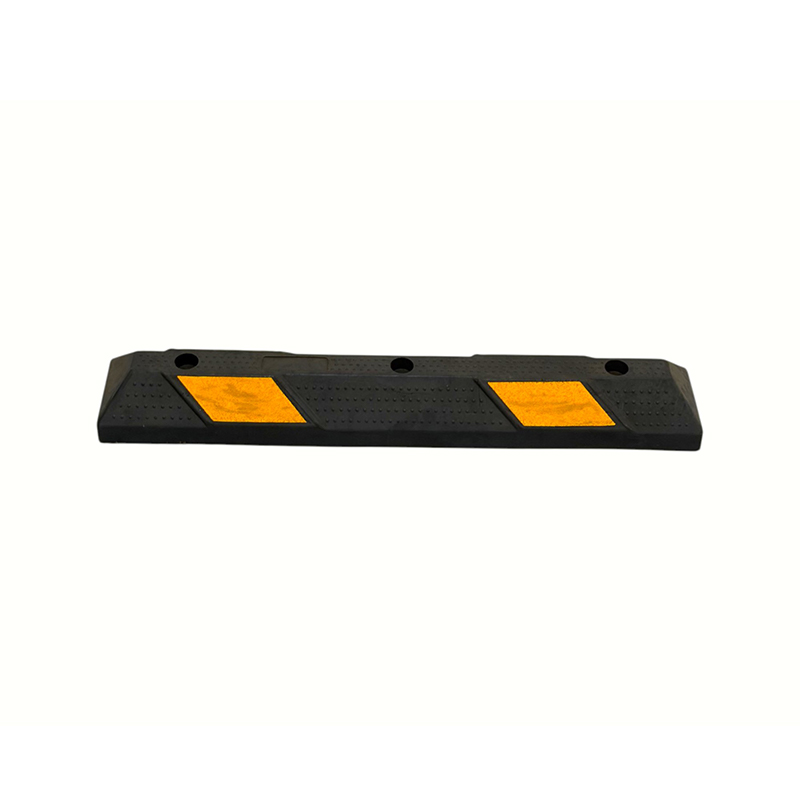
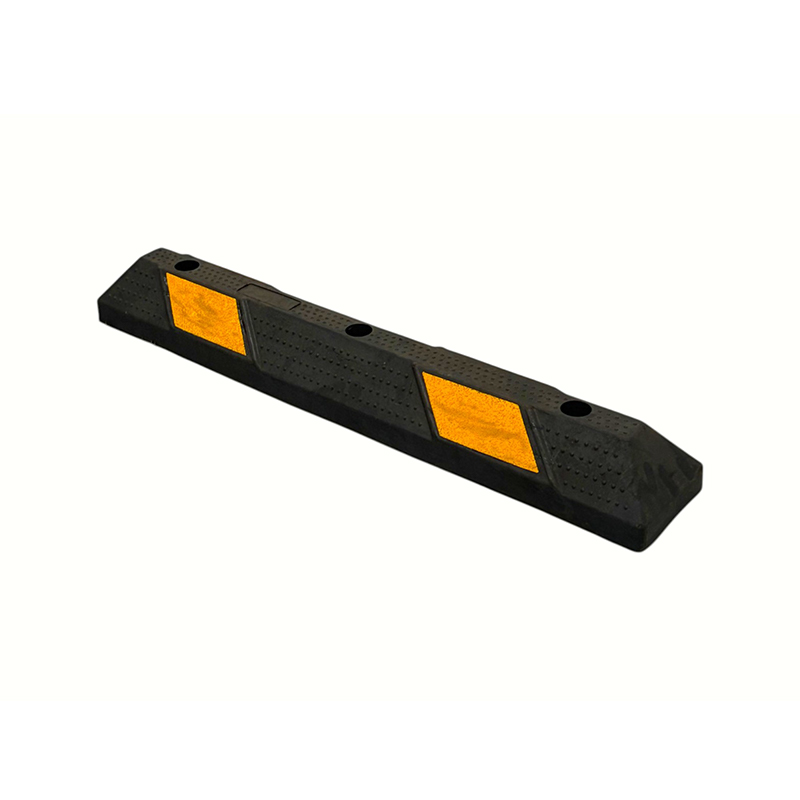
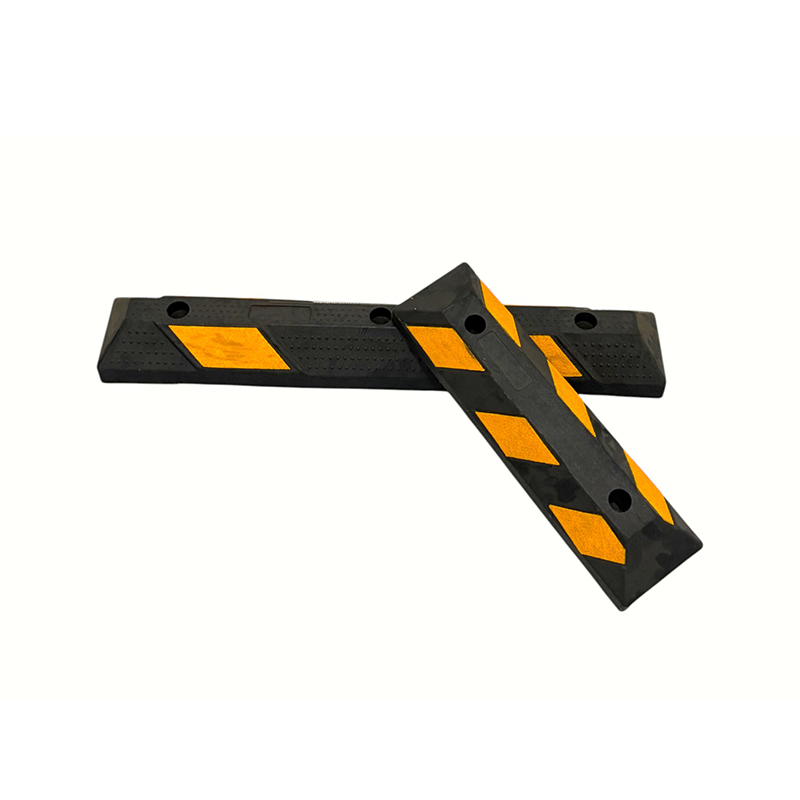
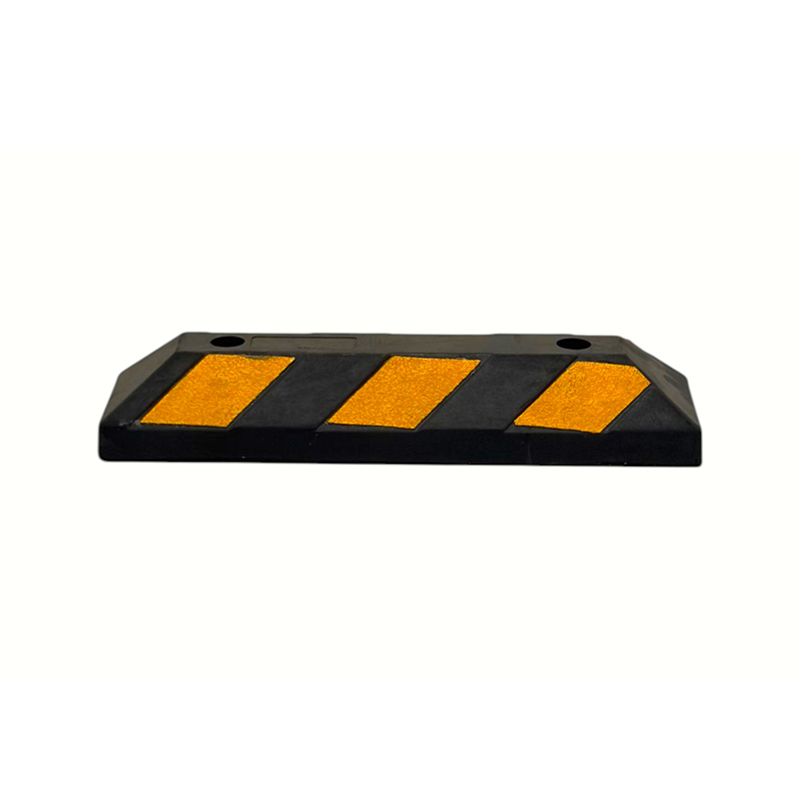
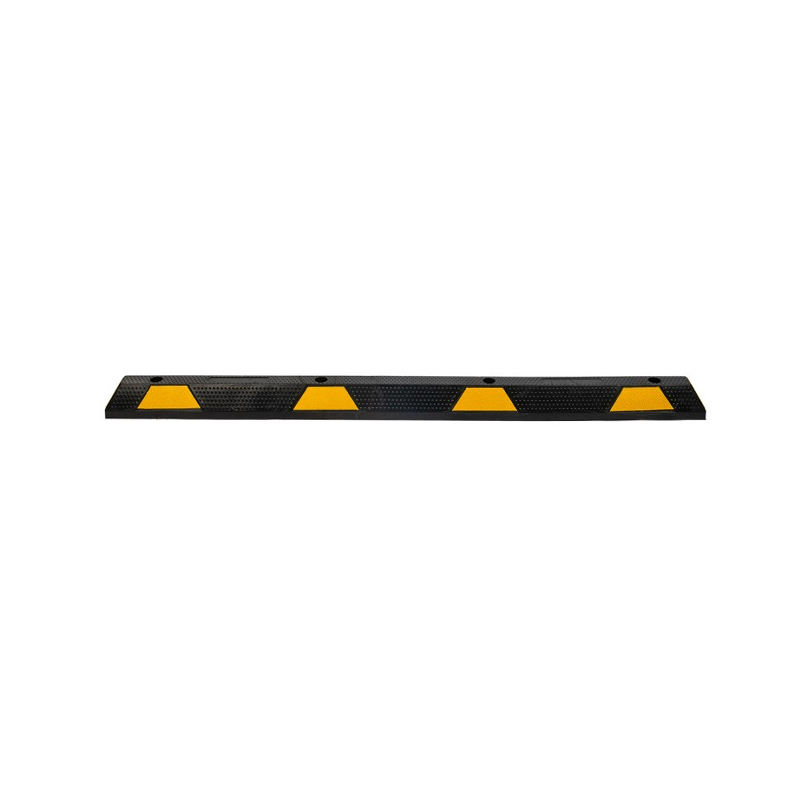
Furthermore, the classic trapezoidal stable cross-section (wide base, narrow top) lowers the center of gravity, enhancing grip and reducing the risk of overturning. This geometry is particularly effective in warehouse wheel stopper applications, where forklifts and pallet jacks frequently maneuver in tight spaces. The trapezoidal design not only buffers tire impact but also minimizes potential chassis damage—a common issue with rigid concrete barriers that have sharp edges. For garage wheel stopper installations, this structural intelligence translates to fewer vehicle repairs and lower liability claims.
1.1 All-Weather Anti-Aging Performance
One of the most overlooked factors in wheel stop longevity is environmental resistance. Plastic stoppers become brittle in sub-zero temperatures, while concrete absorbs moisture, leading to internal cracking and spalling. Our reinforced rubber compound is infused with specialized UV inhibitors and anti-aging agents, ensuring the material will not fade, harden, or crack under extreme heat or severe cold. This all-weather anti-aging performance guarantees a long service life, even in open-air parking lots exposed to desert sun or northern snow. Additionally, the material resists oil, gasoline, and brake fluid spills, which rapidly degrade concrete surfaces and soften many plastics.
2. Visibility and Safety: The Role of Dual High-Intensity Reflective Patches
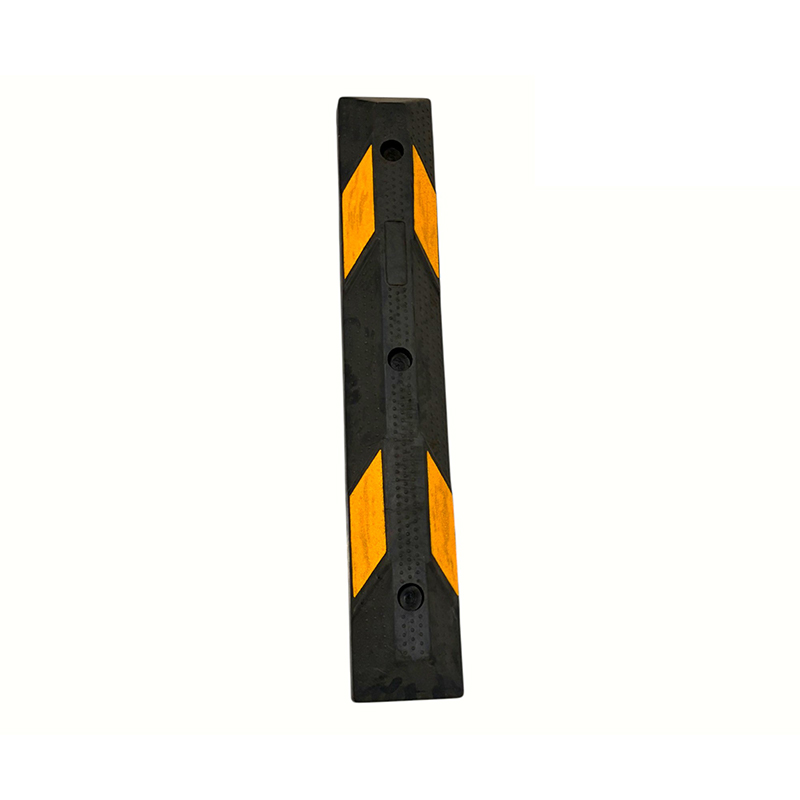
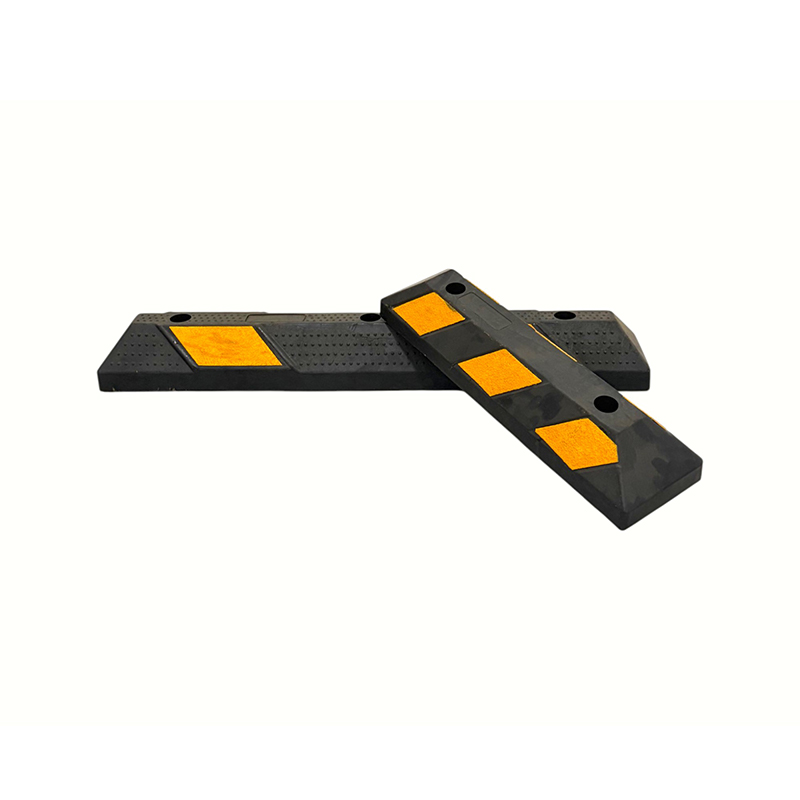
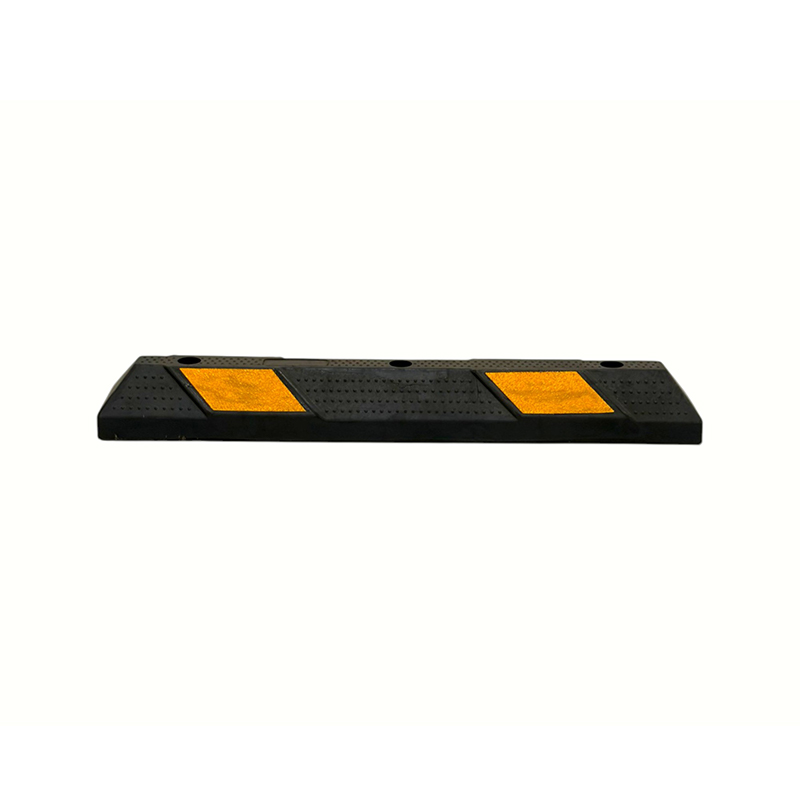
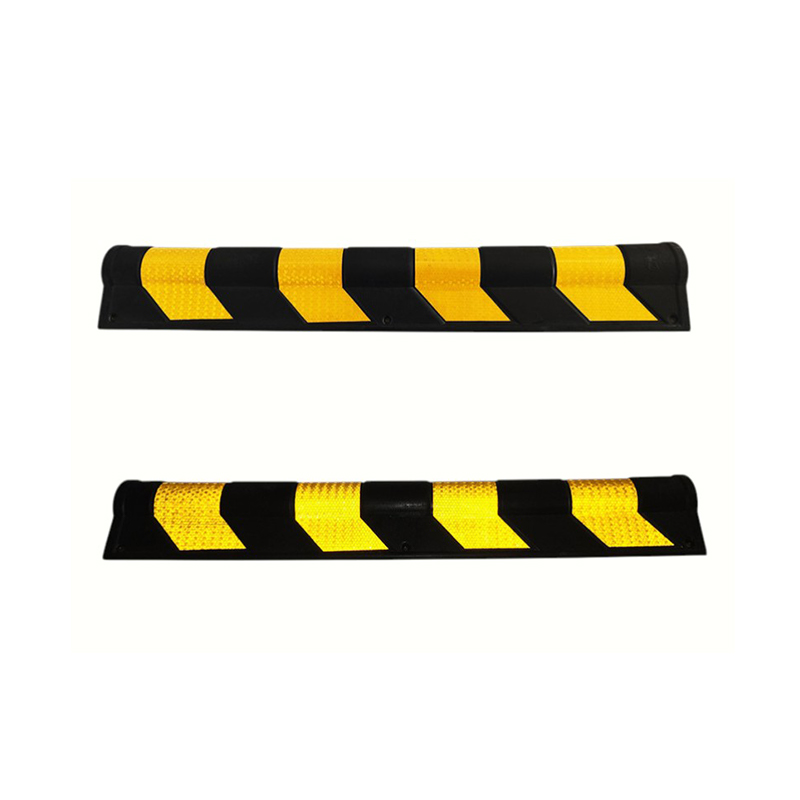
Safety is not just about stopping a vehicle—it is about guiding the driver before impact. Standard wheel stops often feature small reflective strips that are easily obscured by dirt or poor lighting. The large-area reinforced rubber wheel stops with double reflective patches are specifically equipped with two extra-large yellow reflective patches on one side. Their trapezoidal design expands the reflective angle, providing clear boundary guidance for drivers in dark garages or rainy nights. This is a critical upgrade over concrete or plastic alternatives, which typically have minimal or no reflective elements.
In busy warehouse wheel stopper zones, where ambient light may be low and heavy equipment noise is high, these reflective patches serve as a passive visual cue that reduces the likelihood of over-travel. For concrete wheel stop users, retrofitting reflective tape is an added labor cost and often fails to adhere properly to porous surfaces. With our integrated patches, the reflectivity is factory-applied and engineered to withstand pressure washing and abrasive debris, maintaining high visibility for years.
2.1 Standardized Parking Limitation and Compliance
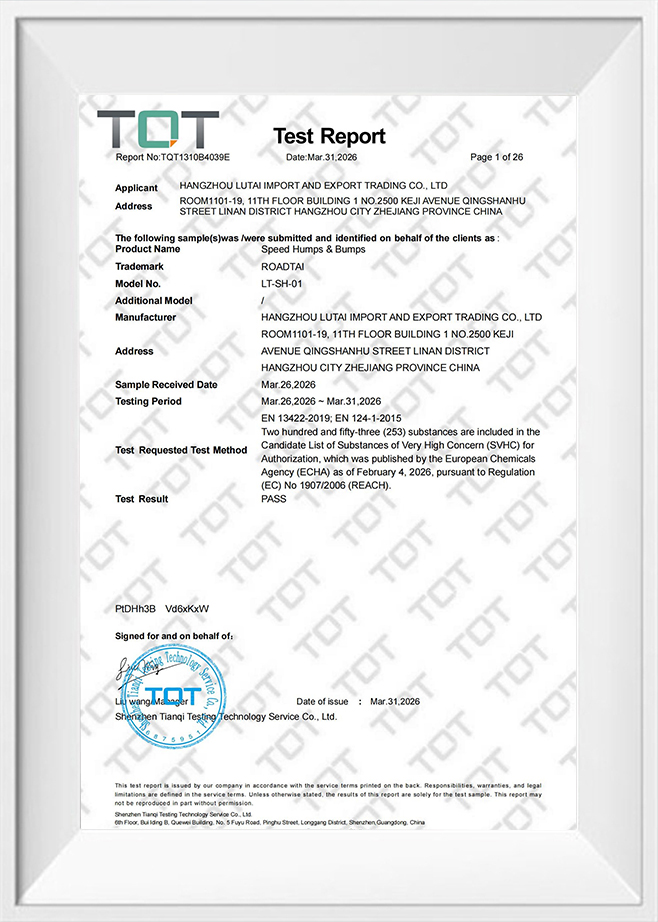
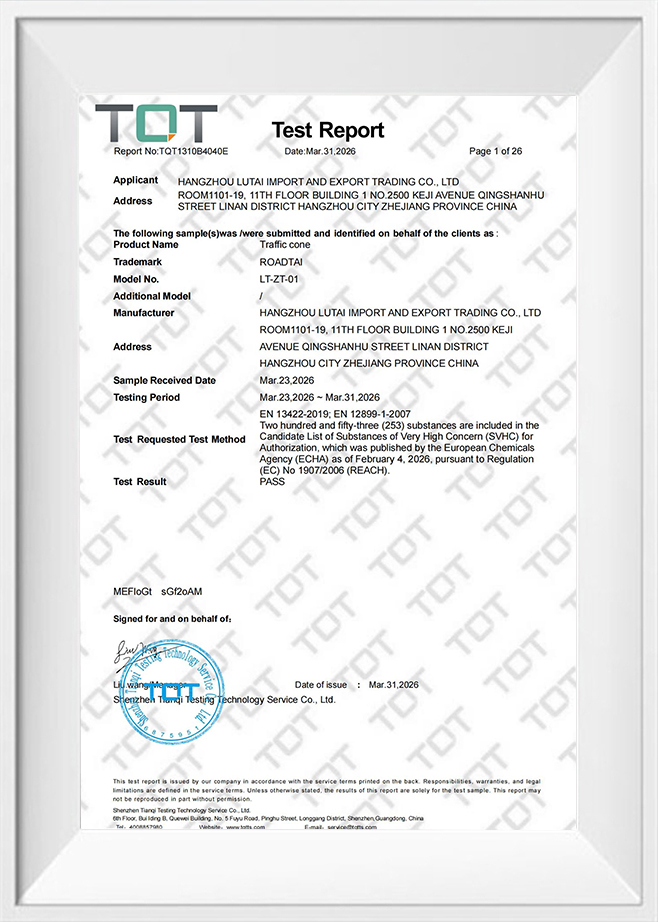
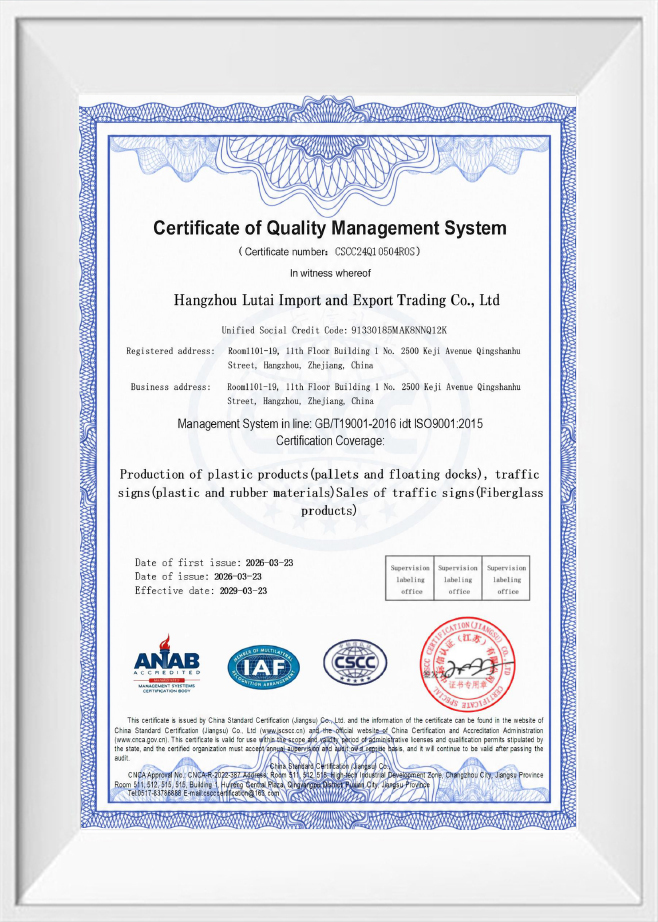
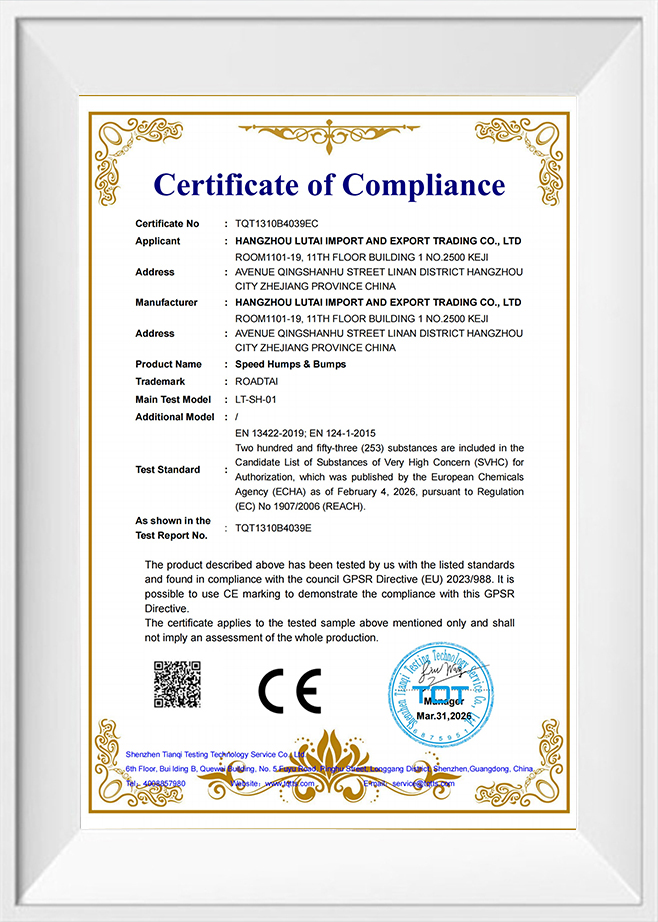
Beyond material and visibility, the large-area reinforced rubber wheel stops with double reflective patches serve as an essential facility for modern underground garages, open-air parking lots, and logistics parks. They ensure vehicles park within safe distances, preventing collisions with walls, pipes, or rear vehicles. Critically, these products are produced in accordance with ISO quality management systems and are CE certified, making them a reliable choice for foreign trade exports and municipal projects. In contrast, many concrete and plastic stoppers lack third-party certification, exposing buyers to compliance risks in regulated markets.
3. Installation, Anchoring, and Lifecycle Cost Analysis
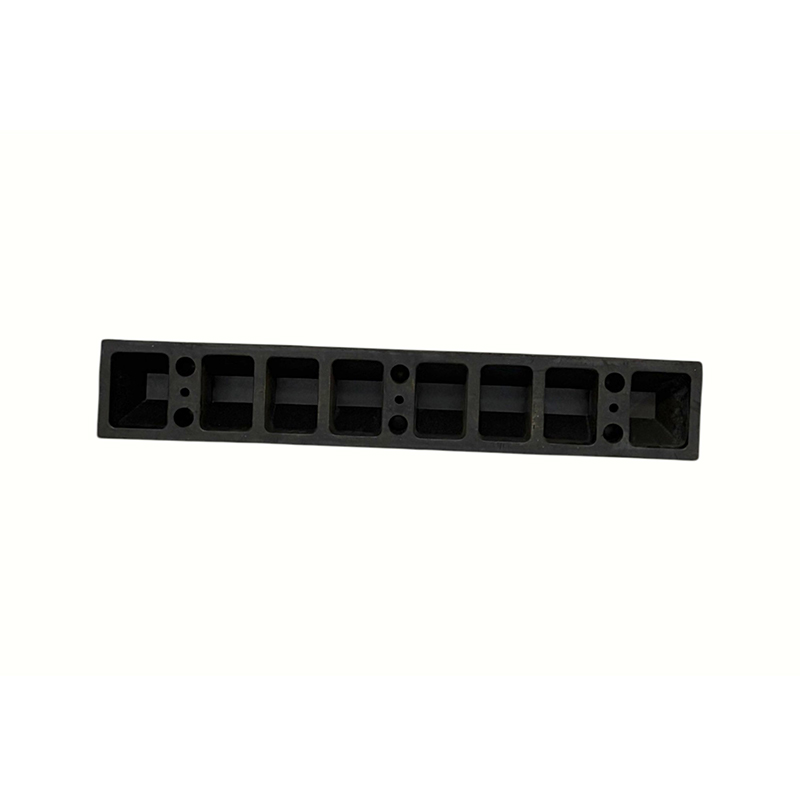
Installation efficiency directly impacts project budgets. Concrete wheel stops require heavy lifting equipment and specialized drilling for rebar anchoring, while plastic units often shear at the bolt holes under torque. Our design incorporates a dual-hole secure anchoring system—pre-drilled with two symmetrical mounting holes compatible with standard expansion bolts. This allows quick, secure fastening to concrete or asphalt surfaces, ensuring zero displacement under high-frequency use. The installation process is straightforward, reducing labor time by up to 40% compared to concrete alternatives.
When evaluating total cost of ownership, the large-area reinforced rubber wheel stops with double reflective patches consistently outperform concrete and plastic. Concrete stoppers often require replacement within 3–5 years due to cracking; plastic units may need replacement every 2 years due to UV degradation. Our rubber stoppers, with proper maintenance, can last 8–10 years, dramatically reducing material and labor costs over a decade. This lifecycle advantage is a key reason why facility managers for logistics hubs and airport parking garages are switching to rubber.
3.1 Comparative Specifications Table
| Feature |
Reinforced Rubber (Our Product) |
Concrete Wheel Stop |
Plastic Wheel Stop |
| Compression Strength |
High (flexible absorption) |
Very High (brittle failure) |
Low (creep and warp) |
| Impact Resistance |
Excellent (rebounds) |
Poor (chips/cracks) |
Fair (shatters under load) |
| UV & Weather Aging |
Superior (inhibitors added) |
Moderate (spalling) |
Poor (fading/brittle) |
| Reflective Visibility |
Double large patches, wide angle |
None or aftermarket tape |
Single small strip |
| Installation Time (per unit) |
~15 min (dual bolts) |
~45 min (heavy drilling) |
~20 min (but prone to pull-out) |
| Expected Lifespan |
8–10 years |
3–5 years |
2–4 years |
4. Application-Specific Recommendations
Choosing the right wheel stop depends on the operational environment. For high-traffic indoor garages and multi-story car parks, the large-area reinforced rubber wheel stops with double reflective patches are ideal due to their low noise (rubber dampens tire impact) and non-marking surface. For outdoor logistics yards and container terminals, the same product excels because of its all-weather durability and heavy-load tolerance. Below we outline key advantages through structured lists.
4.1 Key Advantages of Reinforced Rubber Wheel Stops (Unordered List)
- Superior shock absorption – reduces vehicle strain and driver discomfort.
- Zero structural failure – no chipping, cracking, or shattering under heavy loads.
- Enhanced nighttime safety – double reflective patches provide 360° visibility.
- Eco-friendly material – made from recyclable industrial rubber, unlike concrete which is energy-intensive to produce.
- Easy relocation – can be unbolted and moved to new layouts, unlike permanent concrete installations.
4.2 Step-by-Step Installation Best Practices (Ordered List)
- Clean the mounting surface thoroughly to remove debris and dust.
- Position the wheel stop at the desired stopping distance (typically 0.5–1.0m from wall).
- Mark the two pre-drilled hole locations with chalk or a marker.
- Drill pilot holes into concrete/asphalt using a hammer drill and proper bit size.
- Insert expansion bolts, place the rubber stopper, and torque to specification.
- Verify alignment and test with a low-speed vehicle pass before full operation.
5. Global Supply Chain and Quality Assurance
The performance of any safety product is only as reliable as its manufacturing quality. Hangzhou Lutai Import and Export Trading Co., Ltd. stands at the forefront of this industry, operating two advanced manufacturing bases in Taizhou and Henan. This vertical integration allows us to provide factory-direct pricing while maintaining rigorous quality control and efficient lead times—a critical advantage for large-scale infrastructure projects.
Our R&D team specializes in OEM/ODM development, capable of customizing the large-area reinforced rubber wheel stops with double reflective patches to meet specific height, width, or reflector color requirements. Hangzhou Lutai Import and Export Trading Co., Ltd. operates under the ISO 9001 Quality Management System, and our products are engineered to comply with CE and CNAS certification requirements. To date, we have secured multiple international patents, underscoring our commitment to innovation. For concrete wheel stop buyers looking to upgrade, our team offers sample testing and on-site technical consultation to ensure a seamless transition.
Our global footprint now extends across North America (USA, Canada), Europe (Italy, France, Spain), Asia-Pacific (Australia, Japan, South Korea), and the Middle East (UAE). Hangzhou Lutai Import and Export Trading Co., Ltd. adheres to the principle of "Competing through Quality, Growing through Mutual Benefit." We invite facility managers and procurement professionals to contact us today for detailed specifications and bulk pricing on our rubber wheel stop series.
Frequently Asked Questions
Q1: What makes reinforced rubber wheel stops safer than concrete or plastic alternatives?
Reinforced rubber absorbs impact energy through elastic deformation, reducing shock transfer to the vehicle and anchor system. Concrete transfers force rigidly, often causing tire or chassis damage, while plastic shatters under heavy loads. Additionally, our large-area reinforced rubber wheel stops with double reflective patches include high-visibility reflectors that concrete and most plastic products lack, significantly improving nighttime guidance.
Q2: Can these rubber wheel stops be used outdoors in extreme climates?
Yes. The rubber compound is infused with UV inhibitors and anti-aging agents, ensuring it does not fade, harden, or crack in temperatures ranging from -30°C to +70°C. This makes them suitable for both arctic warehouses and desert parking lots—a clear advantage over plastic (which becomes brittle) and concrete (which spalls from freeze-thaw).
Q3: How does Hangzhou Lutai ensure product quality and certification?
Hangzhou Lutai Import and Export Trading Co., Ltd. operates under ISO 9001 and maintains CE and CNAS certifications. We conduct in-house material testing, compression cycle tests, and reflective luminance verification on every production batch. Our two manufacturing bases in Taizhou and Henan enable full traceability from raw rubber to finished garage wheel stopper units.
Q4: Are custom sizes or colors available for large projects?
Absolutely. We offer full OEM/ODM services, including custom dimensions, custom reflector color (yellow, white, red), and even logo embossing on the surface. Our R&D team works closely with clients to develop prototypes within 15 working days. This flexibility is a core strength of Hangzhou Lutai Import and Export Trading Co., Ltd., especially for municipal contracts and retail chain rollouts.
Q5: How do I choose between a concrete wheel stop and a rubber wheel stop for a warehouse?
For warehouses with frequent forklift and heavy truck traffic, rubber is vastly superior. The large-area reinforced rubber wheel stops with double reflective patches withstand repeated impacts without cracking, and the dual reflective patches are essential in low-aisle lighting. Concrete stops in warehouses often chip and create trip hazards, while rubber remains intact and safe.



 Español