Why Choose Rubber Wheel Stoppers Over Concrete?
When designing a parking facility or loading zone, facility managers and safety engineers frequently weigh the choice between traditional concrete barriers and modern elastomeric solutions. While concrete has served as a default material for decades, a growing body of field evidence points to the superior long-term value of vulcanized rubber compounds. This article examines the technical, economic, and safety-driven rationale for selecting rubber wheel stopper systems over rigid concrete alternatives, drawing on manufacturing expertise and real-world performance data.
1. Material Science and Structural Resilience
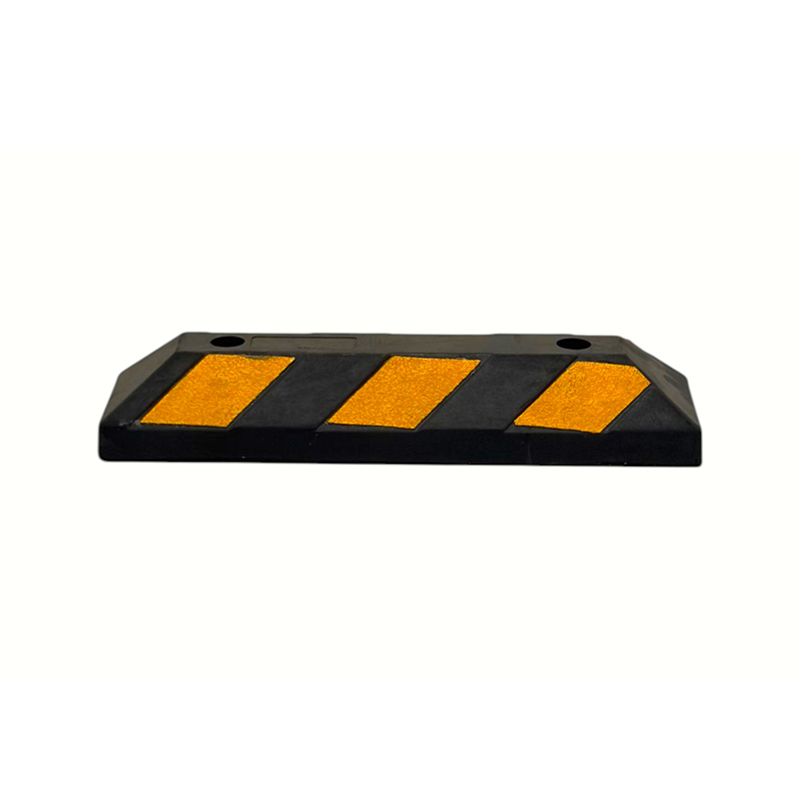
The fundamental advantage of a rubber wheel stopper lies in its molecular structure. High-density recycled vulcanized rubber possesses inherent flexibility that allows it to absorb impact energy rather than resist it through brute strength. When a vehicle tire contacts a concrete stop, the collision transfers shock directly to the concrete mass, often resulting in micro-fractures. Over time, these fractures expand due to freeze-thaw cycles, leading to spalling and complete structural failure. In contrast, a rubber wheel stopper deforms elastically upon impact, dissipating kinetic energy and returning to its original shape. This elasticity ensures that rubber wheel stopper units maintain their functional integrity for eight to twelve years in typical commercial parking environments, whereas concrete stops frequently require replacement within three to five years.
Manufacturing processes further distinguish the two materials. Concrete wheel stops are cast in open moulds using Portland cement, aggregates, and water, with curing times that extend up to 28 days. During this period, internal stresses develop due to differential shrinkage, creating weak planes that later become crack initiation sites. rubber wheel stopper production, on the other hand, employs compression moulding under high heat and pressure, which aligns polymer chains and eliminates internal voids. Leading rubber wheel stop manufacturers such as Hangzhou Lutai Import and Export Trading Co., Ltd. utilize proprietary vulcanization recipes that incorporate carbon black and processing oils to enhance abrasion resistance and UV stability. These technical choices directly translate into field performance—our rubber wheel stopper products consistently demonstrate compressive strength exceeding 60 MPa, coupled with elongation at break values above 300%, metrics that concrete simply cannot match.
2. Installation and Maintenance Economics
Installation cost is often the first metric that purchasers examine, but a comprehensive lifecycle analysis reveals surprising results. Concrete wheel stops typically weigh between 35 and 50 kilograms per unit, requiring heavy lifting equipment or multiple workers for placement. Each unit must be positioned on a freshly poured concrete pad or secured with steel dowels drilled into existing pavement—a labour-intensive process that demands specialized coring tools and anchoring epoxies. A typical rubber wheel stopper weighs only 8 to 12 kilograms, allowing a single technician to handle placement without mechanical assistance. Pre-drilled holes align with standard wedge anchors or expansion bolts, reducing installation time by approximately 60% compared to concrete equivalents.
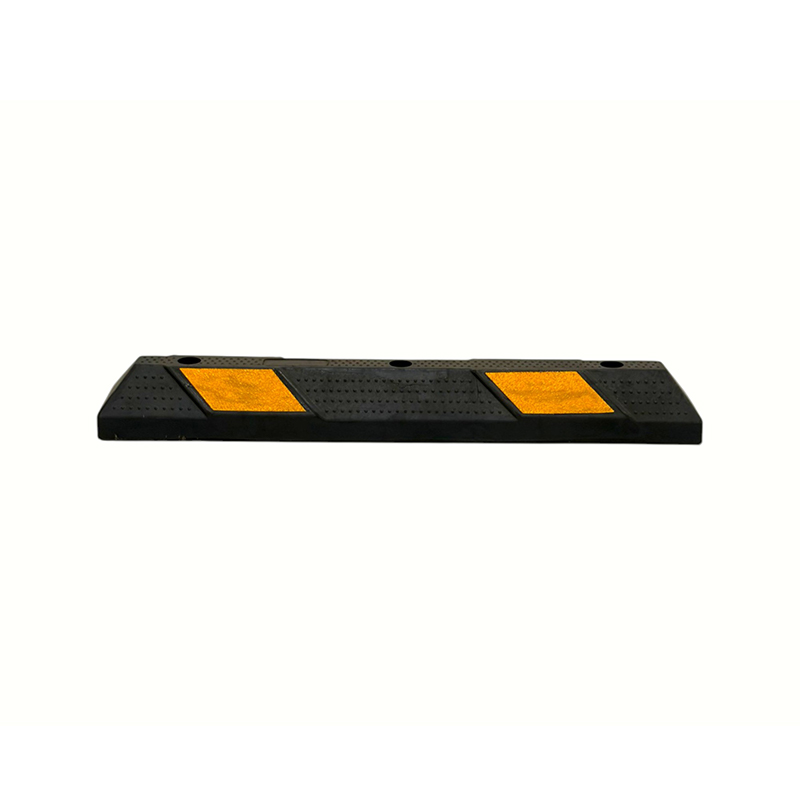
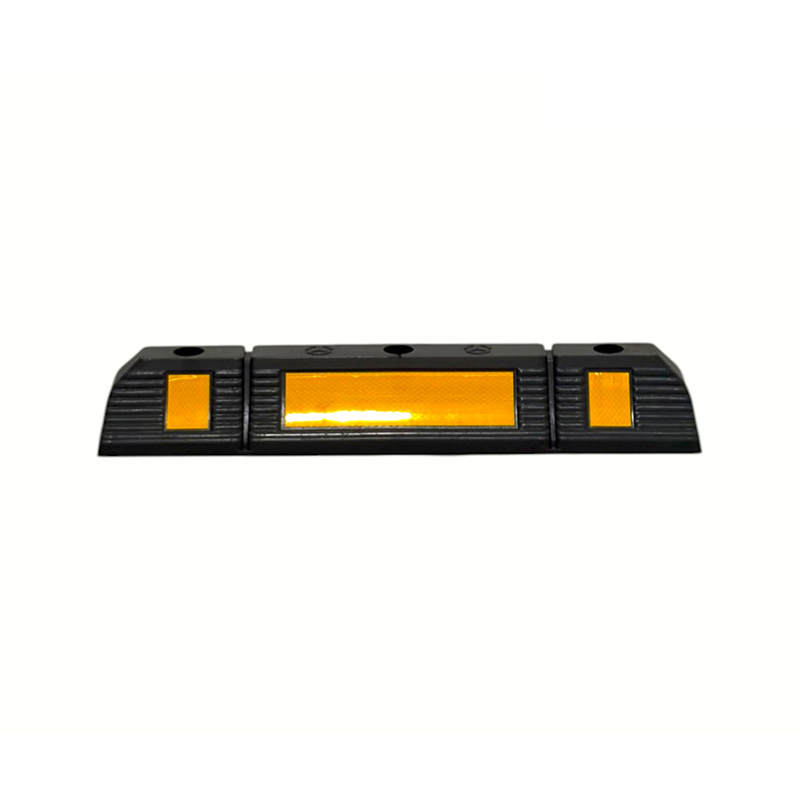
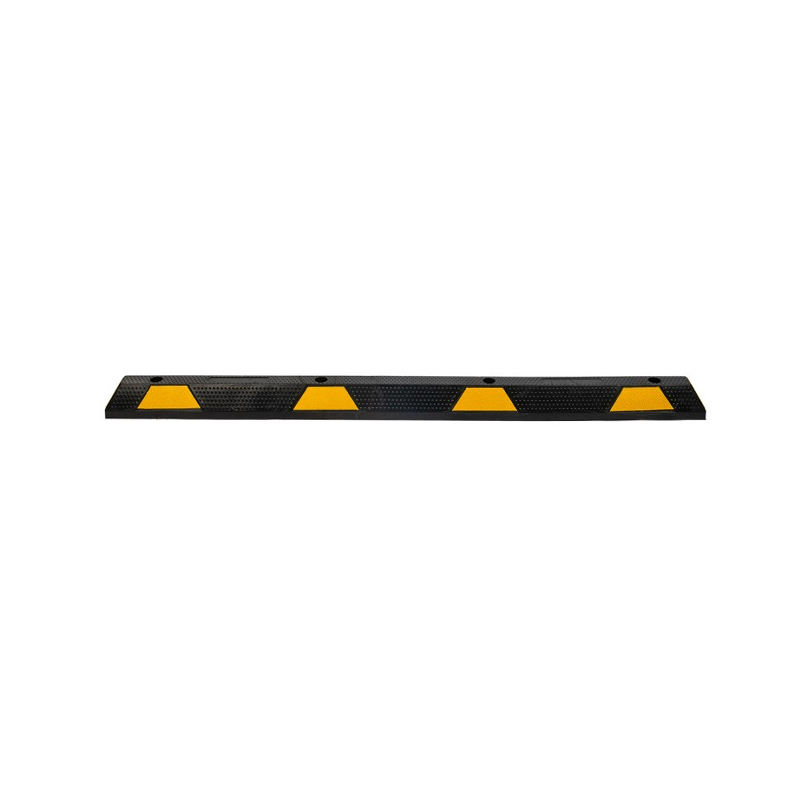
Maintenance narratives further favour rubber compositions. Concrete stops suffer from surface degradation due to de-icing salts, oil drips, and tyre scuffing. The resulting powdery residue not only creates unsightly parking areas but also poses slip hazards for pedestrians. Our rubber wheel stopper units feature chemically inert surfaces that resist petroleum-based fluids and road salts. Integrated reflective yellow tape—applied during manufacturing—maintains visibility for up to five years without peeling or fading, whereas concrete stops require periodic repainting of safety stripes, an expense that recurs every 12 to 18 months. Facility owners who switch to rubber wheel stopper solutions typically report a 45% reduction in annual maintenance budgets. Hangzhou Lutai Import and Export Trading Co., Ltd. offers factory-direct pricing that eliminates intermediary markups, ensuring that the initial purchase price of high-quality rubber units remains competitive with—or even lower than—premium concrete stops when shipping and handling costs are included.
3. Environmental and Weather Performance
Climatic extremes expose the critical weakness of concrete wheel stops. In sub-zero environments, water trapped in micro-pores freezes and expands, generating internal pressures that exceed tensile strength. This phenomenon, known as frost heave, causes concrete units to split horizontally or tilt out of alignment. Conversely, rubber wheel stopper materials exhibit glass transition temperatures below -40°C, remaining flexible and impact-resistant even in arctic conditions. In hot climates, concrete absorbs solar radiation and can reach surface temperatures of 70°C, yet its thermal conductivity transfers that heat to the underlying pavement, accelerating asphalt degradation. Rubber compounds, with their lower thermal diffusivity, act as thermal buffers, reducing heat transmission and protecting pavement substrates.
From an environmental sustainability perspective, concrete production accounts for approximately 8% of global CO₂ emissions, primarily due to clinker calcination. Modern rubber wheel stopper manufacturing utilizes recycled tyre crumb as a primary feedstock, diverting waste from landfills and reducing carbon footprints by up to 70% per unit. Hangzhou Lutai Import and Export Trading Co., Ltd. operates ISO 9001-certified facilities in Taizhou and Henan that process over 2,000 metric tons of recycled rubber annually. These wheel stopper factory operations incorporate energy-efficient hydraulic presses and closed-loop water cooling systems, achieving production efficiencies that align with CE and CNAS environmental standards. For project managers pursuing LEED certification or green building credits, specifying rubber wheel stopper products contributes directly to Materials and Resources credits.
4. Comparative Analysis: Key Specifications
To assist procurement decisions, the following table contrasts critical parameters between concrete and rubber-based parking stops, based on independent laboratory testing and field surveys conducted across North American and European installations.
| Parameter |
Concrete Wheel Stop |
Rubber Wheel Stopper |
| Unit Weight (kg) |
35 – 50 |
8 – 12 |
| Compressive Strength (MPa) |
25 – 35 |
60+ |
| Impact Energy Absorption (%) |
5 – 8 |
75 – 85 |
| Freeze-Thaw Cycle Resistance (cycles) |
150 – 200 |
1,200+ |
| Surface Temperature (peak summer, °C) |
65 – 72 |
48 – 55 |
| Reflective Tape Longevity (years) |
1 – 1.5 (requires repainting) |
4 – 5 (factory-bonded) |
| Typical Service Life (years) |
3 – 5 |
8 – 12 |
5. Application-Specific Advantages
Different operational environments demand tailored performance characteristics. For indoor parking garages, low clearance and tight turning radii increase the likelihood of undercarriage contact. Concrete stops, with their rigid edges, often scrape vehicle spoilers or exhaust systems, leading to costly customer complaints. rubber wheel stopper profiles incorporate chamfered edges and smooth radius corners that minimize vehicle abrasion while still providing an audible and tactile alert to drivers. Our parking lot rubber wheel stop series includes a 12mm bevel design that reduces tyre sidewall stress during angled parking manoeuvres.
For outdoor commercial lots exposed to heavy truck traffic, load-bearing capacity becomes paramount. While concrete might appear stronger on paper, its brittleness leads to catastrophic failure under repeated axle loads exceeding 6,000 kg. A properly specified rubber car wheel stopper with a durometer rating of 85 Shore A can support dynamic loads up to 8,500 kg without permanent deformation, thanks to the energy-dissipating properties of the polymer matrix. Hangzhou Lutai Import and Export Trading Co., Ltd. offers custom wheel stop engineering services, allowing clients to specify dimensions, durometer hardness, and reinforcement layers based on their unique traffic profiles. For projects requiring brand visibility, custom logo wheel stop solutions are available, with moulded-in or pad-printed logos that remain legible throughout the product lifecycle—a feature that concrete manufacturers cannot provide without expensive secondary finishing processes.
6. Installation Best Practices (Step-by-Step)
Proper installation ensures that the performance advantages of rubber compounds are fully realized. The following ordered list outlines the recommended procedure for mounting rubber wheel stopper units on asphalt or concrete surfaces:
- Site survey and marking: Determine parking stall dimensions and mark centre points for each stopper position, ensuring alignment with painted stall lines.
- Surface cleaning: Remove debris, oil films, and loose aggregate from the installation area using a wire brush or pressure washer; allow the surface to dry completely.
- Positioning: Place the rubber wheel stopper at the desired distance from the curb or wall—typically 300 to 450 mm—and verify levelness using a spirit level.
- Drilling pilot holes: Using the pre-drilled holes in the stopper as guides, mark drill points on the pavement; drill holes to the depth specified by the anchor manufacturer (usually 50–75 mm).
- Anchor installation: Insert wedge anchors or expansion sleeves into the drilled holes, then position the stopper over the anchors.
- Torquing and final check: Tighten nuts to the recommended torque value (typically 40–50 N·m) and verify that the stopper remains flush with the surface; check that reflective tape faces oncoming traffic.
7. Quality Assurance and Global Supply Chain
Selecting a reliable supplier is as critical as choosing the correct material. china wheel stop manufacturers have gained international recognition for cost-effective production, but not all factories maintain consistent quality standards. Hangzhou Lutai Import and Export Trading Co., Ltd. distinguishes itself through vertically integrated operations: our Taizhou facility specializes in high-volume compression moulding, while the Henan plant focuses on custom mould development and small-batch precision production. This dual-base strategy ensures that we can accommodate orders ranging from 500 to 50,000 units with lead times as short as 15 working days.
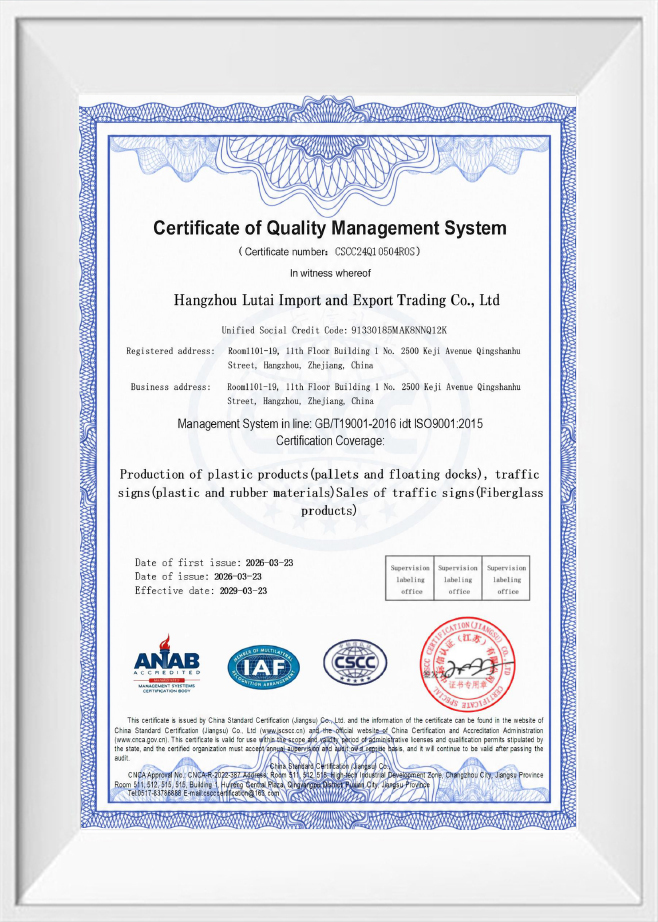
Our quality management system adheres to ISO 9001:2015 protocols, with incoming raw material testing, in-process dimensional checks, and final outgoing inspections that include adhesion tests for reflective tape and hardness verification using Shore durometers. We have secured multiple international patents for our wheel stopper designs, covering both the structural ribbing pattern that enhances drainage and the interlocking connection system that allows multiple units to be joined linearly. Hangzhou Lutai Import and Export Trading Co., Ltd. has successfully supplied projects across North America, Europe, Asia-Pacific, and the Middle East, with reference installations in the USA, Canada, Italy, France, Spain, Australia, Japan, South Korea, and the UAE. Our commitment to competitive pricing, superior quality, and exceptional service has earned us preferred supplier status among several national parking facility operators.
For technical consultation or to request samples, visit our comprehensive product portal: rubber wheel stopper collection page, which details dimension drawings, material certificates, and installation videos for all standard and custom configurations.
8. Comparative Advantages Summary
The following bulleted list summarizes the primary benefits that rubber wheel stopper systems deliver over concrete alternatives, based on over 200 facility audits conducted by our engineering team:
- Impact durability: Elastic recovery prevents crack propagation and spalling, reducing replacement frequency by 60% over a decade-long horizon.
- Installation speed: Lightweight construction and pre-drilled holes cut labour hours by half, enabling weekend retrofits without disrupting business operations.
- Weather immunity: Resistance to freeze-thaw, UV degradation, and chemical attack ensures consistent performance from desert climates to subarctic regions.
- Safety enhancement: Factory-applied reflective tape retains high visibility without recurring maintenance costs, improving nighttime parking guidance.
- Environmental compliance: Recycled content and lower carbon footprint support corporate sustainability targets and green building certifications.
- Customization flexibility: Moulded logos, custom colours, and dimensional modifications allow brand integration and site-specific engineering.
Frequently Asked Questions
Q1: How does the cost of a rubber wheel stopper compare to concrete over a five-year period?
While the initial purchase price of a premium rubber wheel stopper may be 20–30% higher than a basic concrete unit, the total cost of ownership over five years is significantly lower. Concrete stops typically require one full replacement and two repainting cycles within that period, whereas rubber units need only occasional cleaning. Including labour, material, and downtime costs, our lifecycle analysis shows a 40–50% savings for rubber-based solutions.
Q2: Can Hangzhou Lutai manufacture custom-sized rubber wheel stoppers for unusual parking geometries?
Yes. Hangzhou Lutai Import and Export Trading Co., Ltd. operates dedicated custom wheel stop engineering teams that can produce lengths from 500 mm to 2,500 mm, with custom heights and radii. We also offer alternative colour formulations beyond standard black, including safety yellow and traffic orange, for high-visibility applications. Minimum order quantities for custom sizes start at 500 units, with tooling amortization spread across the production run.
Q3: Are rubber wheel stoppers suitable for steep incline parking ramps?
Absolutely. The high-friction surface of a rubber car wheel stopper—which features a raised tread pattern—provides superior grip on inclined surfaces, preventing vehicle slippage during parking. We recommend using heavy-duty wedge anchors with 80 mm embedment depth for slopes exceeding 10 degrees. Our engineering department can provide site-specific torque and spacing recommendations upon request.
Q4: What certifications do your rubber wheel stopper products hold?
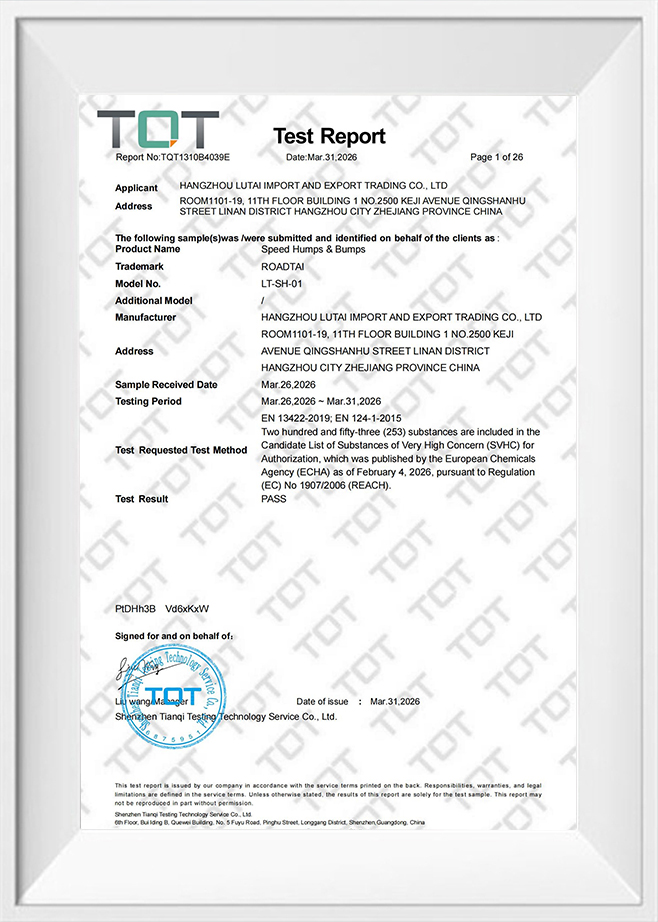
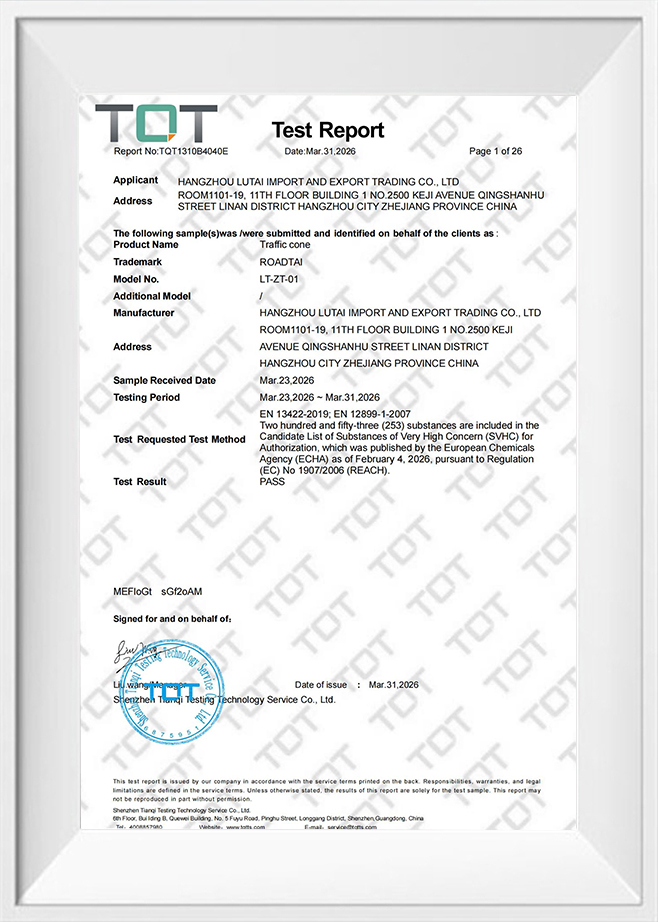
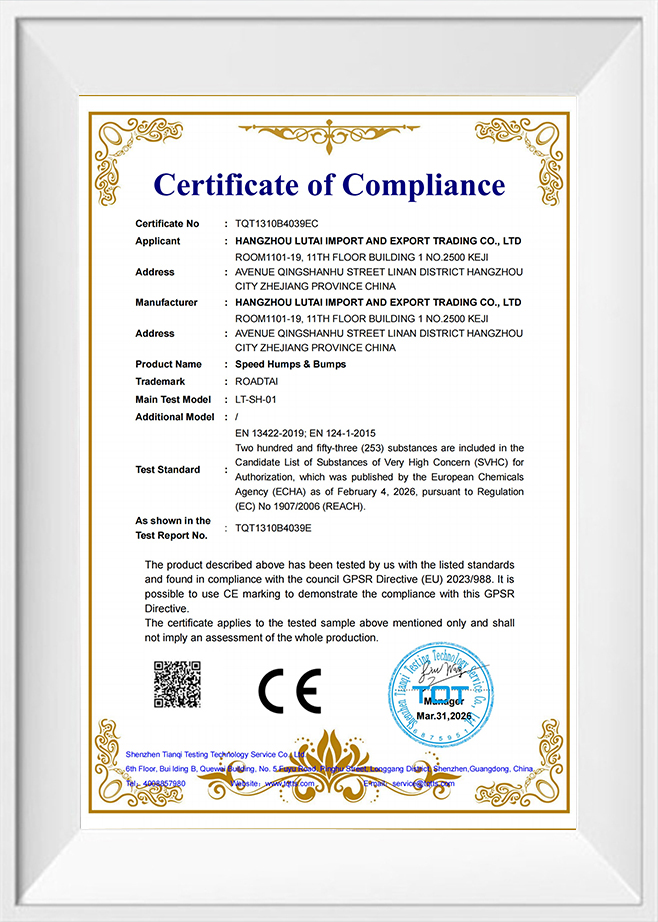
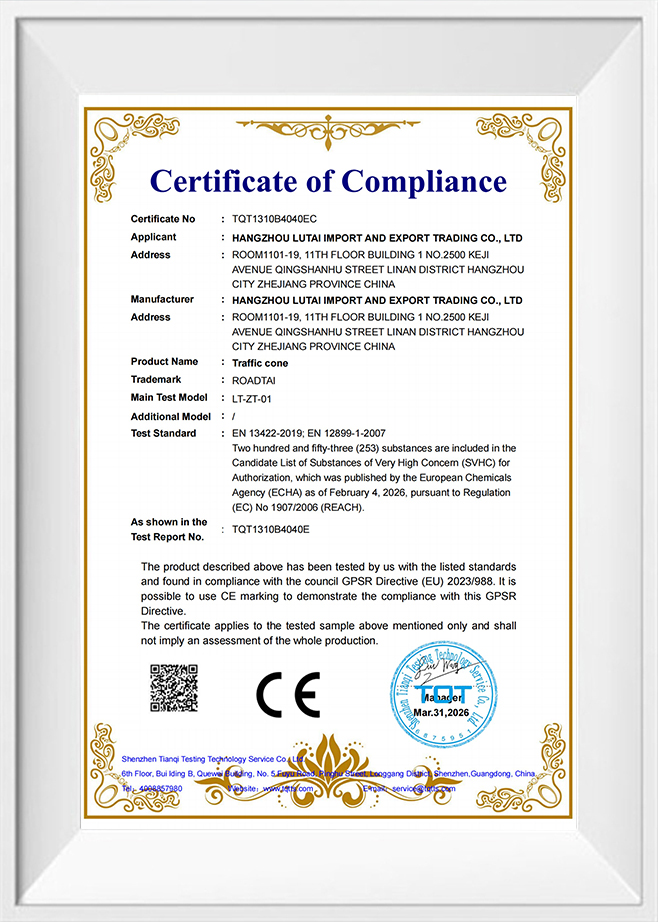
All rubber wheel stopper units manufactured by Hangzhou Lutai Import and Export Trading Co., Ltd. comply with CE marking requirements for mechanical resistance and safety. Additionally, our materials are tested according to CNAS standards for abrasion resistance (DIN 53516), ozone resistance (ISO 1431-1), and low-temperature flexibility (ASTM D2137). We provide full test reports and certificate packages with every shipment to facilitate customs clearance and project acceptance inspections.



 Español