How are plastic pedestrian barriers used for crowd control?
Managing pedestrian flows in public spaces, construction zones, and temporary events demands equipment that balances safety, mobility, and cost-effectiveness. Among the most versatile tools available today is the plastic pedestrian barrier. Unlike traditional steel barricades, these lightweight yet durable units have redefined how site managers, event organizers, and municipal authorities direct foot traffic. This article examines the practical applications of plastic pedestrian barriers in crowd control, explores their key product variants, and highlights how professional suppliers like Hangzhou Lutai Import and Export Trading Co., Ltd. support global projects with tailored solutions.
1. Water-Filled Plastic Pedestrian Barriers – The Stability Standard
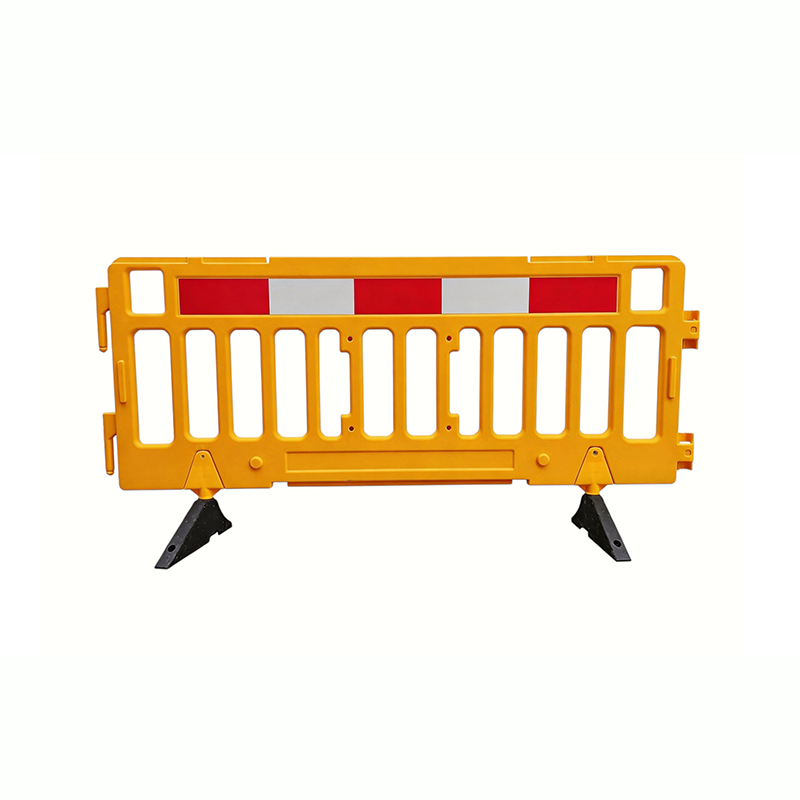
The water-filled variant represents the most widely adopted category of plastic pedestrian barrier for outdoor crowd control. These hollow units feature a sealed fill port on the top, allowing users to add water (or sand in cold climates) to increase mass from approximately 5 kg empty to over 50 kg when full. This transformation converts a portable shell into a stable, impact-resistant barrier that resists tipping from accidental bumps or moderate wind gusts.
Core functional features include interlocking side pins or recessed connectors that link multiple units into continuous runs, creating clear, unbroken sightlines for pedestrians. Typical applications range from festival queuing systems and marathon route separators to construction site sidewalk protection. Compared to temporary fencing, the water-filled plastic pedestrian barrier offers superior visual deterrence and physical deflection while remaining easy to reposition with a simple drain-and-move process. Hangzhou Lutai Import and Export Trading Co., Ltd. supplies these barriers with UV-stabilized polyethylene, ensuring color retention and structural integrity across seasonal exposure. Their manufacturing bases in Taizhou and Henan allow rapid shipment of large volumes, a critical advantage for time-sensitive event setups.
- Ballast capacity: up to 55 liters of water or sand
- Interlocking mechanism: male-female pin system for straight or curved layouts
- Reflective sheeting options: Class 2 reflective strips for low-light visibility
- Drain plug design: quick-release for fast redeployment
For event organizers, the ability to deploy hundreds of meters of plastic pedestrian barrier within hours, then drain and stack them on pallets for storage, directly reduces labor costs and logistical headaches—a key differentiator from fixed concrete dividers.
2. Base-Plate Plastic Pedestrian Barriers – High-Visibility Channeling
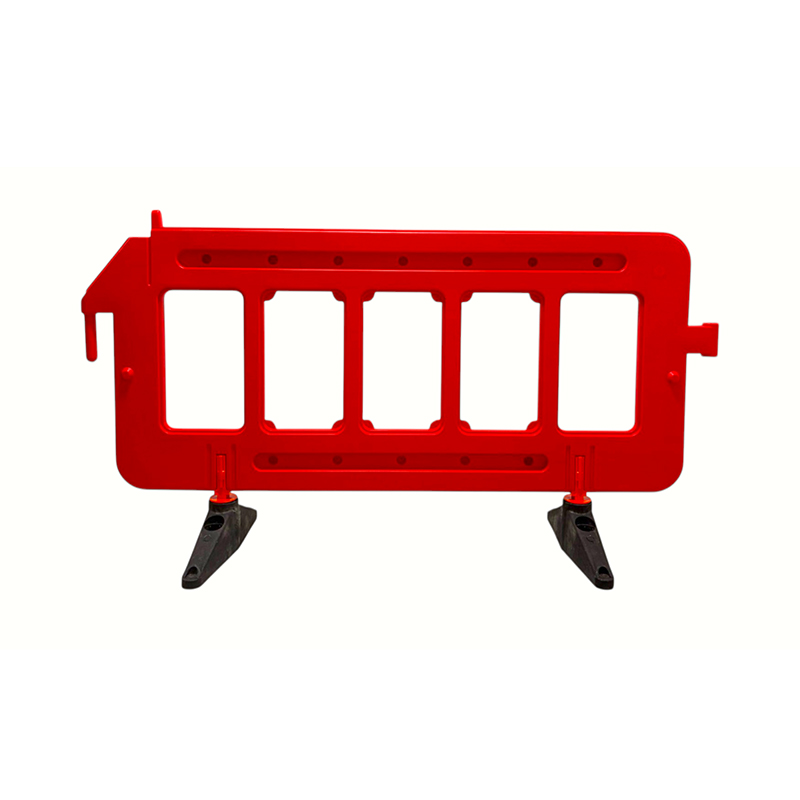
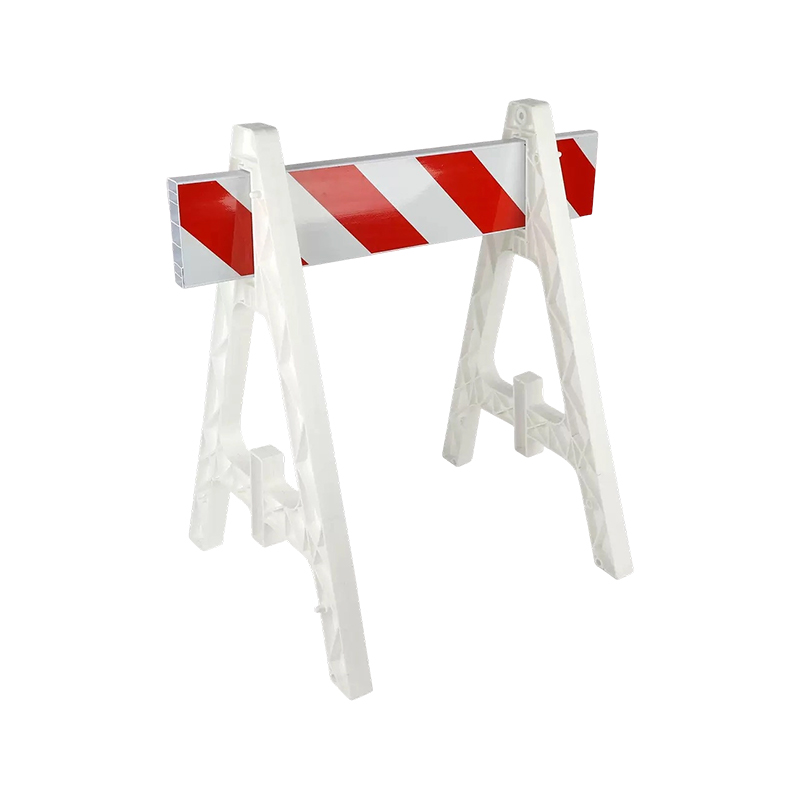
Base-plate designs, often referred to as "pedestrian channelizers," prioritize visual guidance and temporary lane separation. Unlike their water-filled counterparts, these plastic pedestrian barriers feature a broad, flat bottom plate with a raised vertical panel, typically in bright safety orange or yellow. Their primary function is not impact absorption but directional cueing—guiding crowds through narrow corridors, around hazards, or toward entry checkpoints.
Technically, these barriers are manufactured via injection moulding, producing high dimensional accuracy for the plate's stacking ridges and handle cutouts. They often integrate clip-on sign holders or banner rails, enabling real-time message changes (e.g., "Queue Here" or "Exit Only"). Typical scenarios include airport passenger flow management, museum exhibition routing, and outdoor ticketing lines. One distinct advantage is stackability—up to 20 units can be nested together, saving up to 70% storage space compared to water-filled models.
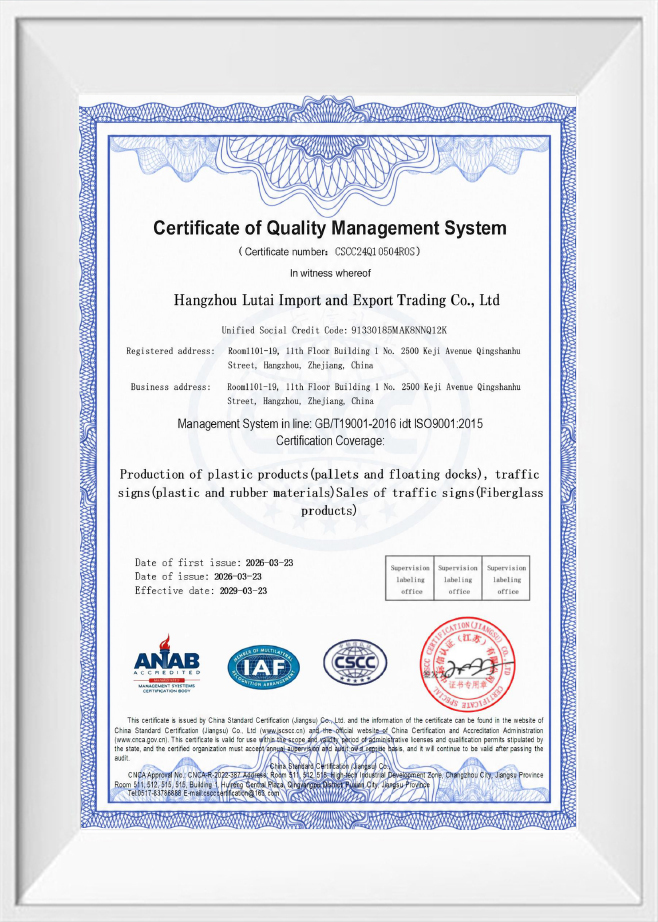
Hangzhou Lutai Import and Export Trading Co., Ltd. offers custom color-molding for these base-plate barriers, allowing brand integration without additional painting. Their R&D team also provides optional weighted rubber feet for enhanced grip on smooth concrete floors—a feature frequently requested by shopping mall operators. The company's ISO 9001-certified production ensures consistent wall thickness, preventing warping even after repeated stacking and unstacking in high-traffic installations.
| Feature |
Water-Filled Type |
Base-Plate Type |
| Primary Ballast |
Water/sand (dynamic) |
Base weight + optional rubber feet |
| Stackability |
Nestable (empty) |
High-density nesting (20+ units) |
| Ideal Terrain |
Uneven outdoor surfaces |
Flat indoor/outdoor hardscapes |
| Reflective Area |
Side panels (large) |
Top rail or sign holders |
3. Interlocking Panel Barriers – Modular Crowd Flow Systems
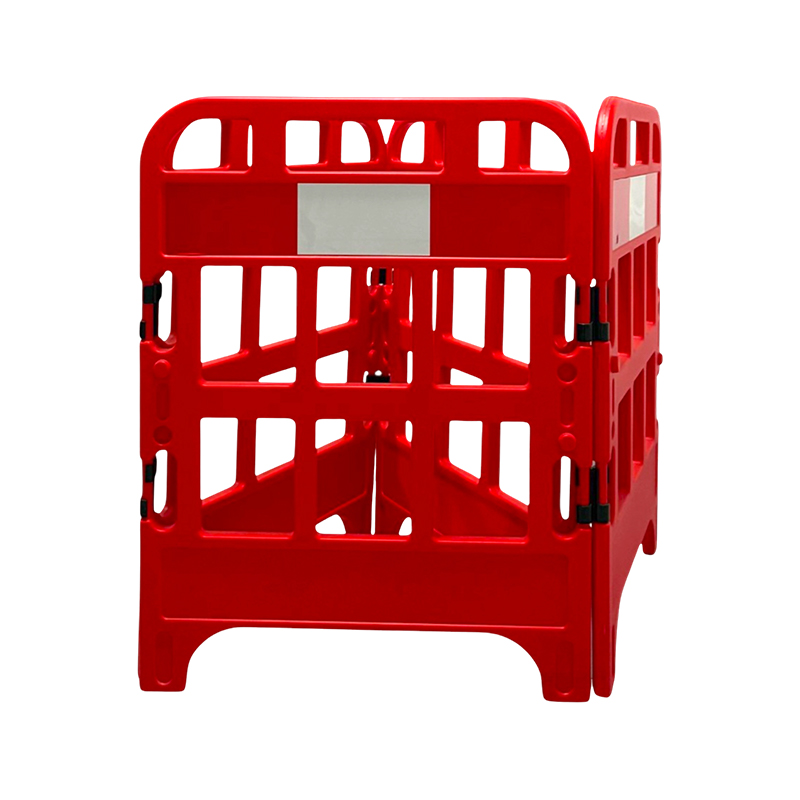
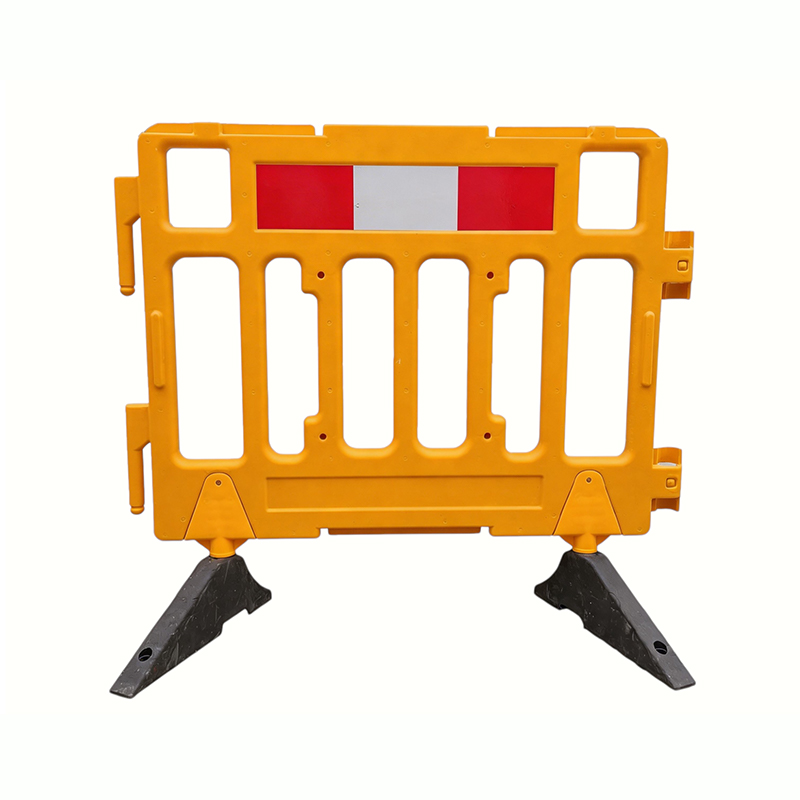
The third major category is the interlocking panel system, which extends the concept of a simple plastic pedestrian barrier into a modular, expandable crowd-flow architecture. These units consist of rectangular panels with heavy-duty hinges or sliding latches on both ends, allowing 90°, 180°, and even variable-angle connections. This flexibility transforms straight lines into zigzag queuing lanes, corrals, or fully enclosed holding areas—essential for concert entries, stadium concourses, and emergency evacuation routes.
From a technical standpoint, these barriers use engineering-grade polypropylene with reinforced ribbing on the inner faces to resist bowing under lateral crowd pressure. Many models incorporate integrated bases that can be independently ballasted with small water bladders or clip-on weight bags, offering a hybrid solution. Application-wise, interlocking panels shine in dynamic environments where layout changes occur multiple times per day—for example, converting a VIP lounge into a general admission queue within 15 minutes.
Differentiation advantages over standard fixed barriers include: (1) tool-free assembly—no wrenches or pins to lose; (2) foldability—panels collapse to 30% of their deployed length for transport; and (3) accessory compatibility—clip-on stanchion belts, LED light strips, and retractable tape can be added without modifying the base unit. Hangzhou Lutai Import and Export Trading Co., Ltd. has developed a patented quick-lock hinge for these panels, which has been adopted by several European rental companies for its reliability in wet conditions. Their CE-certified production line ensures each panel withstands over 10,000 open-close cycles, a testament to longevity in rental fleets.
- Assess crowd density and required channel width (standard panel: 1.1 m height x 0.9 m width).
- Determine connectivity pattern: straight run, L-shape, or serpentine.
- Attach panels via spring-loaded latches—no tools required.
- Optional: add weighted feet or link to fixed anchor points for high-wind zones.
- Deploy signage or lighting clips on the top rail for night operations.
Global Supply Chain & Quality Assurance
Across all three categories, the effectiveness of a plastic pedestrian barrier ultimately depends on consistent manufacturing tolerances and material integrity. Hangzhou Lutai Import and Export Trading Co., Ltd. addresses this through its dual-facility production model: the Taizhou plant focuses on high-volume water-filled and base-plate units, while the Henan facility specializes in interlocking panel systems with complex hinge tooling. Both locations operate under the same ISO 9001 framework, ensuring that every barrier shipped to North America, Europe, or Asia-Pacific meets identical deflection and UV-resistance standards. The company's in-house laboratory conducts impact tests at -20°C and +60°C, validating performance across extreme climates—a critical factor for clients in Canada or the UAE.
Frequently Asked Questions
Q1: What is the main difference between water-filled and base-plate plastic pedestrian barriers?
Water-filled barriers rely on liquid ballast for impact resistance and are better suited for outdoor perimeters where accidental vehicle contact is possible. Base-plate barriers prioritize visual channeling and stacking efficiency, making them ideal for indoor queues and temporary pedestrian lanes. Each serves a distinct crowd-control phase.
Q2: Can interlocking panel barriers be used on uneven ground?
Yes, but with adapters. Standard interlocking panels have fixed-height bases. For uneven surfaces, Hangzhou Lutai Import and Export Trading Co., Ltd. offers height-adjustable feet or ramp shims that level each panel independently, ensuring continuous top-rail alignment for professional appearance and safety.
Q3: How do I clean and store plastic pedestrian barriers after a rainy event?
Most polypropylene and polyethylene barriers resist mildew. Simply rinse with water and mild detergent, then air-dry. For storage, stack water-filled units empty to save space; base-plate and interlocking panels can be nested directly. Always store away from direct sunlight to extend UV inhibitor life.
Q4: Does Hangzhou Lutai offer customized colors or logo printing on these barriers?
Absolutely. As part of their OEM/ODM services, Hangzhou Lutai Import and Export Trading Co., Ltd. provides in-mold color integration and pad-printing for company logos, event branding, or safety messages. Minimum order quantities vary by model, but their R&D team can develop custom moulds within 4–6 weeks based on client samples or drawings.



 Español