

 Español
Content
- 1 Three Accessories, One Reliable Dock System
- 2 PE Cone Pile Caps: Simple Protection for Marine Pilings
- 3 Dock Cleats: Matching Mooring Hardware to Boat Size and Environment
- 4 WPC Decking Panels: The Low-Maintenance Surface for Floating Docks
- 5 Practical Checks Before You Order Marine Dock Accessories
- 6 Frequently Asked Questions
Choosing the right marine dock accessories is just as important as selecting the floating structure itself. Three components do most of the heavy lifting: PE cone pile caps, dock cleats, and WPC decking panels.
Whether you are repairing an existing pier or building a new private dock, these parts protect the structure, keep boats secure, and make daily use safer. The choices you make here directly affect how much time and money you will spend on maintenance over the life of the dock.
This guide walks through the function, materials, and selection criteria for each component so you can build a balanced specification. You will also learn what to measure before ordering and how to pair these items with the rest of your marine dock hardware.
Three Accessories, One Reliable Dock System
A dock works as a system: the decking carries the load, pilings anchor the structure, and cleats handle mooring forces. If any one of these layers fails, the whole experience becomes unsafe.
The table below summarises the primary role and maintenance impact of each accessory covered in this article.
| Accessory | Primary Role | Key Benefit | Maintenance Level |
|---|---|---|---|
| PE Cone Pile Cap | Protects pile tops | Sheds water and blocks debris | Very low |
| Dock Cleat | Mooring and line handling | Holds boats securely | Low |
| WPC Decking Panel | Walking surface | Rot and splinter resistant | Very low |
Once you understand the function of each component, you can evaluate products more confidently and avoid over-engineering one part while underestimating another.
PE Cone Pile Caps: Simple Protection for Marine Pilings
Pile tops are the most exposed part of a dock foundation. Rain, ice, bird droppings, and UV light attack the cut end of a wooden pile. Over time, moisture wicks down into the wood and starts rot. A PE cone pile cap sits over the top like a hat and keeps the pile dry.
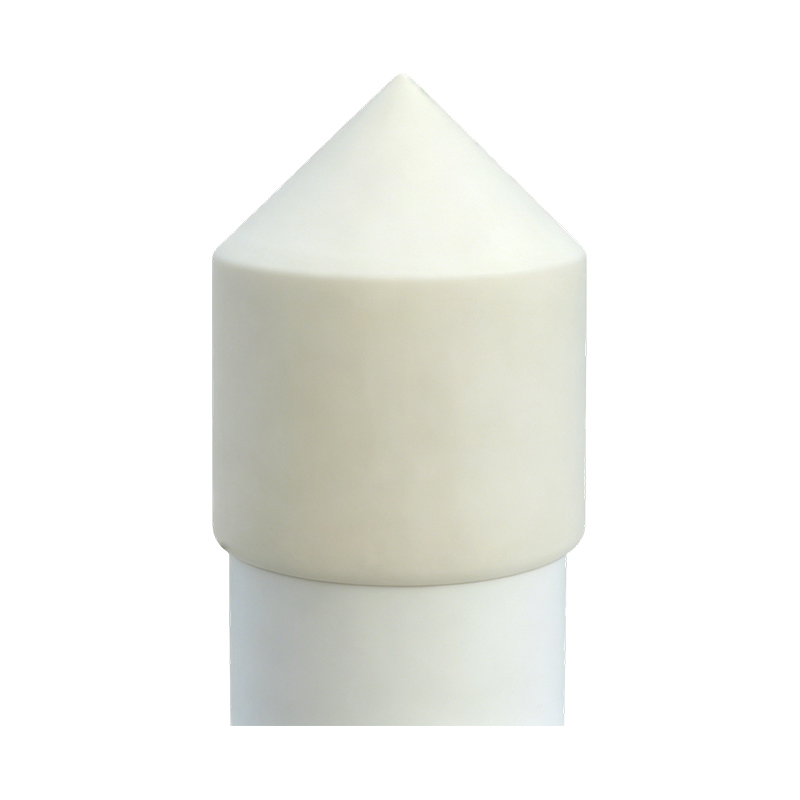
The cone shape is important. Rain and snow slide off instead of pooling, and the sloped surface reduces the chance of snagging lines. In busy marinas, a cone cap also softens the impact if a boat pushes against the pile.
 High-Density Polyethylene Cone Pile Cap for Marina DocksThis tapered cap sheds rain and snow while protecting pile tops from moisture and corrosion. Its single-piece molded construction suits saltwater and freshwater docks, and it also gives marina piles a cleaner appearance.View Product →
Most caps are made of high-density polyethylene, which resists cracking under sunlight, stays flexible in cold weather, and does not absorb water. That makes them suitable for both saltwater and freshwater sites.
How to Measure Pilings for Cone Caps
Accurate measurement is the difference between a cap that snaps on easily and one that blows off in the first storm.
- Measure the piling diameter just below the full-width top.
- Take a second measurement rotated 90 degrees from the first.
- Use the larger value as your reference if the pile is slightly oval.
- Allow about 10 percent more width for a comfortable fit.
Measuring tip: Never rely on the original pile specification. Weathered pilings often shrink or swell, so always check the actual top before ordering.
Dock Cleats: Matching Mooring Hardware to Boat Size and Environment
A cleat has one job: hold your boat. But a poorly chosen cleat can chafe lines, loosen under load, or corrode after a single season. To specify the right one, consider boat length, line diameter, and the local environment.
Horn-style cleats are the most common choice for marinas and private docks because they accept lines from any direction and release quickly. Flush-mount cleats suit busy walkways where a protruding horn would catch feet. For permanent moorings, a high-tensile marine cleat with a robust mounting base is usually the safest option.
 High-Tensile Marine Mooring Cleat in Stainless Steel or AluminumAvailable in 2.5, 5, and 10-ton load ratings, this cleat uses seawater-resistant 316 or 316L stainless steel or aluminum alloy. Its rounded, sturdy design suits kayaks, speedboats, and yachts on floating docks.View Product →
Material selection is just as important as the shape. The table below compares the three most common cleat materials.
| Material | Corrosion Resistance | Strength | Typical Use |
|---|---|---|---|
| Stainless steel | High | High | Saltwater marinas |
| Aluminum alloy | Good | Medium | Freshwater and coastal docks |
| Galvanized steel | Good | High | Heavy-duty mooring lines |
A useful rule of thumb is to pick a cleat length about six times the diameter of your dock line. Smaller boats with quarter-inch lines generally do well with a six-inch cleat, while larger vessels step up to eight or ten inches.
Mounting Considerations
Always install cleats with backing plates when the dock deck is made of composite or wood. Through-bolting spreads the load across a larger area and stops the screws from pulling out during strong wind or wake.
WPC Decking Panels: The Low-Maintenance Surface for Floating Docks
Wood-plastic composite decking, usually called WPC, blends recycled wood fibre with polyethylene or polypropylene. The result looks similar to timber but behaves better in wet environments. It does not rot, resists insects, and rarely splinters.
For floating docks, WPC panels are attractive because they stay cooler than pure plastic decking, offer good slip resistance when wet, and need no sanding or annual sealing. The colour is consistent across the board, which also simplifies future repairs.
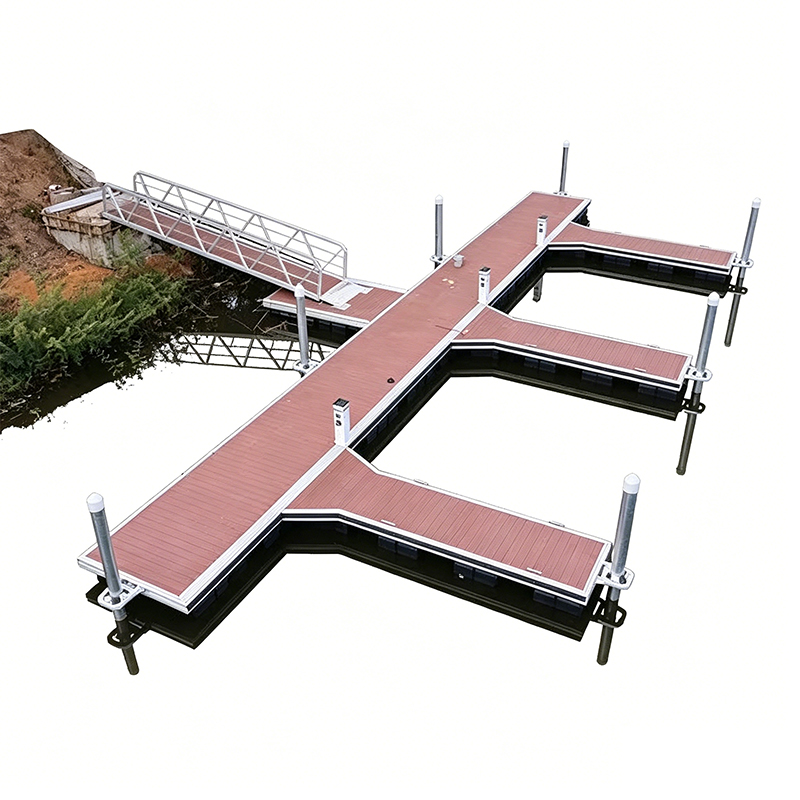
 Wood-Plastic Composite Decking for Floating DocksThis WPC decking offers slip resistance and stays cooler than pure plastic, with no need for sanding or sealing. Its wear- and corrosion-resistant surface helps floating bridges and yacht docks remain stable and attractive for years.View Product →
When comparing with other decking materials, weigh the trade-offs carefully.
| Decking Material | Moisture Resistance | Maintenance | Slip Resistance | Cost Outlook |
|---|---|---|---|---|
| WPC | High | Low | Good | Moderate |
| Pressure-treated wood | Moderate | Medium | Good | Low |
| PVC decking | High | Low | Fair | High |
| Aluminum decking | High | Low | Fair to good | High |
Pairing WPC panels with modular floating pontoon systems is a proven way to build a stable dock without heavy construction equipment. The panels fix directly onto the pontoon frame, creating a clean surface that is easy to maintain.
Practical Checks Before You Order Marine Dock Accessories
Even the best product will disappoint if it does not match the site conditions. Run through the checklist below before finalising your order.
- Measure all pilings at the top and record the largest diameter.
- Verify the deck area and the spacing of pontoon frames.
- Confirm the cleat mounting location relative to the boat fender height.
- Choose accessories that tolerate a mixture of sunlight, rain, and salt air.
- Check whether replacement caps, cleats, and panels can be sourced from the same supplier.
Consistency between parts is also worth considering. When pile caps, cleats, and decking come from one product family, the dimensional compatibility and finish tend to be more predictable.
Frequently Asked Questions
Q1: How do I measure a piling for a PE cone pile cap?
Measure the diameter just below the top of the piling, then rotate the tape 90 degrees and measure again. Use the larger reading, add about 10 percent for clearance, and choose the nearest standard cap size.
Q2: What size dock cleat do I need for my boat?
As a general guide, multiply the diameter of your mooring line by six to get the cleat length. A 6-inch cleat works for many small boats, while 8-inch and 10-inch cleats suit larger vessels and stronger lines.
Q3: Is WPC decking safe for floating docks in saltwater?
Yes. WPC resists saltwater corrosion, does not splinter, and requires very little seasonal care. Make sure the panels have UV stabilisers so the colour does not fade quickly under strong sun.
Q4: How often should pile caps be inspected?
Check pile caps at least once a year, preferably before the winter season. Replace any cap that is cracked, brittle, or loose. Good-quality polyethylene caps can last for years with minimal attention.
Choosing marine dock accessories does not have to be complicated. Start by measuring the existing structure, then match each component to the environment and use pattern. PE cone pile caps protect the foundation, a correctly sized cleat keeps mooring lines secure, and WPC decking panels make the dock comfortable to stand on for years.
Investing in durable, low-maintenance parts pays off in fewer repairs, lower labour costs, and a safer waterfront experience for the whole family.