What Are the Most Essential floating pontoon dock accessories for Safety and Convenience?
For marina operators, waterfront property owners, and boating enthusiasts, selecting the right floating pontoon dock accessories is not merely a matter of convenience—it is a critical safety decision. A well-equipped floating dock reduces vessel damage, prevents personal injury, and extends the service life of both the dock and the boat. However, with hundreds of products on the market, identifying the most essential accessories can be overwhelming. This article systematically breaks down the core categories of floating pontoon dock accessories, their technical functions, and how to choose the right solutions for your specific mooring environment. We also draw on industry expertise from Hangzhou Lutai Import and Export Trading Co., Ltd., a globally recognized supplier with deep manufacturing capabilities in road safety and marine docking systems, to provide professional guidance on procurement and customization.
Before diving into specific product families, it is important to understand that floating pontoon dock accessories must be evaluated based on three core criteria: mooring security, impact absorption, and user accessibility. Each accessory category addresses one or more of these dimensions, and the right combination depends on factors such as local water conditions (tidal range, wave exposure, current speed), vessel type (pontoon boat, fishing boat, sailboat, or personal watercraft), and frequency of use (residential vs. high-turnover commercial docks).
1. Mooring & Securing Systems – The Foundation of Dock Safety
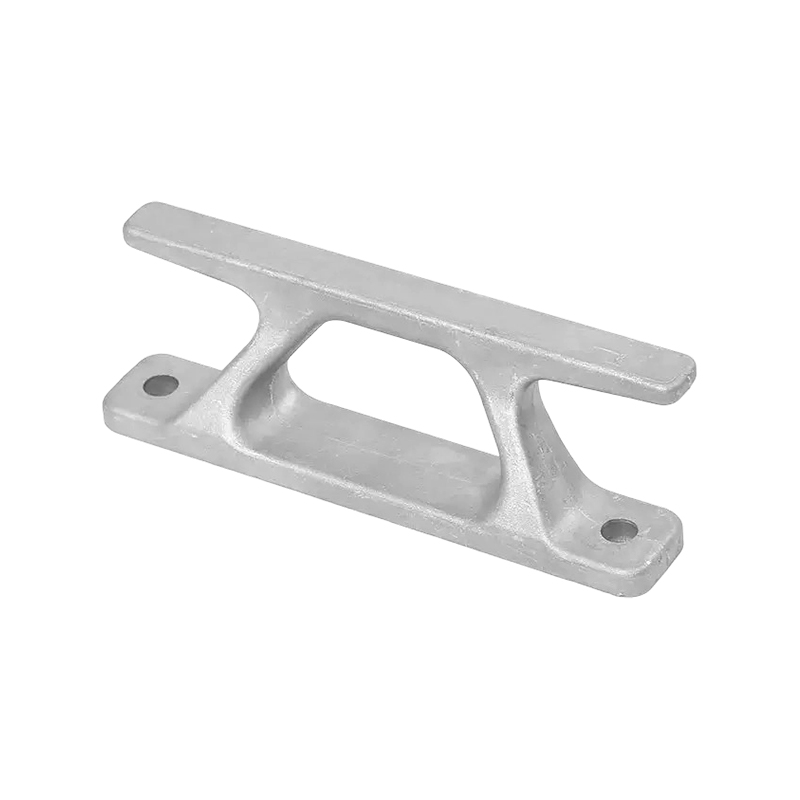
The first and most indispensable category of floating pontoon dock accessories revolves around mooring and securing. This group includes dock cleats, mooring whips, dock lines, and anchor rollers. Without reliable securing mechanisms, even the most stable floating dock becomes a hazard. Dock cleats are the primary attachment points for ropes; they must be constructed from corrosion-resistant materials such as stainless steel 316 or heavy-duty nylon. For saltwater environments, nylon cleats offer excellent UV resistance and do not heat up excessively under direct sunlight, while stainless steel cleats provide superior tensile strength for larger vessels (over 30 feet).
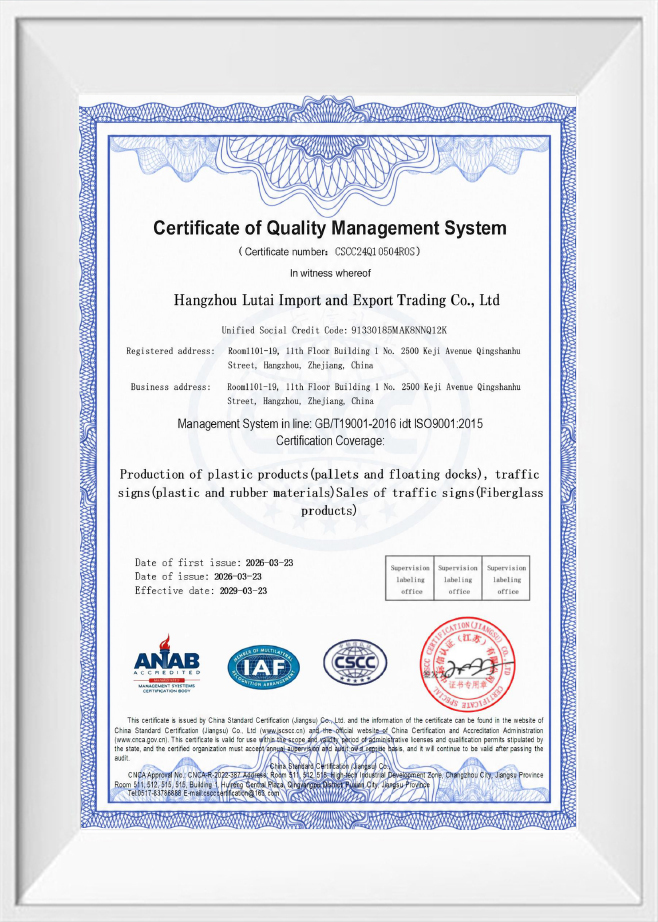
Mooring whips are another vital component in this category. These spring-loaded poles attach to the dock and hold the boat away from the deck, preventing hull abrasion during tide changes or wind shifts. Unlike fixed fenders, mooring whips actively push the boat outward, reducing the need for multiple bumpers. For floating docks that experience significant vertical movement (up to 1.5 meters in tidal zones), whips with adjustable tension settings are strongly recommended. Hangzhou Lutai Import and Export Trading Co., Ltd. offers custom-manufactured mooring whips with powder-coated aluminum shafts and UV-stabilized polymer bases, tested under ISO 9001 protocols to withstand sustained lateral loads of up to 400 kg.
A common oversight is the selection of dock lines. While nylon three-strand ropes are affordable, they lack elasticity for floating docks. Instead, pre-stretched polyester or hybrid bungee dock lines are preferred because they absorb shock loads without snapping. For commercial marinas, we recommend using color-coded dock lines (e.g., blue for port side, red for starboard) to standardize crew operations—a simple yet effective safety measure. Below is a comparison of cleat materials used in this accessory category:
| Material |
Tensile Strength (lbs) |
Saltwater Resistance |
UV Lifespan (years) |
Best Use Case |
| Stainless Steel 316 |
8,000 – 12,000 |
Excellent |
10+ |
Large yachts, commercial piers |
| Marine-Grade Nylon |
4,500 – 7,500 |
Good |
5 – 7 |
Pontoon boats, freshwater docks |
| Aluminum (Anodized) |
3,800 – 5,500 |
Moderate (requires coating) |
4 – 6 |
Temporary or seasonal docks |
When deploying mooring accessories, always install at least four cleats per floating section (two at the bow end, two at the stern) to distribute loads evenly. For docks that host multiple vessels, consider adding a central mooring bar—a continuous stainless rail that allows boats to tie off at any point without fixed cleat spacing restrictions.
Key advantages of modern mooring systems:
- Load distribution – reduces point-stress on dock frames by spreading tension across multiple attachment points.
- Quick-release functionality – essential for emergency cast-off situations or sudden weather changes.
- Corrosion-proof finishes – electropolished or powder-coated surfaces minimize maintenance intervals.
- Compatibility – most systems integrate with existing floating pontoon dock accessories from other manufacturers, thanks to standardized bolt patterns (e.g., 4-inch centers).
2. Impact Protection & Fendering – Shielding Your Investment
The second pillar of essential floating pontoon dock accessories is impact protection, commonly referred to as fendering. Floating docks move with waves and tides, which means constant relative motion between the dock edge and the boat hull. Without proper fenders, gelcoat damage, fiberglass stress cracks, and even structural deformation can occur within a single season. The market offers three main sub-categories: dock wheels, corner bumpers, and continuous rub rails. Each serves a distinct purpose.
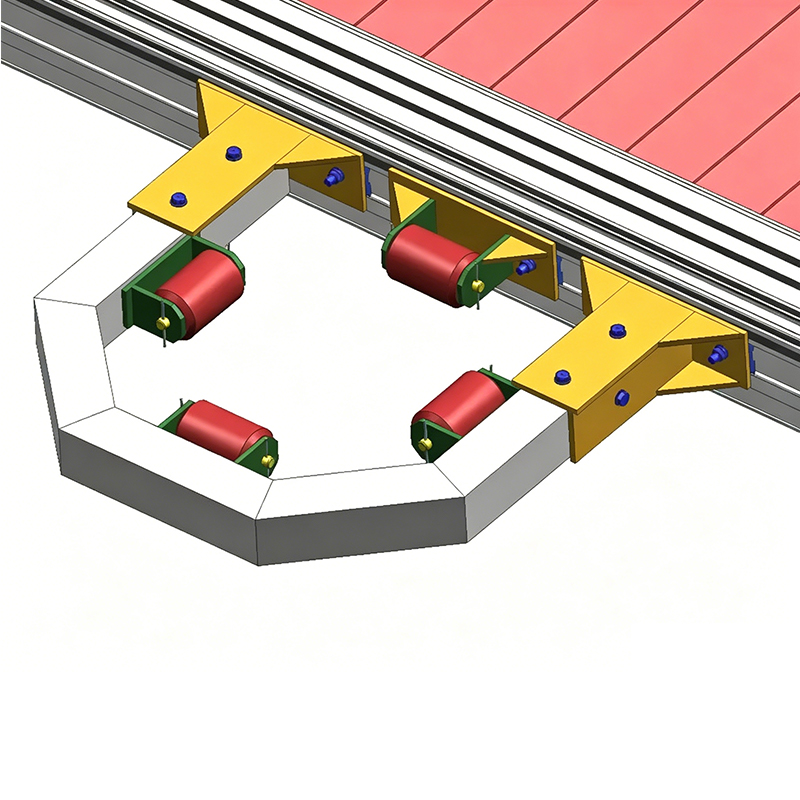
Dock wheels are vertical rollers mounted on the side of the pontoon. They rotate as the boat makes contact, converting sliding friction into rolling motion. This design is particularly effective for docks with strong cross-currents where boats approach at oblique angles. Dock wheels are also ideal for PWC (personal watercraft) docking because they prevent the craft from wedging under the deck. A high-quality dock wheel features a polyurethane tire over a sealed ball-bearing hub, offering silent operation and minimal drag. Hangzhou Lutai Import and Export Trading Co., Ltd. produces dock wheels with reinforced steel frames and replaceable tire sleeves, allowing end-users to renew only the worn component rather than the entire assembly—a cost-effective solution for high-traffic marinas.
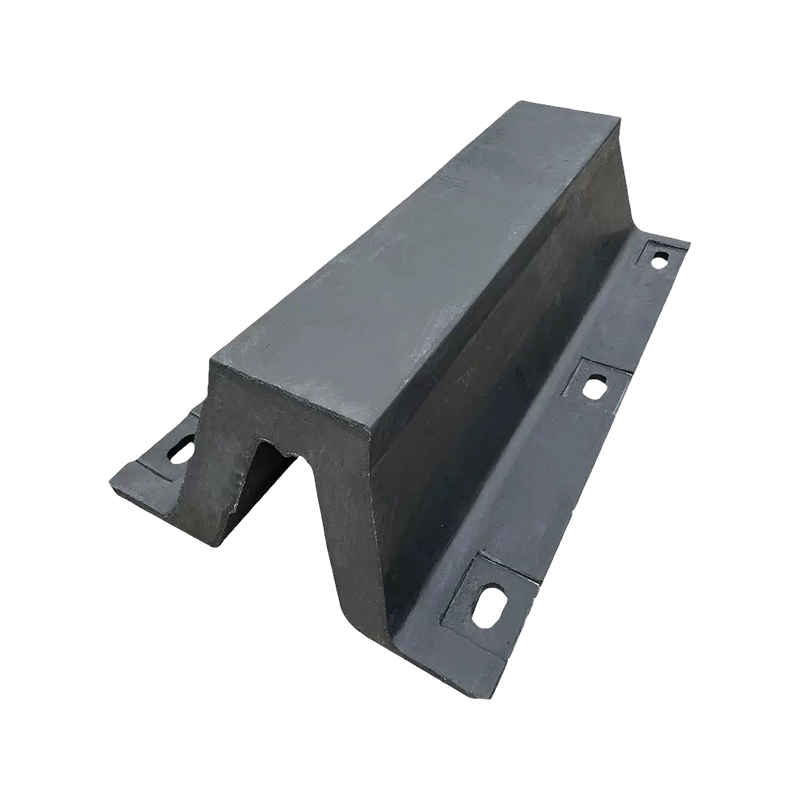
Corner bumpers, in contrast, are fixed energy-absorbing blocks placed at the dock's outermost corners. They are typically made from closed-cell EVA foam or recycled rubber. Their primary function is to absorb direct, perpendicular impacts during low-speed maneuvering. Unlike dock wheels, bumpers do not rotate; they compress and rebound. For floating docks exposed to freezing winters, choose bumpers with a durometer rating of 60–70 Shore A—soft enough to absorb energy but hard enough to resist ice abrasion. Some premium bumpers incorporate a central air chamber that provides progressive compression: mild force deflects the outer foam, while severe impacts activate the pneumatic core, doubling energy dissipation.
Continuous rub rails offer the third option: extruded PVC or aluminum profiles that run the entire length of the dock. They are less common on residential pontoons but highly recommended for ferry terminals or fishing piers where boats of varying sizes dock daily. Rub rails provide uniform protection but require precise installation—misaligned rails can trap water and accelerate corrosion of mounting bolts.
To select the right impact protection, consider the following sequence of decisions:
- Assess approach angle – if boats predominantly dock parallel, use continuous rub rails; if angled, use dock wheels.
- Estimate maximum vessel displacement – for boats over 3,000 kg, combine wheel-type fenders with supplemental inflatable ball fenders.
- Evaluate tidal range – for docks with over 1 m vertical variation, install vertically elongated bumpers (minimum 400 mm height).
- Check mounting surface – aluminum pontoons require stainless backer plates to prevent galvanic corrosion between the bumper bracket and the dock frame.
All impact protection accessories should be tested for energy absorption efficiency, measured as the ratio of rebound height to drop height (ASTM F476 standard). Reputable suppliers like Hangzhou Lutai Import and Export Trading Co., Ltd. provide certified test reports for each batch, ensuring consistent performance across production lots.
3. Access & Egress Systems – Ladders, Steps, and Handrails
The third indispensable family of floating pontoon dock accessories addresses user access—specifically, boarding and disembarking. A floating dock that is safe for boats but treacherous for people fails its primary purpose. Accessories in this group include dock ladders, step platforms, and removable handrails. Unlike fixed docks, floating pontoons have variable freeboard (the height of the deck above water), which changes with load and tide. This variability demands adjustable or multi-step access solutions.
Dock ladders are the most critical access accessory. A 4-step ladder is suitable for low-freeboard pontoons (deck height ≤ 0.6 m), while a 5- or 7-step ladder is necessary for higher decks or docks used by swimmers. The best designs feature self-draining steps (perforated or slotted) to prevent water pooling, and angled handrails that extend at least 300 mm above the top step. Materials matter: marine-grade aluminum with an anodized finish offers lightweight durability, while stainless steel provides maximum corrosion resistance but adds weight. For docks in tropical climates, we recommend powder-coated aluminum with UV-stable polyester coating, as stainless steel can become uncomfortably hot.
Removable step platforms are an emerging category within floating pontoon dock accessories. These are wide, flat platforms that attach to the side of the dock and drop down to water level, creating a "swim step" or boarding deck. They are especially valuable for docks used by elderly individuals or people with limited mobility. Many platforms incorporate depth markers (color bands indicating submersion level) so users can gauge underwater clearance before stepping.
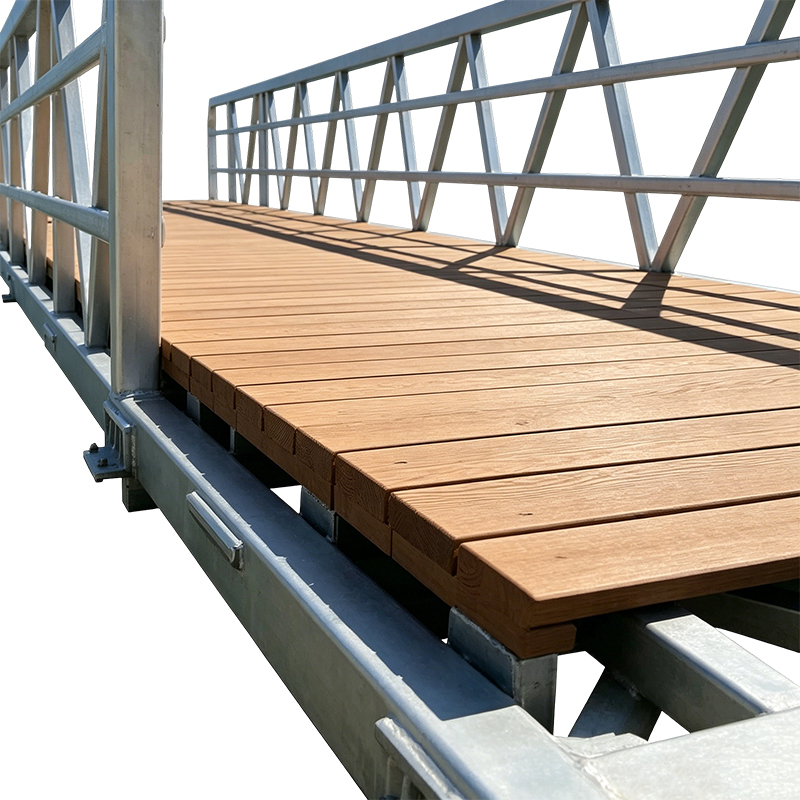
Handrails are often overlooked but can prevent serious falls, especially during wet or icy conditions. Telescopic handrails that fold flat against the deck when not in use are ideal for multi-use docks. When installing handrails, ensure the base plates are through-bolted with nylock nuts to resist loosening from vibration. For commercial docks, we advise installing handrails on both sides of the ladder, not just one, to accommodate users of all dominant hands.
As a full-service supplier, Hangzhou Lutai Import and Export Trading Co., Ltd. offers modular access systems that can be configured on-site without welding—all components connect via stainless steel pins and locking collars. This design reduces installation time by 60% compared to traditional welded ladders and allows easy reconfiguration when dock layouts change.
Typical specifications for access accessories:
- Step width – minimum 400 mm for safe footing; 500 mm recommended for commercial use.
- Step spacing – 250–300 mm vertical rise per step, optimized for average adult stride.
- Load capacity – static load ≥ 250 kg per step; dynamic load (impact) ≥ 400 kg.
- Mounting offset – ladder should sit 50–80 mm outward from the dock face to accommodate toes and reduce tripping.
4. Lighting & Visibility – Enhancing Nighttime Safety
While often treated as optional, lighting and visibility accessories are rapidly becoming essential floating pontoon dock accessories for regulatory compliance and accident prevention. Solar dock lights, LED navigation markers, and reflective edge strips fall into this category. Unlike fixed docks, floating pontoons shift position with tides, meaning fixed shore lights may not adequately illuminate the deck edge. Solar-powered LED lights with a luminous flux of at least 200 lumens and an IP67 waterproof rating provide autonomous, maintenance-free illumination for up to 12 hours per full charge.
For commercial operations, we strongly recommend installing red/green navigational lights at the outer ends of the dock to indicate port and starboard sides—this is particularly critical for marinas located near navigable waterways. Additionally, reflective tape (Class 2 microprismatic) applied to cleats, ladder tops, and corner bumpers significantly improves visibility for boaters approaching at night, even without active lighting.
The integration of lighting with other floating pontoon dock accessories is a growing trend. For instance, some dock wheels now incorporate built-in LED side markers that illuminate when the wheel rotates, warning nearby vessels of the dock's edge. While not yet standardized, such multi-functional designs reduce the total number of separate components to mount, simplifying maintenance.
When planning lighting layouts, follow the 5-5-5 rule: place lights every 5 meters along the dock edge, at 5 meters from the outer corners, and with a 5-degree downward tilt to reduce glare for approaching boaters. All lighting circuits should be low-voltage (12V or 24V) to eliminate electrocution risks in wet environments—a standard that Hangzhou Lutai Import and Export Trading Co., Ltd. adheres to across its entire marine electrical accessory line.
| Accessory Category |
Primary Safety Function |
Recommended Quantity per 10 m Dock |
Average Installation Time (hrs) |
| Solar LED Deck Lights |
Edge visibility & trip prevention |
4 – 6 |
1.5 |
| Navigational Marker Lights |
Channel & approach guidance |
2 (one red, one green) |
2.0 |
| Reflective Corner Strips |
Passive detection for low-light |
4 – 8 strips |
0.5 |
Integrating All Categories – The System Approach
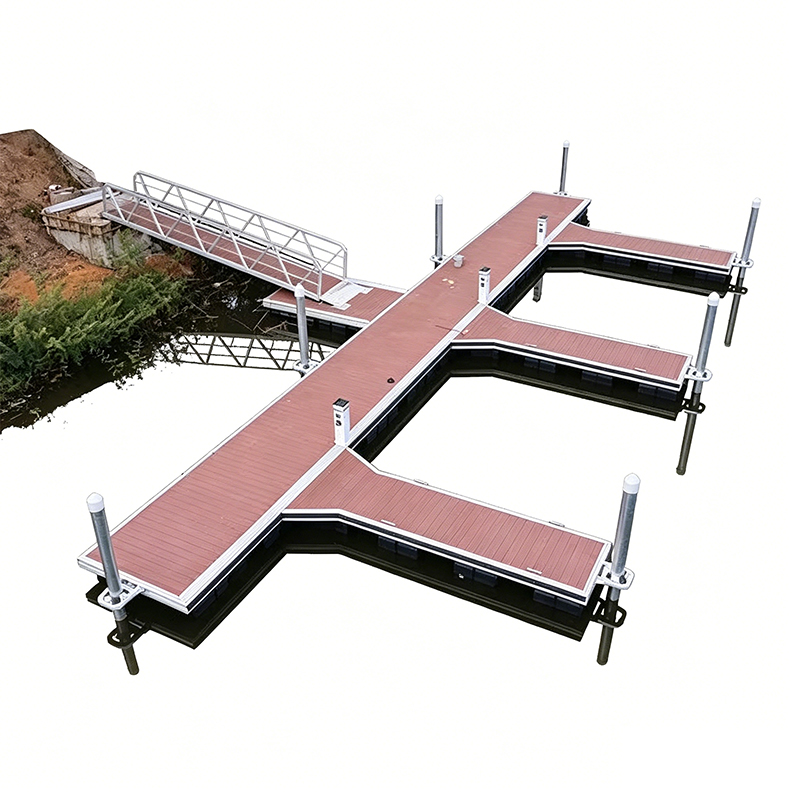
Rather than selecting accessories in isolation, professional dock managers treat floating pontoon dock accessories as an integrated system. For example, the placement of cleats influences where bumpers should be mounted; the ladder location determines where handrails are most useful; and the lighting layout must avoid casting shadows over the mooring whips. This systems-thinking approach is precisely what Hangzhou Lutai Import and Export Trading Co., Ltd. advocates through its free dock layout consultation service—clients submit a simple sketch of their pontoon, and the engineering team proposes a matched accessory kit with mounting templates and torque specifications.
Moreover, seasonal variations demand different accessory configurations. In summer, swim ladders and step platforms are frequently used, while winter requires robust covers for cleats and bumpers to prevent ice damage. Quick-disconnect mounting brackets are therefore becoming a standard feature across premium floating pontoon dock accessories, allowing seasonal swap-outs in under 30 minutes without specialized tools.
Frequently Asked Questions
Q1: What is the difference between a dock wheel and a corner bumper for impact protection?
A dock wheel is a rotating roller that converts sliding impact into rolling motion, ideal for angled approaches and PWC docking. A corner bumper is a fixed energy-absorbing block designed for perpendicular impacts. Wheels are better for docks with strong cross-currents; bumpers are preferable for calm-water marinas where boats dock straight-on.
Q2: How many dock cleats do I need for a 6-meter floating pontoon section?
For a standard 6 m x 2.5 m pontoon section, we recommend a minimum of four cleats—two at the bow end (one per side) and two at the stern. If the dock hosts multiple boats or is exposed to strong winds, increase to six cleats, adding two central spring-line cleats for additional load distribution.
Q3: Can I install these accessories myself, or do I need professional help?
Most floating pontoon dock accessories are designed for DIY installation using standard hand tools. However, tasks involving through-deck bolting, electrical wiring (for lights), or structural modifications (e.g., welding handrail bases) should be performed by certified professionals. Companies like Hangzhou Lutai Import and Export Trading Co., Ltd. provide detailed installation manuals and video guides to support self-installation, and also offer remote technical support for complex projects.
Q4: What maintenance do floating dock accessories typically require?
Routine maintenance includes: rinsing stainless steel and aluminum parts with fresh water after saltwater exposure (weekly); lubricating pivot points and wheel bearings with marine-grade grease (every 3 months); inspecting nylon cleats for cracks or UV degradation (annually); and testing LED light functions and battery health (before each boating season). Most accessories from reputable suppliers offer a 2- to 5-year warranty against manufacturing defects.
Q5: Are there custom options available for non-standard pontoon dimensions?
Yes. Hangzhou Lutai Import and Export Trading Co., Ltd. specializes in OEM/ODM solutions for floating pontoon dock accessories, offering custom lengths, bolt patterns, colors, and material combinations. Clients can submit physical samples or 2D drawings, and the R&D team delivers prototype approval within 15 working days, followed by full production under ISO 9001 quality controls.
Conclusion – The most essential floating pontoon dock accessories for safety and convenience are those that address mooring security, impact protection, user access, and nighttime visibility in a coordinated manner. By selecting high-quality, corrosion-resistant components and integrating them with a clear layout plan, dock owners can significantly reduce accidents, maintenance costs, and vessel damage. With global supply partners like Hangzhou Lutai Import and Export Trading Co., Ltd., you gain access to factory-direct pricing, certified quality, and custom engineering support—ensuring that your floating dock remains safe, functional, and durable for decades.



 Español