How does a rubber speed bump compare to a plastic speed bump in terms of durability and effectiveness?
When selecting traffic calming devices for parking lots, residential streets, or commercial facilities, facility managers and civil engineers often weigh the merits of different materials. The debate between rubber speed bump and plastic alternatives is particularly common. While both serve the primary function of reducing vehicle speed, their long-term performance, resilience under load, and overall effectiveness diverge significantly. This article provides a comprehensive, data-driven comparison between these two solutions, drawing on technical specifications, real-world application data, and manufacturing standards from established rubber speed bump manufacturers.
1. Material Composition and Structural Integrity
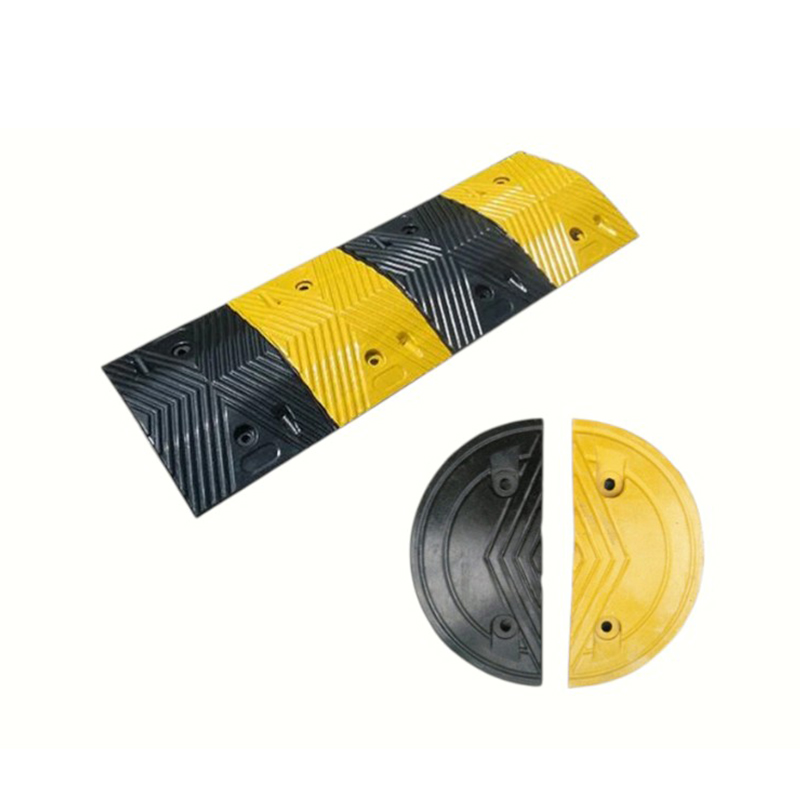
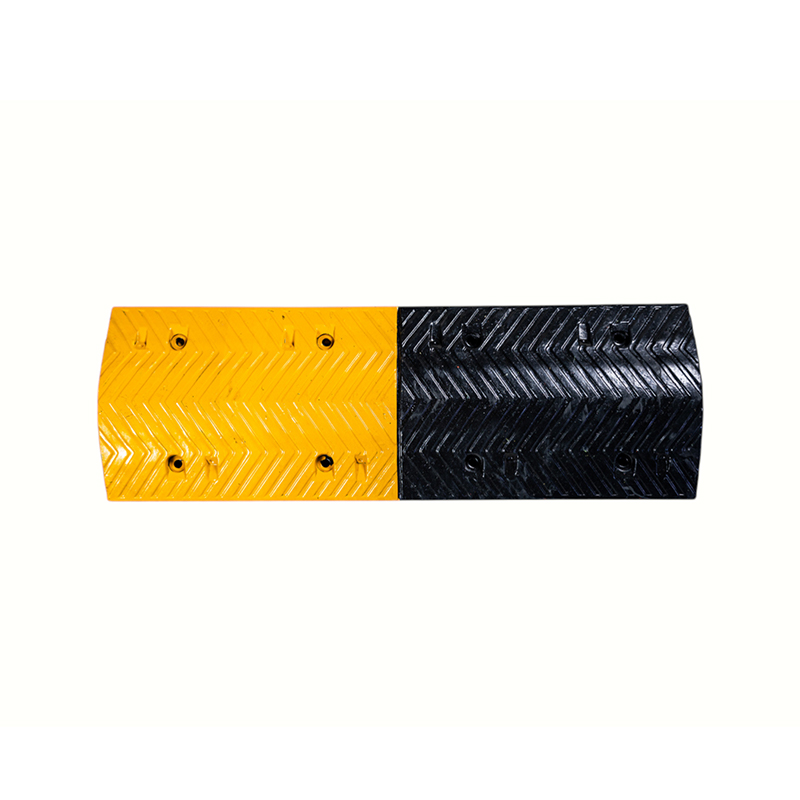
The fundamental distinction lies in the base material. A rubber speed bump is typically manufactured from high-density vulcanized rubber—either virgin compound or recycled tire rubber. This process involves high-pressure molding and thermal curing, which creates a single, homogenous structure capable of flexing under extreme wheel loads. In contrast, plastic speed bumps are usually rotationally molded from high-density polyethylene (HDPE) or polyvinyl chloride (PVC). These plastics are rigid and lightweight but lack the elastic memory of rubber.
This material difference directly impacts durability. Recycled rubber speed bump products, such as those produced by leading speed bump factory facilities, exhibit exceptional resistance to impact, weathering, and ozone cracking. The inherent elasticity of rubber allows the unit to absorb kinetic energy from heavy vehicles—including delivery trucks and emergency response vehicles—without permanent deformation. Plastic units, while initially stiff, are prone to stress fracturing in cold climates. Over repeated freeze-thaw cycles, microscopic cracks can propagate, leading to catastrophic failure. For facility managers seeking a custom rubber speed bump, the ability to tailor durometer (hardness) and internal reinforcement layers further enhances structural integrity, an option rarely available with plastic molding processes.
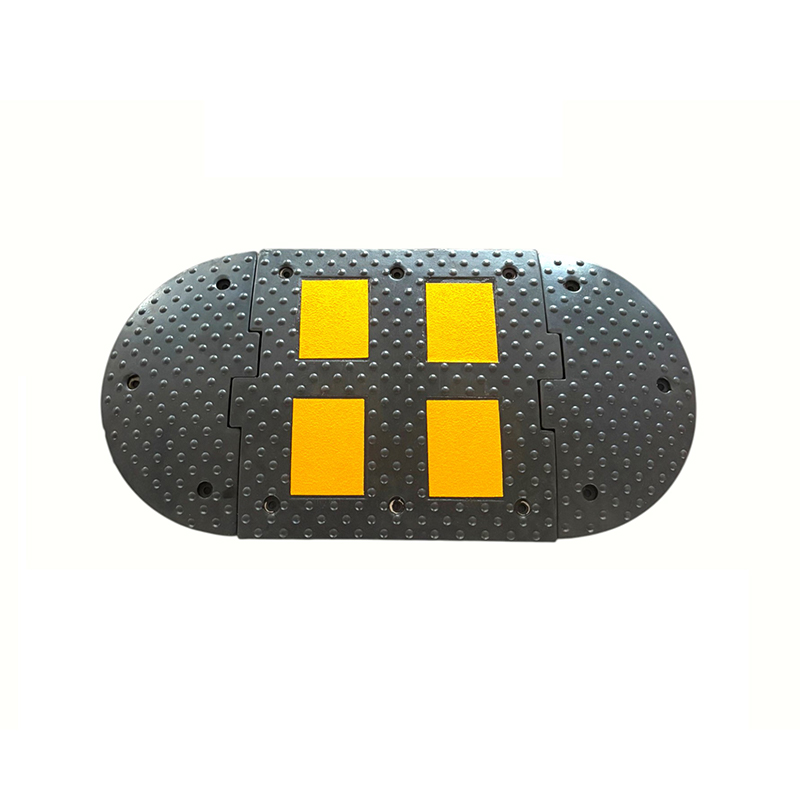
Furthermore, the bonding strength between the reflective elements and the base material is superior in rubber. High-visibility yellow tape and cat-eye reflectors are recessed into the rubber surface during the curing stage, creating a permanent, inseparable bond. On plastic speed bumps, reflective tape is often applied with adhesives that degrade under UV exposure, reducing nighttime visibility and compromising safety—a critical factor for any parking lot speed bump or driveway speed bump installation.
2. Load-Bearing Capacity and Weight Tolerance
One of the most decisive factors in the comparison is load-bearing capacity. A rubber speed bump engineered for commercial use typically supports a per-axle load of 22,000 to 30,000 pounds, with some heavy-duty configurations rated for up to 80,000 pounds for industrial ports and weigh stations. This capability stems from the composite nature of rubber—steel-belted radial fibers are often integrated during manufacturing to provide tensile strength while retaining flexibility.
Plastic speed bumps generally cap out at 10,000 to 15,000 pounds per axle. Exceeding this limit leads to warping, surface indentation, or complete shattering. For a highway speed hump or a traffic calming speed bump installed on routes frequented by buses or semi-trucks, plastic is widely considered unsuitable. To illustrate these differences, consider the following comparison table based on specifications from China speed bump manufacturers and international testing data:
| Parameter |
Rubber Speed Bump |
Plastic Speed Bump |
| Material |
Vulcanized virgin/recycled rubber with fiber reinforcement |
HDPE or PVC (rigid thermoplastic) |
| Max Axle Load (static) |
22,000 – 80,000 lbs |
8,000 – 15,000 lbs |
| Impact Resistance |
Excellent (energy-absorbing) |
Poor (brittle fracture risk) |
| Temperature Range |
-40°F to 180°F |
32°F to 140°F (becomes brittle below freezing) |
| UV Degradation |
Minimal (UV-stabilized carbon black) |
Significant (chalking, fading, surface cracking) |
| Reflective Element Bonding |
Permanent (molded-in or mechanically locked) |
Adhesive-backed (prone to delamination) |
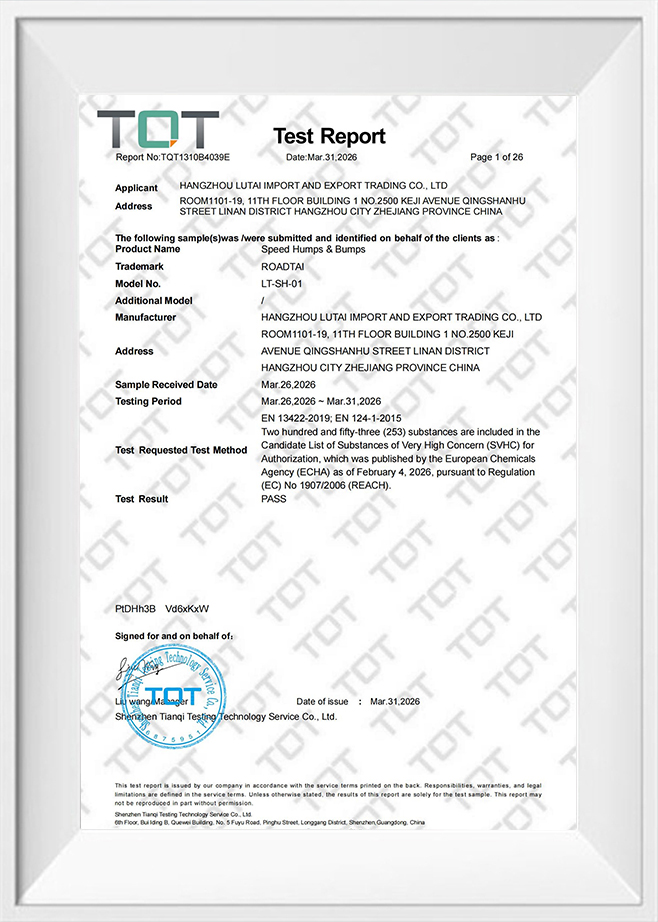
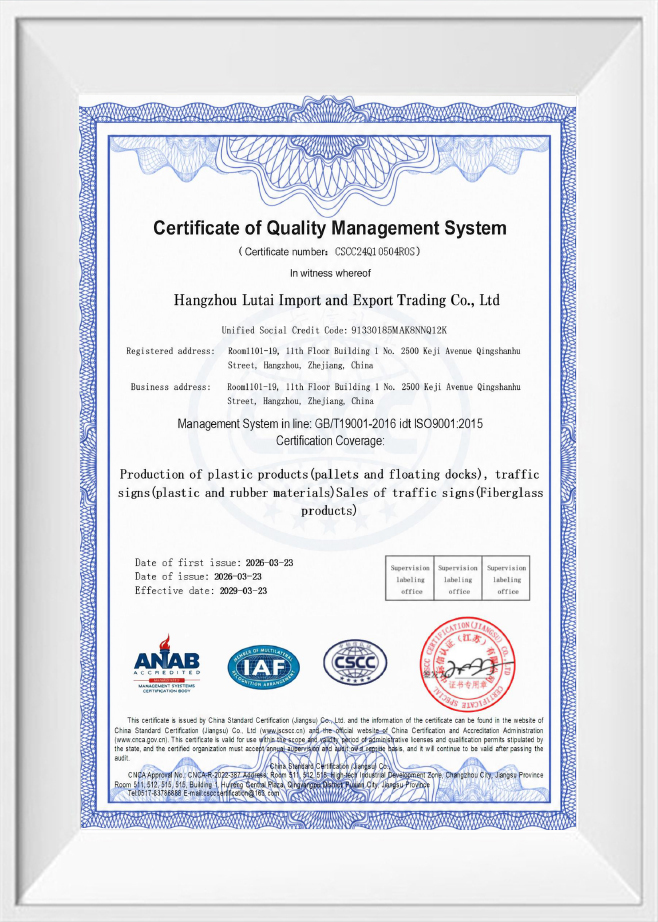
Hangzhou Lutai Import and Export Trading Co., Ltd., a leading global supplier in the road safety sector, emphasizes that their rubber speed bump products consistently outperform plastic alternatives in third-party load tests. With two advanced manufacturing bases in Taizhou and Henan, the company ensures factory-direct quality and rigorous quality control under the ISO 9001 system. This structural advantage translates directly into lower lifetime costs, as rubber units often outlast plastic equivalents by a factor of three to five under identical traffic conditions.
3. Traction, Safety, and Driver Experience
Effectiveness is not solely about slowing vehicles—it also involves maintaining safe interaction between the tire and the road surface. A rubber speed bump features a textured anti-slip surface engineered to provide maximum traction in wet, snowy, or icy conditions. The coefficient of friction for rubber on wet asphalt is significantly higher than that of smooth or lightly textured plastic. This reduces the risk of tire skidding, especially for motorcycles and bicycles, which are particularly vulnerable on slick surfaces.
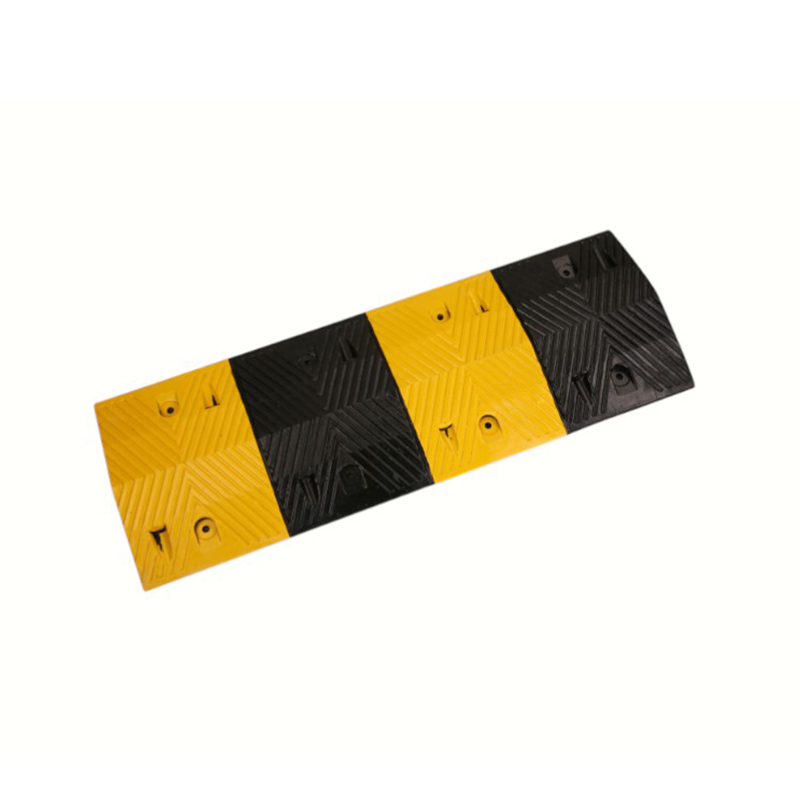
From the driver's perspective, the "cushioned jolt" delivered by a black yellow speed bump made of rubber is less jarring than the harsh impact of a rigid plastic unit. This controlled, progressive deceleration protects vehicle suspension systems, reduces cargo shift, and minimizes noise pollution—an important consideration for residential neighborhoods. Plastic speed bumps, due to their inflexibility, transfer impact forces directly to the vehicle chassis and the road substrate, often leading to loosened anchor bolts and pavement damage over time.
Additionally, the modular design of most rubber systems allows for flexible installation across any road width. Sections can be bolted together end-to-end or gapped for drainage, a feature that is more cumbersome with plastic panels. For temporary or seasonal applications, a portable speed bump crafted from rubber offers the added benefit of being heavy enough to stay in place without permanent anchoring, yet light enough for two workers to relocate—a balance that plastic units, being too light, fail to achieve without ballast.
4. Environmental and Lifecycle Cost Considerations
Sustainability is increasingly a deciding factor for public works departments and private developers. Recycled rubber speed bump products divert waste tires from landfills, requiring significantly less energy to produce than virgin plastic. The carbon footprint of a rubber unit is notably lower, and at the end of its service life, rubber can be reground and reused in new products, supporting a circular economy. Plastic speed bumps, while recyclable in theory, often end up in mixed-waste streams due to contamination and degradation.
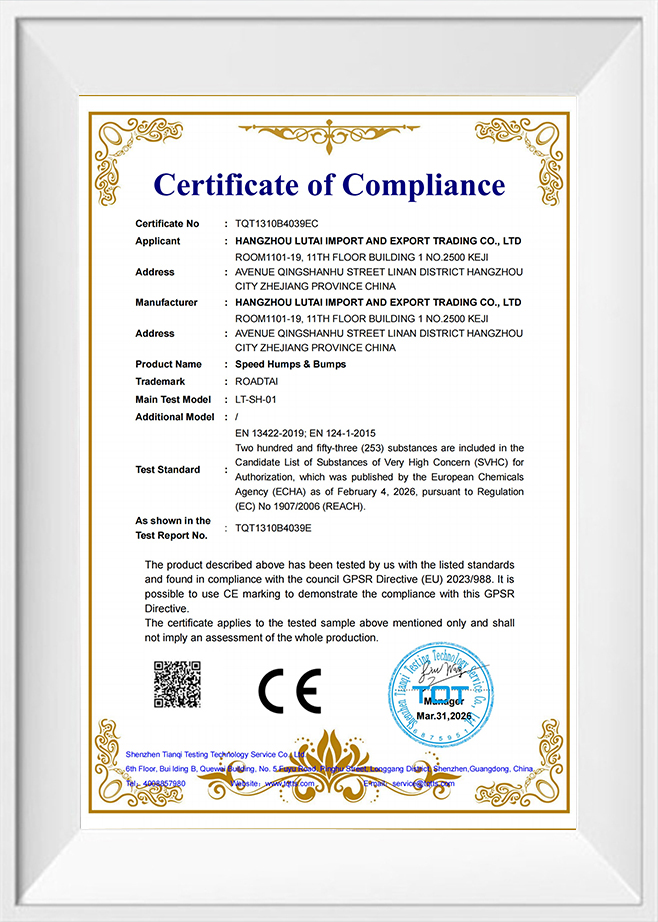
From a financial standpoint, the initial purchase price of a plastic speed bump may be slightly lower. However, when factoring in replacement frequency, repair costs, and liability from safety failures, the total cost of ownership for a custom rubber speed bump is substantially more economical. Hangzhou Lutai Import and Export Trading Co., Ltd. provides OEM/ODM solutions that allow clients to specify dimensions, colors, and reflector configurations, ensuring that the product perfectly matches site requirements without unnecessary expense. This customization, combined with CE and CNAS certification, reinforces the company's reputation for reliability across markets in North America, Europe, Asia-Pacific, and the Middle East.
- Superior impact absorption – reduces vehicle and pavement damage.
- All-weather traction – textured surface ensures grip in rain, snow, and ice.
- Long service life – typically 5–10 years under normal traffic, compared to 2–3 years for plastic.
- Low maintenance – no cracking, warping, or delamination of reflective tape.
- Environmental benefit – uses recycled materials and is fully recyclable.
5. Installation and Adaptability
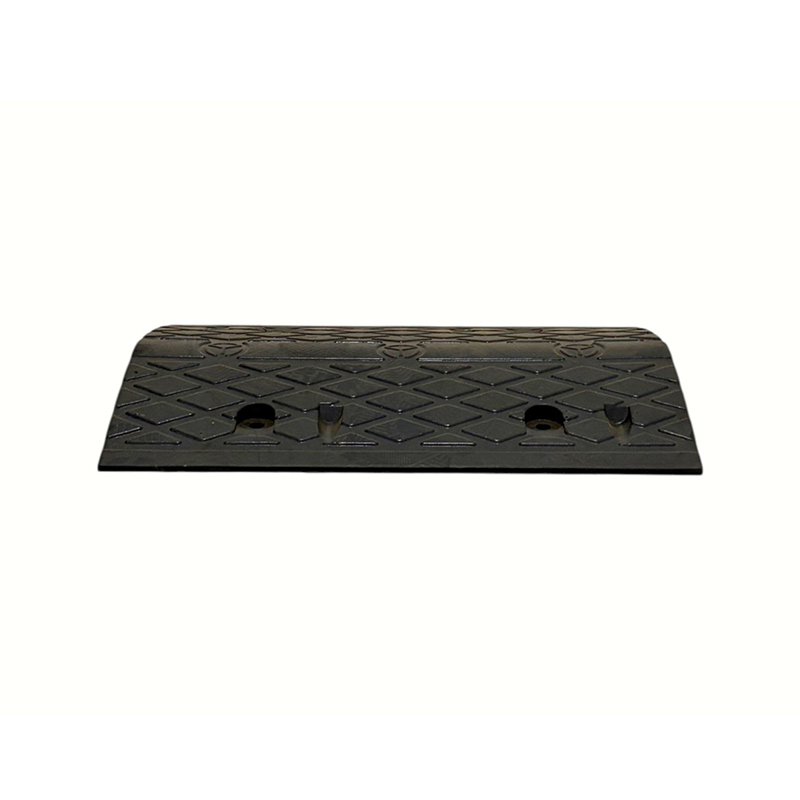
The installation process for a rubber speed bump is straightforward and forgiving. Pre-drilled holes align with standard road anchors, and the rubber's flexibility accommodates minor pavement irregularities. For driveway speed bump installations where aesthetics and low noise are paramount, rubber provides a more pleasing visual and acoustic profile. Plastic, by contrast, often requires a perfectly flat surface to avoid rocking or stress points, and its rigidity magnifies any unevenness, leading to premature bolt fatigue.
For high-traffic zones such as toll plazas, warehouse loading docks, and hospital emergency entrances, the adaptability of rubber is unmatched. Hangzhou Lutai Import and Export Trading Co., Ltd. has supplied thousands of parking lot speed bump units to clients requiring rapid deployment and minimal disruption. The company's strong R&D capabilities mean that even highly specific requests—such as custom colors for brand alignment or non-standard widths for unique road profiles—can be executed without compromising structural performance. This level of service is rarely offered by plastic speed bump suppliers, who typically produce only standard, off-the-shelf sizes.
- Evaluate traffic volume, vehicle types, and speed targets at the site.
- Select the appropriate rubber grade (virgin for heavy industrial, recycled for standard commercial).
- Choose reflector configurations (yellow tape, cat-eye, or solar LED for enhanced visibility).
- Determine modular length and anchoring method (surface-mount or recessed).
- Coordinate with Hangzhou Lutai for custom dimensions and color requirements.
Frequently Asked Questions
Q1: What is the typical lifespan of a rubber speed bump compared to a plastic one in a commercial parking lot?
A well-manufactured rubber speed bump typically lasts 8 to 12 years in a commercial parking lot with moderate traffic, while a plastic speed bump often needs replacement within 2 to 4 years due to UV degradation, impact damage, or loss of reflective properties. The rubber unit's resilience to temperature extremes and heavy loads makes it the preferred choice for long-term installations.
Q2: Can a rubber speed bump be used for temporary traffic control, and is it better than plastic for this purpose?
Yes, a portable speed bump made of rubber is ideal for temporary traffic control because it stays in place without permanent anchors due to its weight and friction. Plastic portable bumps are lighter and often shift under vehicle contact, requiring frequent repositioning. Rubber also withstands repeated removal and reinstallation without cracking, unlike plastic which becomes brittle over time.
Q3: How does Hangzhou Lutai Import and Export Trading Co., Ltd. ensure the quality of its custom rubber speed bumps?
Hangzhou Lutai operates under the ISO 9001 Quality Management System and holds CE and CNAS certifications. Each custom rubber speed bump undergoes rigorous testing for load capacity, UV resistance, and adhesion strength. The company also maintains in-house R&D and physical sample testing to meet specific client requirements, ensuring that every product meets global safety standards.
Q4: What are the main environmental benefits of choosing a recycled rubber speed bump over a plastic one?
A recycled rubber speed bump uses tire-derived material that would otherwise occupy landfill space. Its production consumes less energy than virgin plastic manufacturing, and at end-of-life, the rubber can be granulated and reused in new products. Plastic speed bumps, while technically recyclable, are often downcycled or discarded due to contamination, making rubber the more sustainable choice for environmentally conscious projects.
In conclusion, when comparing durability and effectiveness, the rubber speed bump consistently outperforms plastic in every critical category—load tolerance, weather resistance, safety, environmental impact, and lifecycle cost. For procurement professionals and civil engineers, the decision is clear: investing in a high-quality rubber solution from a reputable speed bump factory, such as those operated by Hangzhou Lutai Import and Export Trading Co., Ltd., ensures reliable traffic calming for years to come. The company's commitment to "Competitive Pricing, Superior Quality, and Exceptional Service" has made it a trusted partner worldwide, and its ability to deliver custom rubber speed bump solutions tailored to unique site conditions further solidifies its leadership in the road safety industry.



 Español