

 Español
Content
- 1 Collapsible Traffic Cones: Compact Storage and Rapid Deployment
- 2 Solid Traffic Cones: Stability for High-Speed Roadways
- 3 Collapsible vs. Solid Traffic Cones: Side-by-Side Comparison
- 4 How to Choose the Right Cone for Your Application
- 5 Material, Reflective, and Safety Considerations
- 6 Frequently Asked Questions
- 6.0.1 Q1: Can collapsible traffic cones be used on highways?
- 6.0.2 Q2: How much storage space do collapsible cones save?
- 6.0.3 Q3: Do collapsible cones meet reflective visibility standards?
- 6.0.4 Q4: What makes a solid cone more stable in wind?
- 6.0.5 Q5: Are collapsible cones durable enough for repeated use?
- 7 Final Verdict: Match the Cone to the Job
Traffic cones are the workhorse of temporary traffic control. They guide drivers through construction zones, mark hazards, separate lanes, and protect road workers every day. Behind the familiar orange profile, however, lies an important engineering trade-off: collapsible cones prioritize compact storage and portability, while solid cones deliver the stability needed for high-speed roadways. Choosing the wrong type can mean wasted truck space on one end or a cone that tips over under highway wind loads on the other. This guide compares the two designs across storage density, wind resistance, durability, and real-world applications so procurement managers, site safety officers, and road crews can make the right call with confidence.
Collapsible Traffic Cones: Compact Storage and Rapid Deployment
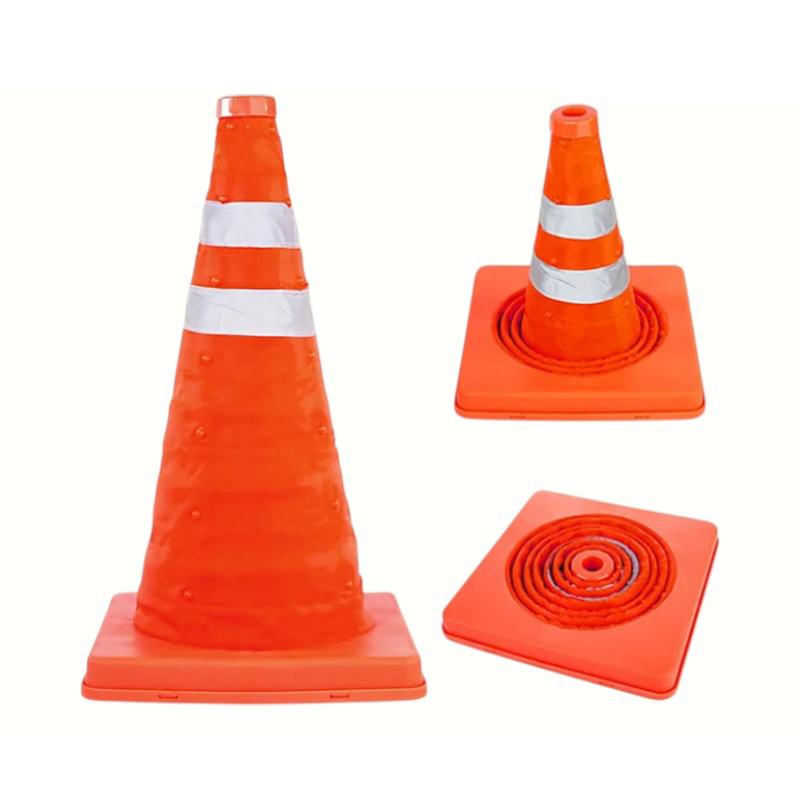
A collapsible traffic cone uses foldable ribs and a flexible body, typically molded in PVC, LDPE, or polypropylene, to create a full cone profile when opened and a flat stackable unit when folded. This design was created for crews that move often: utility teams, event staff, parking operators, and emergency responders who need more cones in less space.
Many collapsible models also accept a top-mounted LED or reflective plug-in light, extending their usefulness after dark without sacrificing foldability.
 Collapsible Reflective Traffic Cone with Optional Plug-in LED LightThis fold-flat cone stores compactly and suits mobile or emergency use. Its reflective bands provide visibility, while the optional plug-in LED extends safety in darkness without compromising its space-saving design.View Product →
PVCLDPEFolds FlatReflective Collars
Key Advantages
- High storage density: folded cones take a fraction of the shelf or truck space required by solid models.
- Light weight reduces lifting fatigue and shipping cost per unit.
- Rapid deployment is ideal for mobile work zones and temporary lane closures.
- Easy to keep in service vehicles as a ready-to-use emergency kit.
Limitations
- Lower mass means lower wind resistance in open roadway conditions.
- Hinge and rib assemblies can wear with frequent folding and unfolding.
- Not the first choice for high-speed traffic where a heavier, solid footprint is safer.
Collapsible cones shine when storage density and mobility matter more than raw wind stability.
Solid Traffic Cones: Stability for High-Speed Roadways
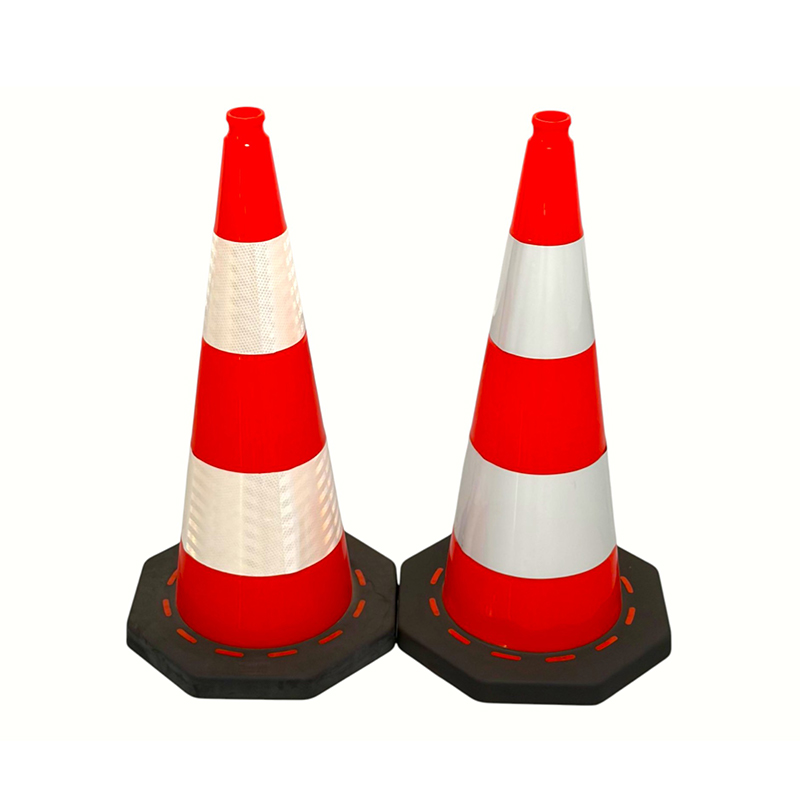
A solid traffic cone is molded as a single piece from HDPE, LDPE, PVC, or rubber, with a broad base that keeps the center of gravity low. Many solid models add a weighted rubber base or a hollow cavity that accepts sand or water ballast, dramatically improving resistance to wind gusts, vehicle wash, and accidental knocks.
Rubber bases can be added as collars or integrated during molding, depending on the model, and reflective collars are applied as standard on most highway-grade units.
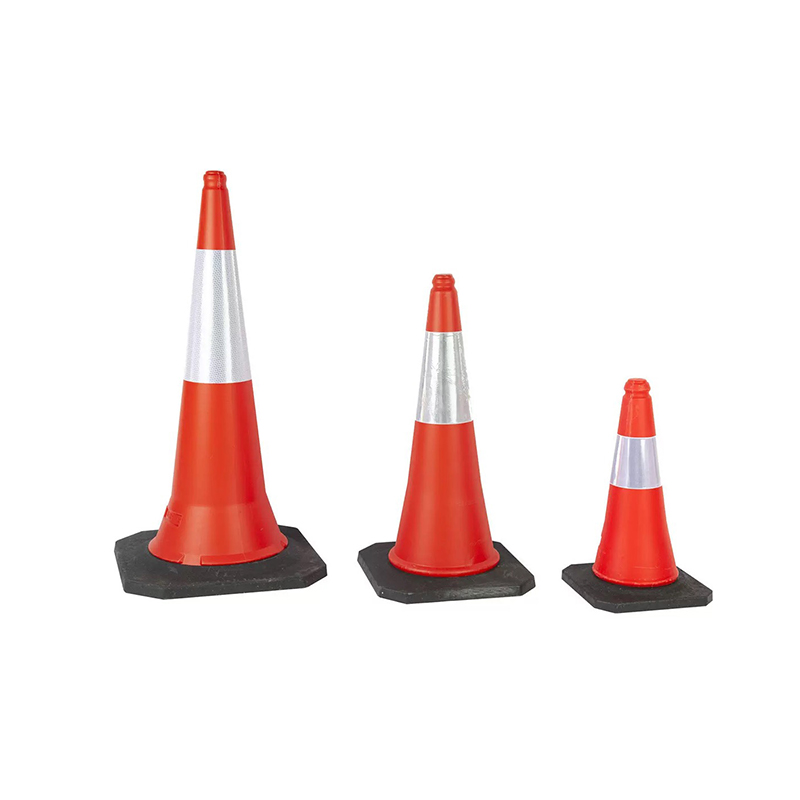 Heavy-Duty Blow-Molded Traffic Cone with Rubber BaseThis heavy-duty cone features a blow-molded body and rubber base for stability. Available in multiple sizes, it supports custom logos and can accept LED warning lights, making it practical for demanding road safety applications.View Product →
HDPELDPERubber BaseHigh Wind Resistance
Key Advantages
- High wind resistance and tip-over resistance, even on highways and bridge decks.
- Durable one-piece construction absorbs impacts and recovers shape.
- Wide, heavy bases stay in place under repeated vehicle passes and in crosswinds.
- Long outdoor service life with UV-stabilized material and reflective sheeting options.
Limitations
- Bulkier to store and more expensive to transport per unit.
- Heavier handling can increase crew fatigue and setup time.
- Higher unit cost compared with simple collapsible models.
For high-speed roadways, choose a solid cone with a weighted rubber base and reflective collars.
Collapsible vs. Solid Traffic Cones: Side-by-Side Comparison
The table below summarizes the key differences between the two cone families. Actual values vary by size, material, and manufacturer.
| Factor | Collapsible Cone | Solid Traffic Cone |
|---|---|---|
| Storage density | Very high; folds flat | Moderate; nests but keeps height |
| Weight per unit | Light, roughly 0.5-1.5 kg | Heavy, roughly 2-10 kg plus base |
| Wind resistance | Low to moderate | High, especially with ballast |
| Durability | Good for light-duty use | Excellent for repeated highway use |
| Deployment speed | Very fast | Moderate |
| Best use | Urban, indoor, mobile crews | Highway, construction, high wind |
| Typical material | PVC, LDPE, PP | HDPE, LDPE, PVC, rubber |
How to Choose the Right Cone for Your Application
The best choice depends on where the cone will be used, how long it will stay in place, and how it will be transported from one job to the next.
Highways and Interstates
Use solid cones with weighted rubber bases and engineering-grade reflective collars. Long-term exposure to high-speed traffic demands maximum stability.
Urban Streets and Local Roads
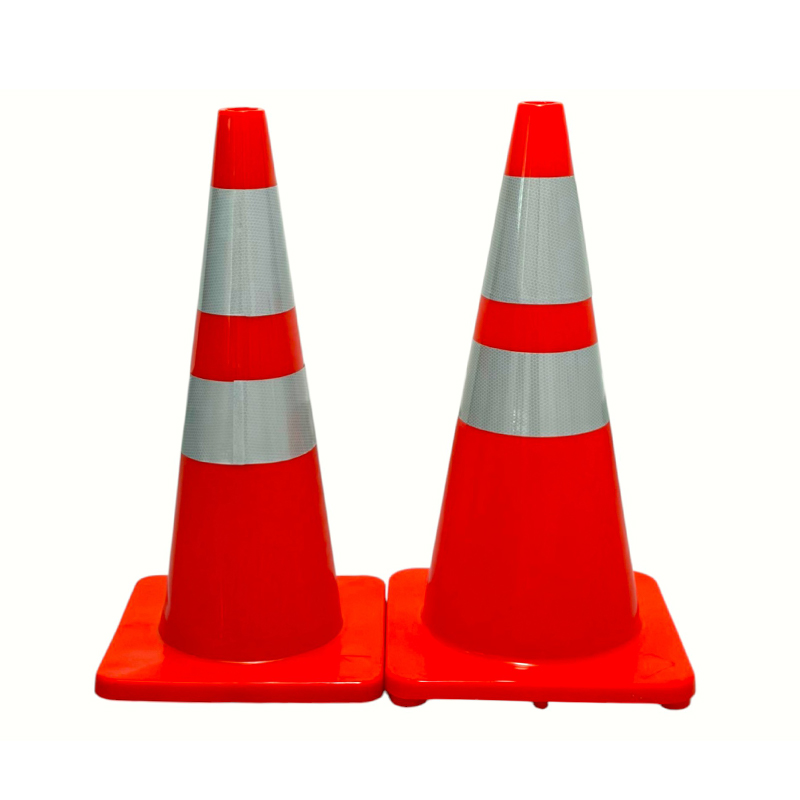
Moderate speeds and shorter work windows allow more flexibility. A wide-body profile lowers the center of gravity while keeping the cone easy to handle, which makes it a strong candidate for urban work.
 Wide-Body LDPE Traffic Cone with Reflective CollarsIts wide-body LDPE construction and rubber base enhance stability, making it suited for urban work zones. The two-part interlocking design allows easy handling, and it can be fitted with LED lights or plastic chains for added warning.View Product →
Mobile Construction Crews
Collapsible cones make sense when crews move between sites every day. They fit into a single van and can be placed by one person without special equipment.
Warehouses, Parking Lots, and Events
For indoor lanes, reserved spaces, and temporary event routes, collapsible cones reduce storage pressure and are quick to reposition. Rubber or heavy-base solid cones work better where vehicles regularly drive close to the cones, such as loading docks and parking garages.
Material, Reflective, and Safety Considerations
Material choice affects flexibility, impact recovery, UV resistance, and cost. PVC is economical and flexible; LDPE offers a good balance of toughness and cost; HDPE is more rigid and weather-resistant; rubber adds significant weight and friction. Our PVC vs. rubber traffic cone material selection guide dives deeper into these trade-offs.
Reflective performance is just as important as physical stability. Engineering-grade reflective collars, microprismatic sheeting, and multiple bands ensure the cone is visible at night and in low-light conditions. Both collapsible and solid models can be fitted with reflective sleeving, so visibility should not be the deciding factor between the two designs.
Whatever type you select, verify that the cone meets the visibility and performance requirements of your local traffic control standards, and inspect cones regularly for cracks, faded reflective collars, and damaged bases.
Frequently Asked Questions
Q1: Can collapsible traffic cones be used on highways?
Collapsible cones are generally not recommended for high-speed roadways where wind gusts and vehicle wash can push them over. A solid cone with a weighted rubber base provides the stability required for highway work zones.
Q2: How much storage space do collapsible cones save?
A collapsible cone folds to near-flat, so a truck that holds fifty solid cones can often carry several hundred folded units. This makes them valuable for mobile crews, warehouses, and emergency response fleets.
Q3: Do collapsible cones meet reflective visibility standards?
Many collapsible models come with engineering-grade reflective collars and satisfy common visibility requirements. However, physical wind performance and durability differ from solid cones, so always compare specifications before deployment.
Q4: What makes a solid cone more stable in wind?
Stability comes from total mass, base width, and a low center of gravity. A heavy rubber base or a ballast cavity filled with sand or water prevents the cone from tipping in crosswinds and high-speed traffic conditions.
Q5: Are collapsible cones durable enough for repeated use?
Quality collapsible cones are built with reinforced hinges and wear-resistant materials for frequent folding, but they are still best suited to temporary, low-impact work rather than permanent lane closure projects.
Final Verdict: Match the Cone to the Job
There is no single best traffic cone. Collapsible cones win on storage density, portability, and deployment speed, while solid traffic cones win on high-speed roadway stability and long-term durability. Many professional fleets carry both: collapsible models for daily mobile work and solid, weighted models for highway projects and extended closures.
Assess your storage capacity, transport method, wind exposure, and traffic speed before ordering. If you need a complete range of high-visibility cones, barricades, and road safety and traffic management solutions, verify that the product is matched to the environment where it will work hardest.