

 Español
Content
- 1 Traffic Cone Size Chart: Standard Heights and Applications
- 2 How Speed Limits Set the Minimum Cone Height
- 3 Reflective Collars: The Visibility Multiplier
- 4 PE, PVC, or Rubber: How Material Affects Size Selection
- 5 Selection Guide: Turning a Cone Size Chart into a Purchase Order
- 6 Frequently Asked Questions About Traffic Cone Size Charts
A contractor managing a 500-meter lane closure on a suburban arterial road orders 75 cm traffic cones based on a cone size chart, but the work zone includes a stretch where traffic moves at 80 km/h. On that section, the required minimum cone height is 100 cm, not 75 cm. The result is a temporary traffic control setup that appears compliant while actually falling short of visibility standards for the speed present. Reading a cone size chart correctly is not a shopping convenience; it is a safety decision that affects stopping distance, driver reaction time, and worker exposure.
A cone size chart translates temporary traffic control requirements into three measurable choices: cone height, base design, and reflective collar configuration. These three variables determine how early a driver sees the cone, whether wind shifts the device out of position, and whether the unit qualifies for the road class where it is installed. The most common mistakes in cone selection are choosing based on what looks large enough rather than the posted speed, skipping the reflective collar count, and using lightweight cones in high-wind areas without a weighted base.
Traffic Cone Size Chart: Standard Heights and Applications
Standard traffic cone heights are 50 cm (20 in), 75 cm (30 in), and 100 cm (40 in). Each tier corresponds to a specific speed range and application type.
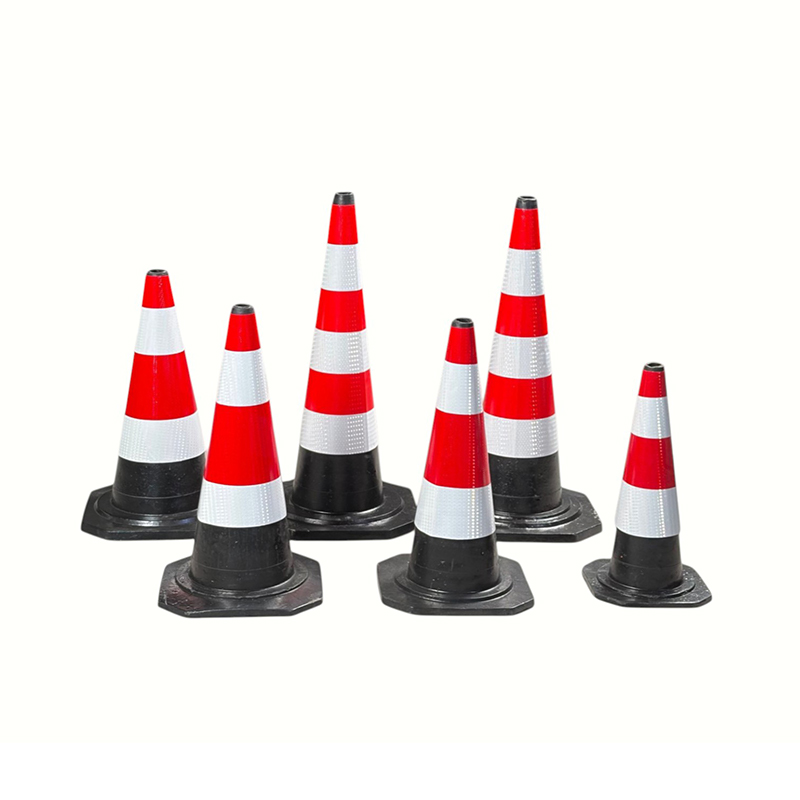
50 cm cones are used in parking lots, pedestrian zones, and low-speed areas where traffic moves below 30 km/h. They are lightweight, easy to store, and suited for indoor or short-duration work. 75 cm cones are the industry standard for urban roadwork; they cover speeds between 30 and 60 km/h and are the most commonly specified size for lane closures on city streets. 100 cm cones serve highways, expressways, and any section where traffic exceeds 60 km/h.
Speed limit is the determining factor because cone height directly affects the distance at which a driver can recognize the device. A 50 cm cone with one reflective collar is visible at about 45 m at night. A 75 cm cone with two collars extends visibility to 70 m. A 100 cm cone with three collars reaches close to 100 m. The table below compares the standard sizes, their applications, and typical speed thresholds.
| Cone Height | Typical Application | Speed Limit | Reflective Collars |
| 50 cm / 20 in | Parking lots, pedestrian zones | Up to 30 km/h | 1 |
| 75 cm / 30 in | Urban work zones, lane closures | 30-60 km/h | 2 |
| 100 cm / 40 in | Highways, expressway maintenance | Over 60 km/h | 3 or more |
How Speed Limits Set the Minimum Cone Height
The posted speed limit, not the road type, establishes the minimum cone height. At 30 km/h, a driver needs roughly 40 m of unobstructed view to recognize and react to a cone, and a 50 cm cone meets that requirement. At 60 km/h, the required visibility distance increases to about 80 m, and only a 75 cm cone with two reflective bands provides enough contrast at night. At 80 km/h and above, drivers need close to 120 m of advance warning, which makes a 100 cm cone with three reflective elements the safe minimum.
These thresholds are based on braking reaction distance calculations combined with field testing of retroreflective materials. A 50 cm cone placed on a freeway where traffic passes at 100 km/h does not give drivers enough time to change lanes - the visual target is simply too small at that distance. The chart below visualizes the minimum cone height associated with each speed tier.
Minimum Cone Height by Road Speed
Reflective Collars: The Visibility Multiplier
Reflective collars double the night-time visibility of any traffic cone, and the number of collars should increase with cone height and road speed. A standard 10 cm wide collar made from microprismatic or glass-bead retroreflective material returns light directly to the driver.
During the day, the orange or white body of a cone is visible at 150 to 200 m. At night without reflective elements, visibility drops to 30 to 50 m. Adding one collar to a 50 cm cone extends night visibility to roughly 45 m. Two collars on a 75 cm cone reach 70 m. Three collars on a 100 cm cone provide close to 100 m of visibility, which is the key difference in high-speed work zones.
PE, PVC, or Rubber: How Material Affects Size Selection
The cone material influences weight, wind resistance, and impact performance, and these factors determine which size you need for a specific site. PE polyethylene cones are the most common choice for temporary work zones. They are UV-stabilized, available in all three standard heights, and cost-effective for large deployments.
PVC cones offer higher flexibility and self-right after impact, which makes them suitable for areas with frequent vehicle interaction, but their lighter weight means they need a sand or rubber base in windy conditions. Rubber cones are the heaviest option, often 3 to 6 kg for a 50 cm model, and are preferred for high-wind locations, open highways, and repeated impact scenarios. For road safety and traffic management projects, the choice between PE and PVC usually comes down to budget and impact resistance requirements, while rubber is reserved for sites where wind or road vibration are known problems.
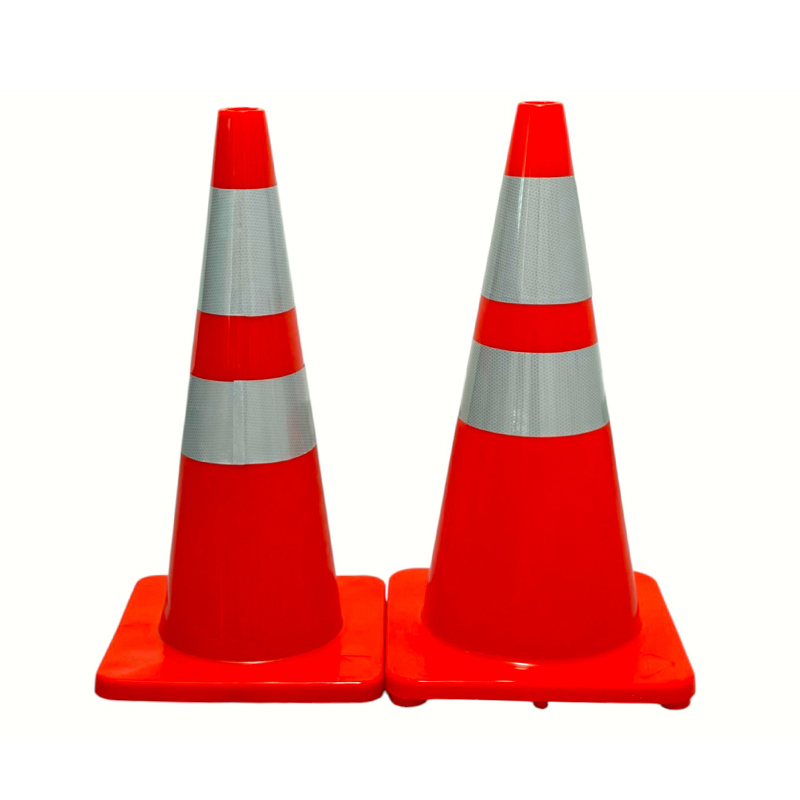
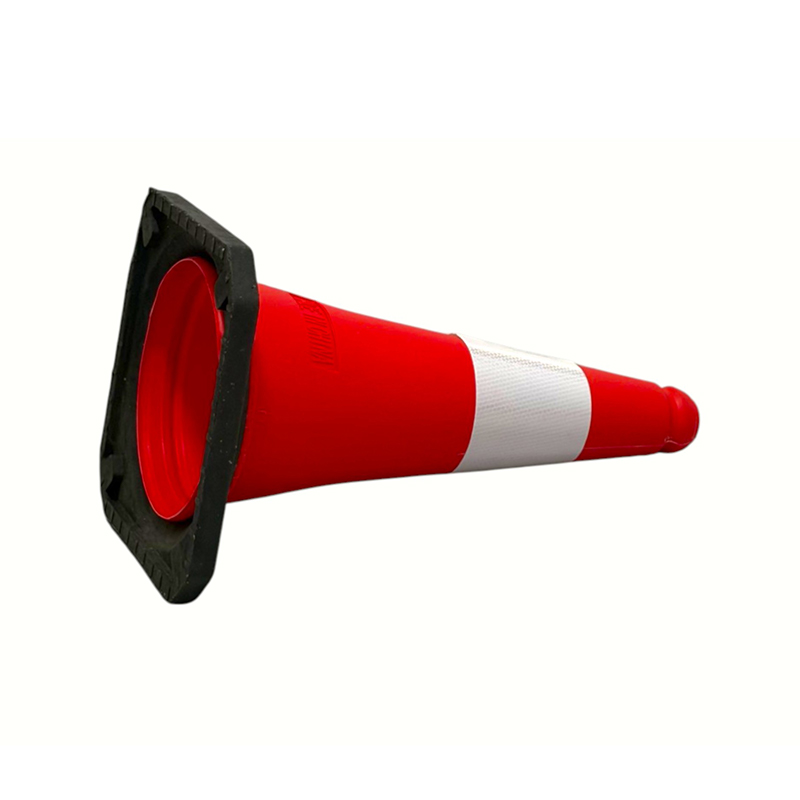 High-Visibility PE Traffic Safety Cone for Road ManagementThis PE cone offers high impact resistance and 24/7 visibility with reflective sheeting, available in 50/75/100 cm heights with weighted base for wind stability, suitable for highway diversions and municipal projects.View Product →
Choosing between PE and PVC materials is a common decision point. The full comparison of polymer types and PVC versus rubber traffic cones can be reviewed in the PVC vs. rubber traffic cone selection guide.
Selection Guide: Turning a Cone Size Chart into a Purchase Order
Safety managers can use this checklist to convert the cone size chart into an actual procurement specification.
- Verify the posted speed limit at the most exposed section of the work zone.
- Select the cone height based on the highest speed present, not the average speed.
- Confirm the reflective collar count meets local road safety regulations: one collar for 50 cm, two for 75 cm, three for 100 cm.
- Choose the base design: an integrated one-piece base is easier to handle, while a separate rubber base adds stability for windy or high-speed sites.
- Calculate the required quantity: space cones every 5 to 10 m on urban streets, 15 to 20 m on highways.
- Check wind stability: a 75 cm PE cone with a 4 kg rubber base should remain upright in winds up to 30 km/h. Above that, switch to a heavier rubber cone or add base weight.
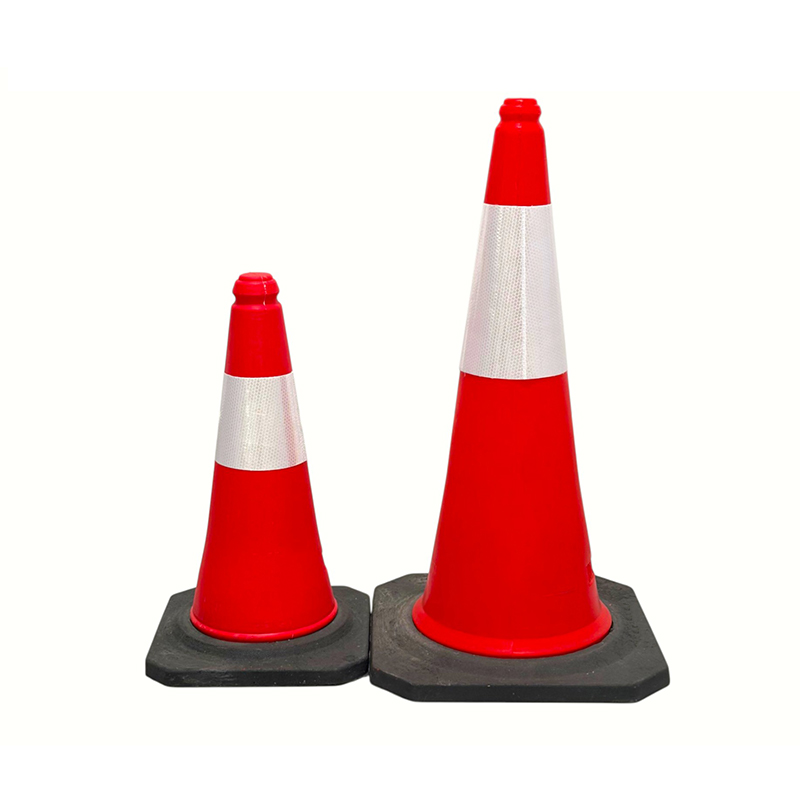
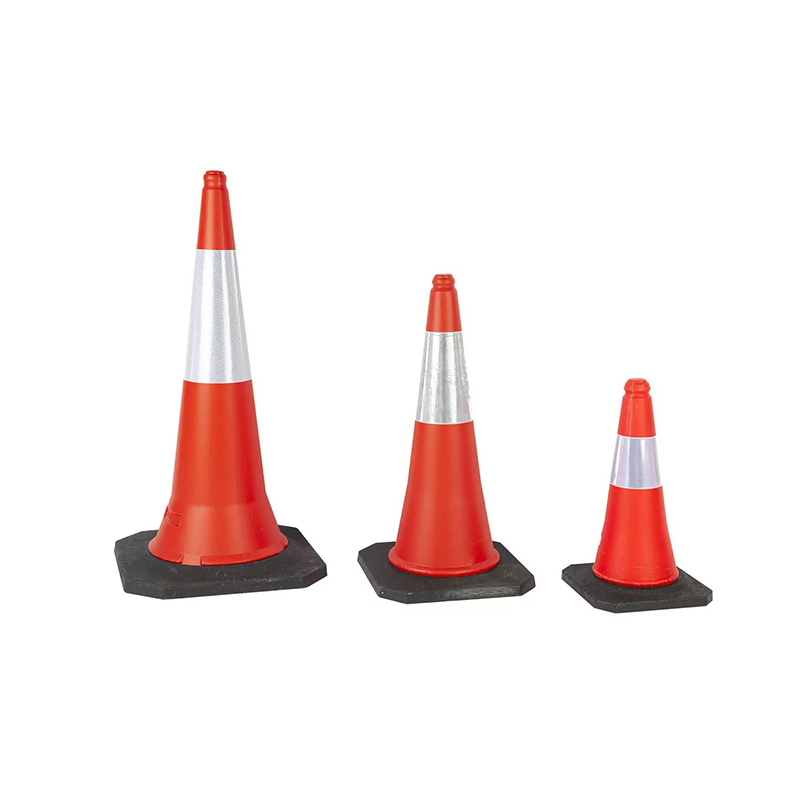 Heavy-Duty Plastic Traffic Cone with Rubber BaseThis blow-molded cone features a rubber base and two-stage interlocking design for stability. Available in 50/75/100 cm sizes, it supports custom logos and optional LED lights, ideal for urban roadwork and temporary traffic control.View Product →
Frequently Asked Questions About Traffic Cone Size Charts
What is the most common traffic cone size?
The 75 cm or 30 inch cone is the most common size. It is the standard for urban roadwork, lane closures, and general temporary traffic control where posted speeds range from 30 to 60 km/h. It balances visibility with portability and is typically equipped with two reflective collars.
Are 50 cm cones allowed on public roads?
Yes, but only where the posted speed limit is 30 km/h or lower. At higher speeds, a 50 cm cone does not provide enough visibility or stopping distance for drivers. In those cases, a 75 cm or 100 cm cone must be used.
When should I use a 100 cm traffic cone?
Use a 100 cm cone when traffic exceeds 60 km/h, on freeways, at intersections, or in any application that requires high visibility. The 100 cm size with three reflective collars is the recommended standard for expressway maintenance and construction zones.
How many reflective collars are required on a traffic cone?
The general guideline is one collar for a 50 cm cone, two for a 75 cm cone, and three for a 100 cm cone. The collar count should match the road speed and the cone height selected from the size chart.