

 Español
Content
- 1 1 Introduction to Industrial Traffic Cones and Material Selection
- 2 2 Material Composition: PVC versus Recycled Rubber Traffic Cones
- 3 3 Durability, Flexibility, and Impact Recovery Analysis
- 4 4 Weather Resistance, Temperature Stability, and Environmental Performance
- 5 5 Visibility, Color Retention, and Retroreflective Strip Compliance
- 6 6 Weight Distribution, Wind Resistance, and Base Stability
- 7 7 Standard Dimensions, Height Guidelines, and Application Scenarios
- 8 8 Cost-Benefit Evaluation and Life-Cycle Maintenance
- 9 9 Technical Comparison Matrix
- 10 10 Conclusion and Selection Recommendations
1 Introduction to Industrial Traffic Cones and Material Selection
Traffic safety cones serve as essential equipment for visual warning, hazard management, channelization, and flow control across construction sites, municipal roadways, industrial facilities, and parking structures. Designed to direct vehicles and pedestrians safely around hazardous areas, these temporary markers play a critical role in reducing collision risks and ensuring compliance with workplace safety mandates. For procurement managers, wholesale distributors, and facility operators, selecting the appropriate type of safety cone involves critical material choices that impact product performance, long-term durability, and overall total cost of ownership.
The visual effectiveness of a safety cone relies heavily on high contrast, bright fluorescent coloration, and strategically positioned reflective elements. However, the physical structural performance under variable weather conditions, mechanical stress, and physical impacts is governed almost entirely by the underlying manufacturing materials. Modern manufacturing processes primarily rely on Polyvinyl Chloride (PVC) and heavy-duty vulcanized or recycled rubber. Understanding the mechanical differences, thermal tolerances, and structural characteristics between these materials ensures that safety managers select the ideal equipment tailored to specific site environments, weather conditions, and operational demands.
2 Material Composition: PVC versus Recycled Rubber Traffic Cones
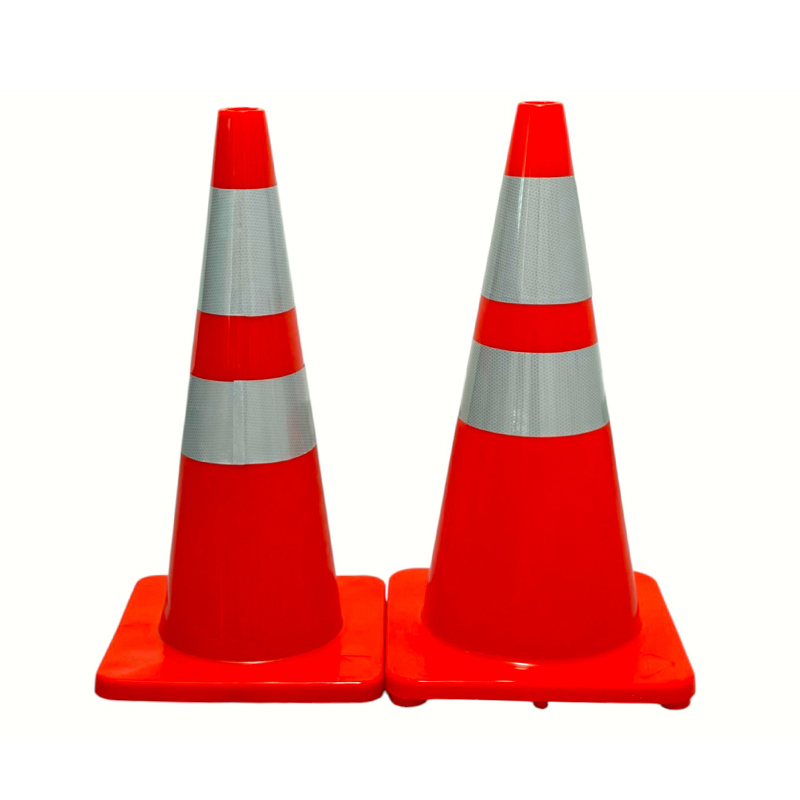
Polyvinyl Chloride, commonly known as PVC, is a thermoplastic synthetic polymer widely used in safety equipment manufacturing. In safety cone production, flexible PVC formulations are combined with plasticizers, UV stabilizers, and high-intensity fluorescent pigments. Injection-molded PVC cones feature a homogeneous single-piece construction or a dual-piece design with an integrated weighted black base. Flexible PVC offers exceptional tensile strength, brilliant color saturation, and immediate shape-recovery properties upon physical deformation or vehicular impact.
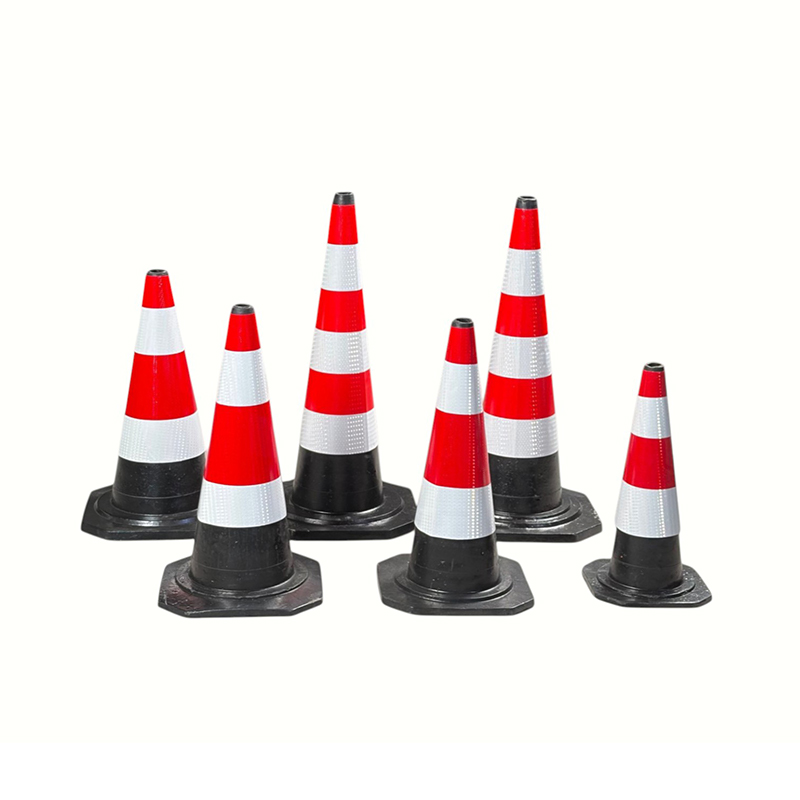
In contrast, heavy-duty rubber traffic cones are manufactured using either natural vulcanized rubber or high-density recycled tire rubber combined with polyurethane binder agents. Compression molding processes shape the dense rubber compound into thick-walled cone structures with heavy solid bases. Rubber traffic cones feature high weight density, natural impact absorption, and strong mechanical abrasion resistance. While rubber traffic cones naturally possess an inherently dark base color, high-visibility orange or yellow coatings and reflective collars are applied to meet global regulatory visibility standards.
3 Durability, Flexibility, and Impact Recovery Analysis
Physical impact resilience is a fundamental quality parameter for traffic cones exposed to low-speed vehicular movement, heavy equipment interaction, and constant field handling. High-quality flexible PVC traffic cones demonstrate superior memory-shape retention. When crushed, run over, or flattened by vehicles, the internal polymeric structure deforms elastically without cracking, tearing, or permanent structural warping. Once the crushing force is removed, flexible PVC rapidly rebounds back to its original conical geometry, maintaining operational utility without immediate replacement needs.
Heavy-duty rubber traffic cones provide extreme structural mass and high energy absorption during direct impacts. Rubber molecules absorb kinetic energy through material elasticity, preventing severe fragmentation or brittle fracture under high-force loads. However, continuous extreme compression can cause minor surface scuffing or localized paint degradation on coated surfaces over prolonged deployment cycles. Both materials deliver long service lives under standard working environments, but flexible PVC excels in applications requiring continuous shape recovery after repetitive vehicular run-over incidents.
4 Weather Resistance, Temperature Stability, and Environmental Performance
Environmental exposure poses distinct challenges to traffic cone longevity, including extreme ambient temperatures, direct solar ultraviolet radiation, rainfall, and chemical exposure from automotive fluids or road salts. Temperature stability varies significantly between PVC and rubber formulations, influencing material flexibility and surface stability across different geographical climates.
Flexible PVC traffic cones maintain high structural integrity across a standard temperature range. Advanced UV-stabilized PVC compounds resist chemical degradation and brittle fracturing caused by prolonged sunlight exposure. However, under extreme sub-zero cold conditions below minus 20 degrees Celsius, lower-grade PVC polymers can experience minor stiffening, which slightly reduces immediate bounce-back performance. Conversely, rubber traffic cones exhibit exceptional thermal stability across an extreme temperature envelope ranging from minus 40 degrees Celsius to over 80 degrees Celsius. Rubber retains its physical elasticity and impact absorption without becoming overly brittle in freezing environments or excessively soft under severe extreme ambient heat.
5 Visibility, Color Retention, and Retroreflective Strip Compliance
Daytime and nighttime visual conspicuousness is critical for traffic control devices to provide adequate driver reaction time. Bright fluorescent colors, including standard safety orange, lime green, and safety yellow, ensure rapid visual identification during daylight hours and low-light weather conditions. Fluorescent pigments integrated directly into liquid PVC prior to injection molding ensure uniform coloration throughout the entire thickness of the cone wall, preventing premature color peeling or surface erosion.
Nighttime visibility depends on the addition of high-intensity retroreflective collars or sheeting wrapped around the upper cone stem. Reflective sleeves utilize micro-prismatic lens technology to bounce headlight illumination back to vehicle drivers. Compliance standards, such as MUTCD specifications, require specific reflective strip widths and heights depending on the total height of the cone. While PVC allows seamless integration of retroreflective bands with consistent surface adhesion, rubber traffic cones require high-tack adhesive backings or recessed collar tracks to ensure reflective bands remain permanently attached despite mechanical friction.
6 Weight Distribution, Wind Resistance, and Base Stability
Wind displacement caused by passing heavy vehicles or natural high-wind weather conditions can dislodge lightweight traffic markers, creating severe hazards on high-speed expressways or exposed construction areas. Base weight distribution is the core engineering factor preventing cone tipping, sliding, or overturning during high-velocity air disturbance.
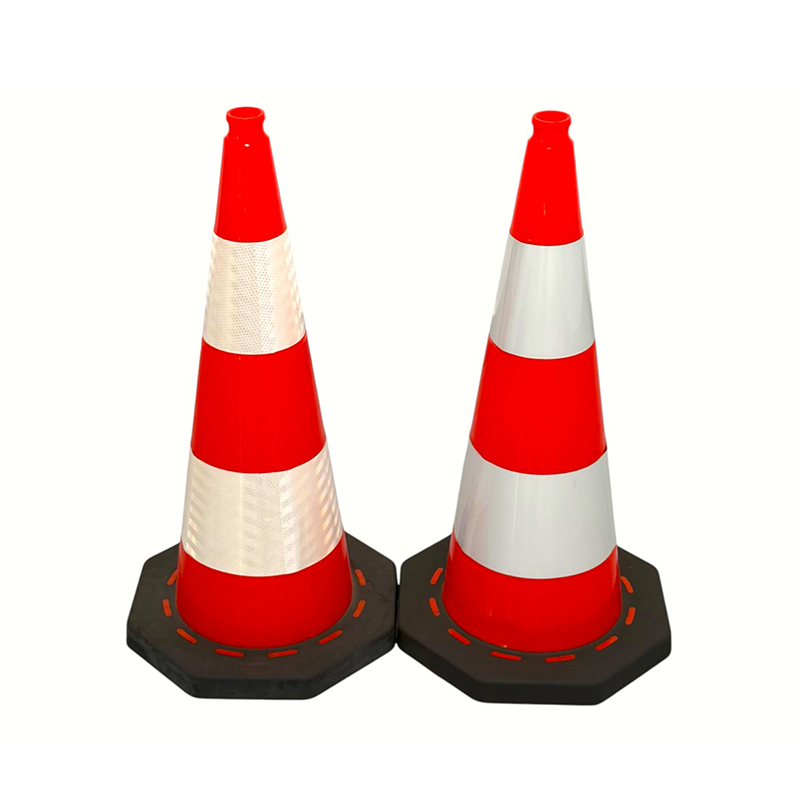
Heavy-duty rubber traffic cones feature an inherently low center of gravity due to the high density of the rubber base material. The broad, thick base accounts for a significant portion of the total product weight, providing high wind resistance and grounding stability on asphalt or concrete surfaces. Dual-piece PVC traffic cones utilize a high-density black rubber or PVC weighted base permanently locked into the high-visibility PVC cone body. This combination matches the wind-resistance performance of solid rubber cones while retaining the superior color retention and high-flexibility benefits of the upper PVC stem.
7 Standard Dimensions, Height Guidelines, and Application Scenarios
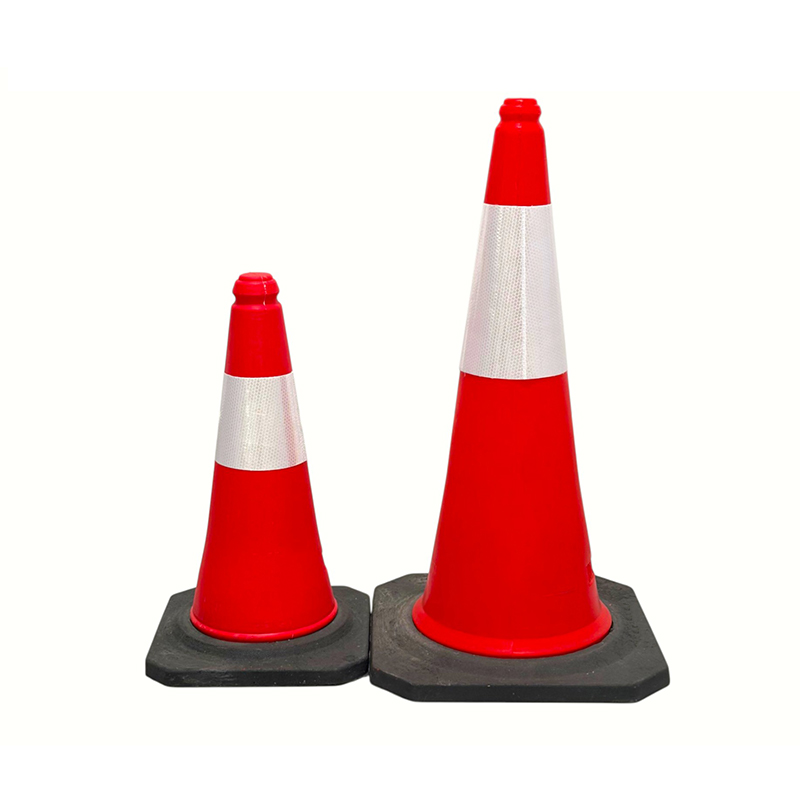
Selecting the appropriate cone height and weight is governed by application speed limits, traffic volume, and specific hazard warning requirements. Standard industrial and road traffic cones are manufactured in four primary height tiers:
- 12 inch (300 mm) Cones: Used for indoor facility maintenance, parking garages, low-speed pedestrian zones, and localized utility repairs.
- 18 inch (450 mm) Cones: Deployed in low-speed street work zones, commercial parking lots, school safety crossings, and facility management applications.
- 28 inch (700 mm) Cones: Standard requirement for general highway maintenance, urban roadway lane closures, traffic redirection, and commercial worksites with speed limits up to 45 miles per hour.
- 36 inch (900 mm) Cones: Mandatory for high-speed interstates, expressways, major infrastructure construction projects, and emergency incident response zones requiring maximum long-range warning distance.
8 Cost-Benefit Evaluation and Life-Cycle Maintenance
Procurement decisions require a balanced assessment of initial purchasing costs against long-term operational performance, replacement frequency, and maintenance requirements. Flexible PVC traffic cones typically require lower manufacturing complexity, offering competitive initial pricing with long service lifetimes in standard municipal and commercial traffic applications. Their ease of cleaning, high resistance to staining, and rapid shape recovery minimize replacement costs caused by low-speed vehicle impacts.
Heavy-duty rubber traffic cones carry a higher raw material weight, which can increase transport and logistics costs per unit. However, their extreme durability in harsh industrial settings, heavy mining sites, and sub-zero cold climates reduces overall replacement rates over extended operating periods. Routine maintenance for both cone types involves basic cleaning with mild detergent, checking retroreflective sheeting adhesion, and inspecting bases for structural wear to ensure ongoing safety compliance.
9 Technical Comparison Matrix
| Performance Parameter | Flexible PVC Traffic Cones | Heavy-Duty Rubber Traffic Cones |
|---|---|---|
| Material Base Polymer | Premium Virgin or Flexible PVC | Vulcanized or High-Density Recycled Rubber |
| Primary Manufacturing Process | Injection Molding / Dip Molding | Compression Molding |
| Impact Shape Recovery | Immediate, elastic rebound | Gradual, heavy energy absorption |
| Cold Temperature Range | Minus 10 to Plus 60 degrees C | Minus 40 to Plus 80 degrees C |
| Base Weight Distribution | Integrated dual-piece weighted base | Inherently heavy solid base material |
| Surface Color Integration | Full-body pigment integration | Coated or pigment-infused finish |
| UV Degradation Resistance | High (with UV chemical additives) | Very High |
| Typical Deployment Areas | Roadways, expressways, parking zones | Heavy industrial, mining, cold climates |
10 Conclusion and Selection Recommendations
Choosing between flexible PVC and heavy-duty rubber safety traffic cones depends on specific operational requirements, climate exposures, and site conditions. Flexible PVC traffic cones deliver outstanding daytime visibility, superior shape-recovery after impacts, and light overall handling weight suitable for general highway maintenance, urban traffic control, and facility safety management.
For environments subject to severe temperature extremes, heavy industrial transport, or extreme wind conditions, heavy-duty rubber traffic cones provide maximum base stability and rugged thermal resistance. Evaluating target site conditions, compliance standards, and long-term durability metrics ensures safety managers and wholesale distributors select the optimal safety equipment to maintain worker and motorist safety.
11 Frequently Asked Questions
Question 1: What is the main structural difference between PVC and rubber traffic cones?
Answer: Flexible PVC cones are made from plasticized polymer resins that offer light weight, bright color retention, and rapid shape recovery when crushed. Rubber cones are made from dense vulcanized or recycled rubber compounds, providing higher base weight, low center of gravity, and high thermal stability in cold climates.
Question 2: How do retroreflective collars improve traffic cone safety?
Answer: Retroreflective collars utilize prismatic micro-lens technology to reflect headlights directly back toward drivers during low-light or nighttime conditions. This extends driver recognition distances and meets national highway traffic control compliance standards.
Question 3: What cone height should be selected for highway work zones?
Answer: High-speed roadways and expressways typically require 28 inch (700 mm) or 36 inch (900 mm) safety cones equipped with standardized retroreflective bands to ensure long-distance visibility for fast-approaching traffic.
Question 4: Can flexible PVC traffic cones withstand sub-zero winter temperatures?
Answer: High-grade PVC cones formulated with low-temperature plasticizers perform reliably in standard cold weather. However, in extreme cold conditions below minus 20 degrees Celsius, heavy-duty rubber cones offer greater material flexibility and crack resistance.
Question 5: How does the base design prevent traffic cones from blowing over in high winds?
Answer: Base stability is achieved through concentrated weight distribution at the bottom of the cone. Dual-piece PVC cones use dense recycled bases, while rubber cones utilize heavy solid bases to maintain a low center of gravity that resists wind drag from passing trucks.
12 Industry References and Standards
- Manual on Uniform Traffic Control Devices (MUTCD), Federal Highway Administration, Section 6F.64: Channelizing Devices.
- ASTM D638 - Standard Test Method for Tensile Properties of Plastics (evaluating flexibility and impact recovery parameters of PVC polymers).
- ISO 20471 - High Visibility Clothing and Warning Equipment for Professional Use: Test Methods and Requirements.
- American National Standards Institute (ANSI/ISEA 107) - American National Standard for High-Visibility Safety Apparel and Accessories.