

 Español
Content
- 1 What Is a Construction Ahead Road Sign?
- 2 Why Construction Ahead Signs Are Critical for Work Zone Safety
- 3 Common Types of Construction Ahead Road Signs
- 4 Key Standards and Regulations
- 5 How to Choose the Right Construction Ahead Road Sign
- 6 Installation and Maintenance Best Practices
- 7 Frequently Asked Questions
- 8 Conclusion
Every work zone starts with a clear warning. The construction ahead road sign is the first signal that tells drivers to slow down, stay alert, and prepare for changing traffic patterns. Without this simple but essential device, road crews, pedestrians, and motorists face unnecessary risk. Choosing the right sign for your project ensures compliance, improves visibility, and helps prevent accidents.
What Is a Construction Ahead Road Sign?
A construction ahead road sign is a traffic control device placed before a work zone to alert drivers about upcoming road work, lane closures, detours, or temporary hazards. It usually features an orange background with black symbols or text, following the high-visibility color scheme recognized by drivers in many countries.
Unlike permanent guide signs, construction ahead road signs are temporary by design. They must be deployed quickly, moved as the work area shifts, and kept visible around the clock. That is why portability and durability are just as important as the message itself.
These signs serve several important purposes:
- Giving drivers enough time to react and adjust speed
- Redirecting traffic into open lanes before barriers narrow the roadway
- Protecting road workers and construction equipment from passing vehicles
- Reducing the likelihood of rear-end collisions and sudden lane changes
Because work zones are dynamic environments, the construction ahead road sign must be visible day and night, resistant to weather, and easy to move or adjust as the work area changes.
Why Construction Ahead Signs Are Critical for Work Zone Safety
Road work zones create conditions that drivers do not encounter on a normal commute: narrowed lanes, uneven pavement, temporary traffic signals, and workers moving near moving vehicles. A visible construction ahead sign gives drivers a clear mental model of what is coming.
The consequences of a missing or poorly placed warning sign can be severe. Drivers may brake suddenly, merge too late, or unintentionally enter the work space. In rain, fog, or darkness, the risk multiplies. A clearly visible construction ahead sign gives drivers a predictable sequence of actions: slow down, scan the road, merge early, and watch for workers.
Safety guidelines generally recommend that advance warning signs be placed far enough before the work area to allow drivers to brake or change lanes smoothly. The exact distance depends on road speed, but the principle is always the same: early warning reduces panic and promotes orderly driving. In addition, many jurisdictions require the use of standard orange warning signs for official compliance.
Key point: A construction ahead road sign is not an optional accessory on a work site; it is a foundational element of traffic control planning.
Common Types of Construction Ahead Road Signs
Construction warning signs come in several formats, each suited to a different work zone layout and duration.
Portable Folding Signs
Portable folding signs are lightweight and easy to store. They are ideal for short-term maintenance, utility repairs, or temporary lane closures. Many models feature adjustable legs and quick-change clips that allow workers to swap message panels without tools. One practical example is a portable HDPE square extendable traffic sign that offers a stable base and customizable height.
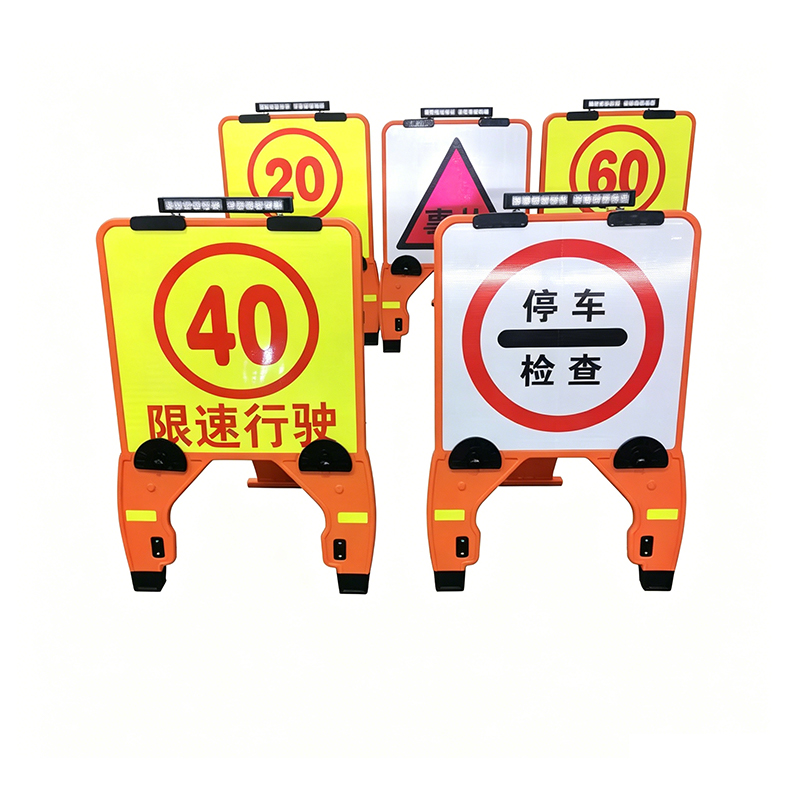 Portable HDPE Extendable Traffic Sign with Quick-Change ClipsThis foldable HDPE sign features a quick-change clip system for tool-free panel swaps and an aerodynamic leg design for stable, rapid deployment. Ideal for temporary maintenance and lane closures, it pairs well with the preceding discussion on portable folding signs.View Product →
Flexible Delineator Signs
Flexible signs use impact-resistant materials such as PVC or HDPE with a springy base. When struck by a vehicle, they bend and return to their original position, reducing damage to both the sign and the vehicle. This makes them a smart choice for narrow roads and high-speed areas.
Barricade-Mounted Signs
For larger work zones, signs can be mounted on traffic barricades, concrete barriers, or water-filled plastic barriers. This integrated approach makes the warning visible from a distance and reinforces the physical separation between traffic and workers.
LED-Enhanced Signs
LED-enhanced signs use flashing lights or illuminated panels to capture attention in low-light conditions. They are particularly useful for night work or when weather reduces natural visibility.
Key Standards and Regulations
Regulations for construction ahead road signs vary by country, but most follow established guidelines for color, shape, reflectivity, and placement.
- Color and shape: In the United States, work zone warning signs are typically orange with black legends and are either diamond-shaped or rectangular. In many European countries, similar orange or yellow warning signs are used.
- Reflectivity: Signs must be visible at night. Reflective sheeting materials are graded by intensity, and highway use generally requires high-intensity or microprismatic grades.
- Size: Larger signs are used on high-speed roads because drivers need more distance to read and react.
- Placement: Signs should be placed a specific distance before the work zone, depending on speed limit and road type.
Contractors and safety managers should always verify local requirements before purchasing. You can also learn from related traffic control products, such as warning traffic bollards guide, to better understand how different devices work together in a complete traffic control plan.
How to Choose the Right Construction Ahead Road Sign
With so many options available, it helps to focus on a few key factors when selecting construction ahead road signs.
Portability
If the work zone moves frequently, choose a lightweight sign that can be set up and taken down in minutes. Features like folding legs, carry handles, and compact storage are valuable.
Durability
Signs are exposed to sun, rain, wind, dust, and accidental impacts. UV-resistant plastic and rust-proof hardware extend service life and keep the sign looking professional.
Visibility
High-contrast colors and reflective surfaces are essential. Consider whether the sign will be used at night, in tunnels, or in areas with heavy truck traffic.
Impact Resistance
On roads where vehicles may drive close to the work space, a flexible sign board with an elastic base can absorb impacts without breaking.
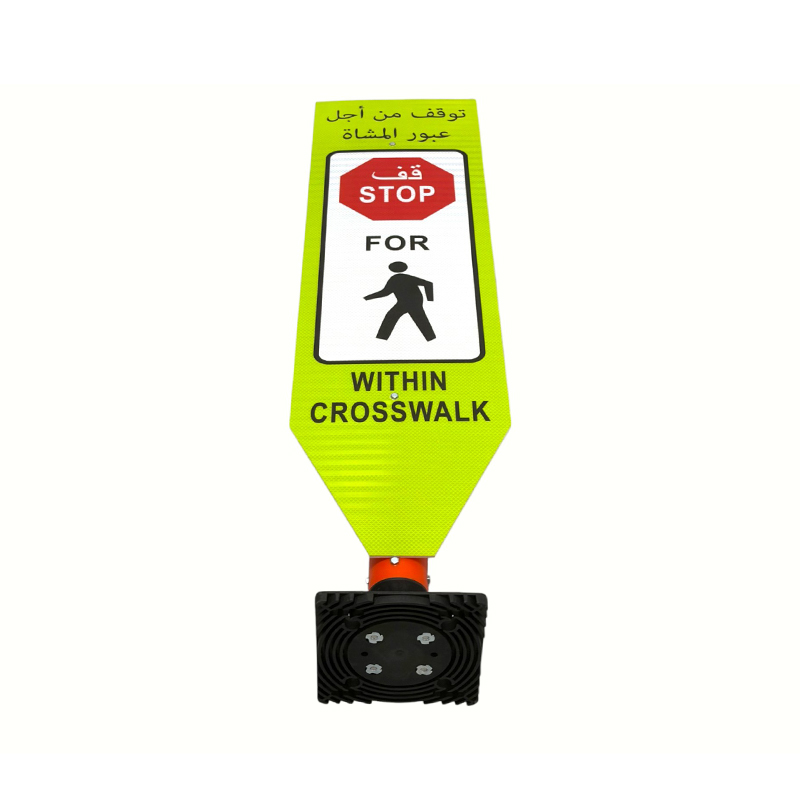 Flexible Traffic Delineator Sign with Impact-Resistant Elastic BaseBuilt from high-strength HDPE and TPU with a steel-plate reinforced elastic base, this sign rebounds after vehicle impact and uses Class IV reflective film. Recommended for non-motorized lane barriers and pedestrian safety islands, it suits the impact-absorption context.View Product →
Compliance
Always check that the sign meets the standards required by your local transport authority. Using a non-compliant sign could create liability and reduce safety.
Budget
While price matters, the cheapest sign may not survive a full project. Compare the expected service life, replacement cost, and safety performance when calculating value.
Installation and Maintenance Best Practices
A construction ahead sign only works when it is correctly positioned and maintained. Follow these practical tips to keep your signs effective throughout the project:
- Place the sign far enough in advance of the work zone based on road speed. A high-speed highway needs a longer warning distance than a local street.
- Secure the sign firmly. Use sandbags, weighted bases, or staking to prevent it from blowing over or shifting.
- Position the sign so it is visible to all approaching lanes, especially around curves and hills.
- Inspect signs regularly for fade, cracks, missing reflectors, or dirt that blocks the message.
- Clean reflective surfaces with mild soap and water to maintain night-time visibility.
- Replace or repair any sign that becomes difficult to read or unstable.
Seasonal factors also matter. In winter, snow can cover low-mounted signs, so consider taller stands or additional reflectors. In summer, strong sunlight can fade colors over time, so choose UV-stable materials.
Frequently Asked Questions
Q1: What does an orange construction ahead road sign mean?
An orange construction ahead road sign warns drivers that road work is taking place ahead and that they should reduce speed, watch for workers, and be ready to change lanes or stop.
Q2: What color and shape are construction warning signs?
In most countries, construction warning signs are orange or yellow with black text or symbols. The shape can be diamond, rectangular, or square, depending on the message and the governing standard.
Q3: How far in advance should a construction ahead sign be placed?
The recommended distance depends on the speed limit. For example, higher-speed roads usually require earlier placement so drivers have enough time to react. Local traffic control guidelines should always be consulted.
Q4: Can I use a construction ahead road sign in a parking lot or private site?
Yes. Portable construction ahead signs are commonly used in parking lots, warehouses, and private facilities to alert drivers to temporary hazards or maintenance work. However, the sign should be visible and stable enough for the specific environment.
Conclusion
Whether you manage a highway project, a municipal road repair, or a private parking lot, the construction ahead road sign is an essential tool for protecting both workers and drivers. By understanding the different types, following safety standards, and choosing durable, highly visible products, you can create a safer work environment and keep traffic moving smoothly.
For a complete range of traffic control and work zone safety equipment, explore our road safety products or contact our team for assistance in selecting the right solution for your project.