

 Español
Content
Every time a highway lane closes for paving or bridge work, the traffic control supervisor runs a checklist that most drivers never see. In the United States, work zone crashes claim over 700 lives a year, and the cones, barricades, and signs placed on that stretch of asphalt are a direct response to that number. A traffic control device is not an accessory; it is the physical layer of protection that tells a driver where to go, when to stop, and what is coming next. The formal definition, written by the Federal Highway Administration in the Manual on Uniform Traffic Control Devices (MUTCD), is any sign, signal, marking, or other device placed on or adjacent to a street or highway by an authority to regulate, warn, or guide traffic. In practice, that covers everything from a regulatory stop sign to an orange traffic cone in a construction zone.
A Field-Focused Definition of a Traffic Control Device
Any device placed on a roadway has one of three jobs: regulate, warn, or guide. If it does none of those, it does not belong in the traffic control system. This definition matters for purchasing decisions because it forces a simple question: what exactly is this device supposed to do on the road?
A regulatory device such as a stop sign assigns legal priority. A warning device like a construction sign alerts drivers to a changing condition. A guide device such as a lane marking or a traffic cone keeps traffic flowing in an orderly path.
This three-part function is why a traffic control device must be visible and unambiguous. The MUTCD stresses that a device has to satisfy a need, command attention, convey a clear message, and give the driver enough time to respond. A poorly placed cone, a faded stop sign, or a barricade with a missing reflective band can turn a safety tool into a hazard.
Traffic Control Device Types: A System View
Every traffic control device falls into one of five categories. Each category has its own materials, visibility requirements, and maintenance needs. The practical difference shows up in how quickly a device can be deployed and how long it will survive on the road.
| Category | Typical Examples | Primary Function | Placement |
| Signs | Regulatory, warning, guide signs | Regulate and warn | Permanent or temporary |
| Signals | Traffic lights, pedestrian beacons | Assign right of way | Permanent intersections |
| Markings | Lane lines, crosswalk markings | Guide and channelize | Permanent road surfaces |
| Channelizing | Cones, delineator posts, barricades | Guide around hazards | Mostly temporary worksites |
| Barriers | Water-filled barriers, expandable guardrails | Physically separate traffic | Temporary or semi-permanent |
Signs and markings dominate permanent roadways, while channelizing devices and barriers are the backbone of temporary work zones. Understanding the category helps specifiers match a product to a specific hazard rather than buying a generic safety item. Within these categories, product design varies considerably. Traffic cones, for example, range from 50cm PE cones for low-speed streets to 100cm PVC cones with weighted bases for expressways. Delineator posts are often made of TPU or EVA to survive repeated hits without breaking. Water-filled barriers come in interlocking modules that form continuous lines of protection.
Temporary vs. Permanent Traffic Control: The Worksite Difference
Permanent devices are fixed in place for years. Temporary devices are deployed, moved, and removed as a project changes. The difference is not just lifespan; it changes the engineering requirements.
Permanent
- Fixed anchoring required: bolts, concrete bases
- Designed for 10+ year service life
- Weathering and corrosion resistance critical
- Work zone approval rarely needed
Temporary
- Portable or water-filled for quick repositioning
- Designed for days to months
- High mobility, lower weight
- Requires daily inspection
In a temporary worksite, devices must be deployable and collectible quickly. Traffic cones and delineator posts are the standard choice because they are lightweight, highly visible, and repositionable in minutes. For longer closures, water-filled barriers provide the mass needed to stop a vehicle without permanent foundations.
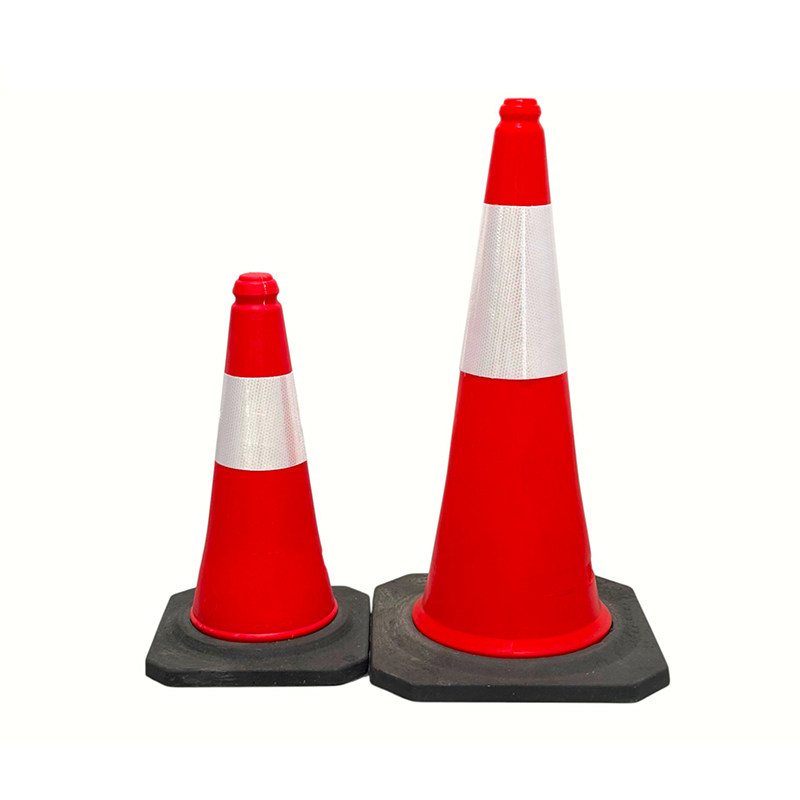 High-Visibility PE Traffic Safety Cones for Rapid Worksite DeploymentThese lightweight cones offer quick setup and removal, with reflective collars for visibility. Available in multiple sizes and bases to suit temporary roadwork and hazard isolation.View Product →
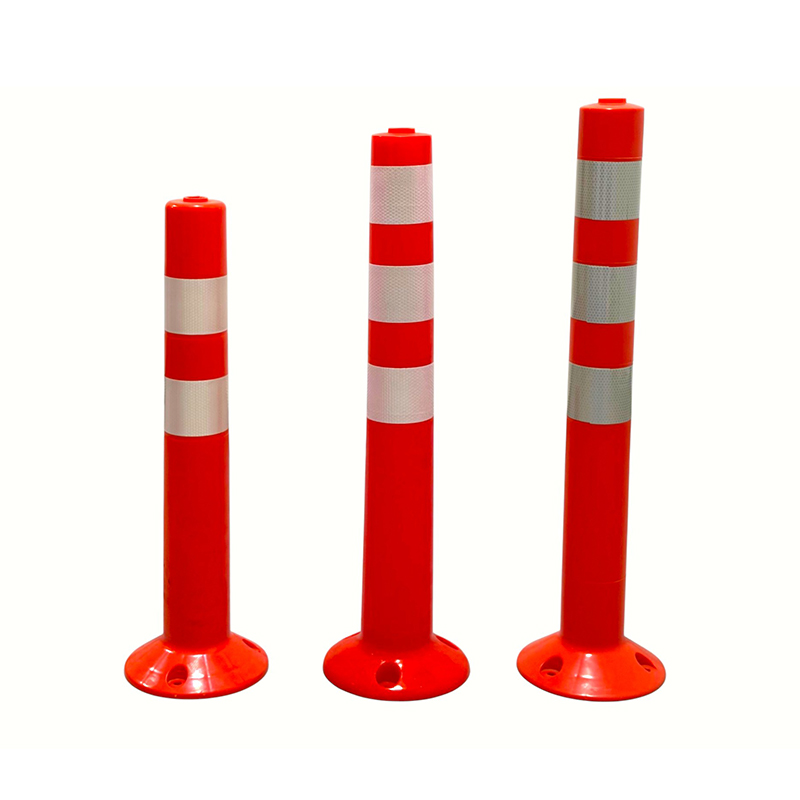 Flexible Delineator Posts with Self-Righting Design for Traffic GuidanceThese posts bend without breaking and rebound to upright position, ideal for high-impact zones. Their quick deployment and portability make them practical for temporary worksites.View Product →
 Interlocking Water-Filled Barriers for Temporary Road ClosuresThese modular barriers are lightweight when empty and stabilize when filled, providing impact absorption. They link without hardware, forming a continuous wall for diversions and events.View Product →
How to Choose the Right Traffic Control Device
Selection is not about picking the nicest looking product; it is about fitting the device to the specific hazard and the time available to deploy it. Four criteria should drive every purchase decision.
- Compliance: every device must meet the applicable national standard. In the U.S., that is MUTCD. In many other markets, devices are tested to CE or ISO 9001.
- Visibility: reflective sheeting, microprismatic collars, and high-contrast colors allow drivers to detect the device at highway speeds. 50cm cones are a minimum for daytime city use; 75-100cm cones with reflective collars are needed on high-speed roads.
- Deployability: a device that takes four minutes to set up instead of forty seconds will be skipped on busy jobs. Look for telescoping signs, collapsible cones, and bases that allow one-person setup.
- Durability: materials such as TPU, PVC, and HDPE withstand repeated impact, UV exposure, and temperature swings. When a product says 360-degree rebounding, it means it will survive being hit by a car and spring back.
When weighing options, consider the full lifecycle. A cheaper cone may need replacement after one season, while a heavier-duty TPU post can last for years and lower total cost of ownership. Reflective treatment also affects lifespan; microprismatic sheeting generally outlasts standard reflective paint.
For teams sourcing for industrial worksites or road projects, material choice is often the deciding factor. A side-by-side comparison of PVC vs. rubber traffic cones can clarify which product fits your site and budget. Similarly, if channelizing devices are part of your plan, a guide on warning traffic bollards explains how impact ratings affect safety.
Suppliers that run their own manufacturing facilities, such as Hangzhou Lutai Import and Export Trading Co., Ltd., can usually provide OEM/ODM support and consistent quality control. That matters when a project needs custom colors, reflective sheeting, or integrated bases.
FAQ: Traffic Control Device Basics
Are traffic control devices required by law?
Yes. When placed on public roadways, they must comply with the national standard. In the U.S., the MUTCD is adopted by federal, state, and local agencies. Private property owners are also expected to follow these standards when the devices affect public traffic.
What is the difference between a traffic control device and a safety device?
A traffic control device regulates, warns, or guides road users. A safety device may serve a different purpose, such as fall protection or visibility clothing. Some overlap exists; reflective barriers, for example, can do both.
Can a business install its own traffic control devices?
Yes, on private property. For public roads, installation usually requires permission and compliance review by the local authority. Temporary work zones in most jurisdictions require a site-specific traffic control plan.
What are the most durable materials for temporary traffic control?
For channelizing products, TPU and PVC deliver high elasticity and resistance to tearing. For barriers, HDPE is common because it absorbs impact and resists UV, moisture, and chemicals.