What is the difference between a rubber and a plastic cable protector?
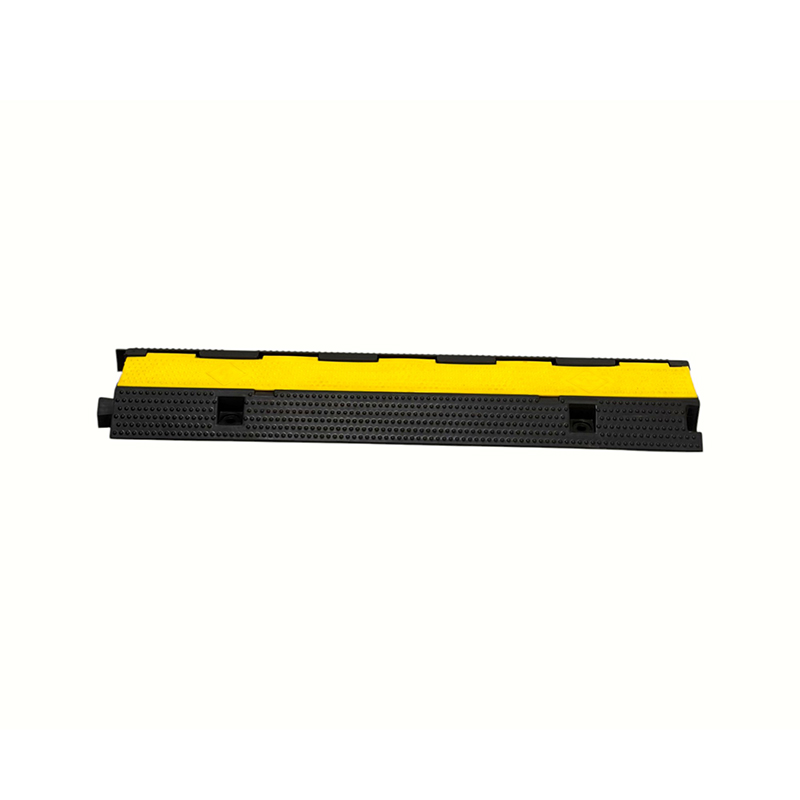
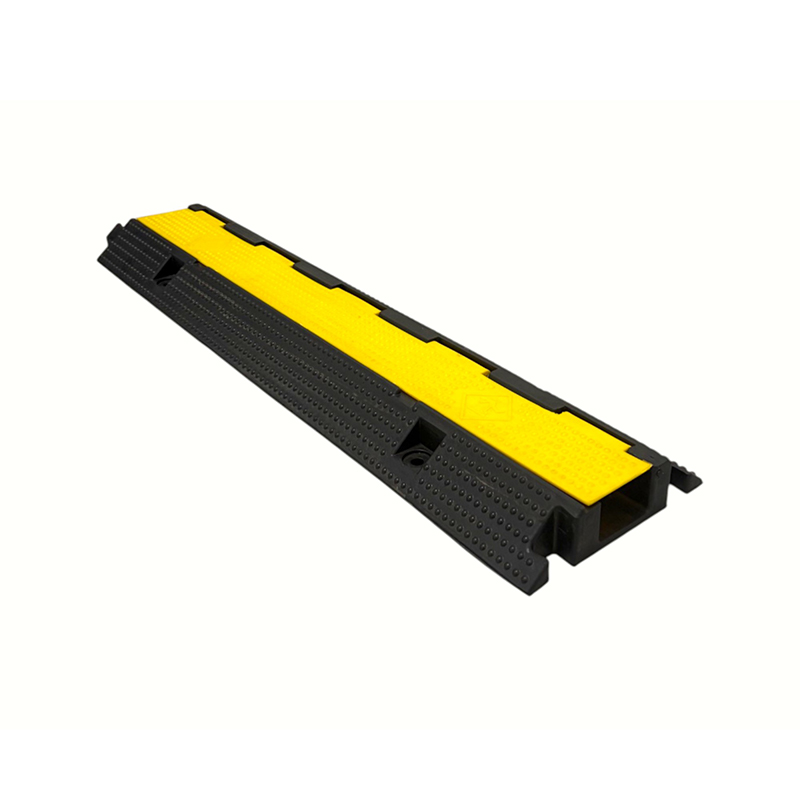
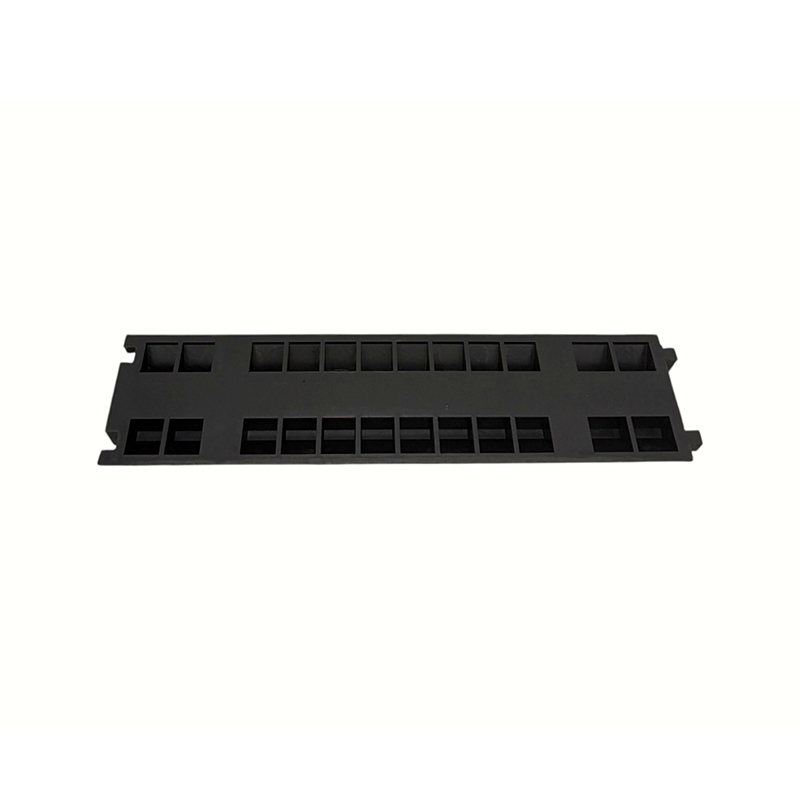
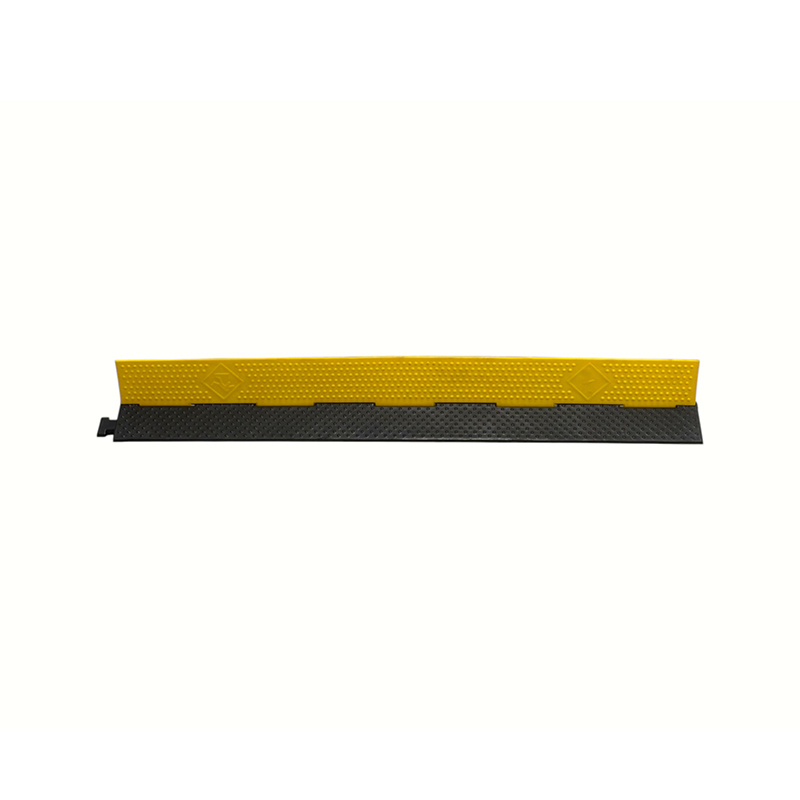
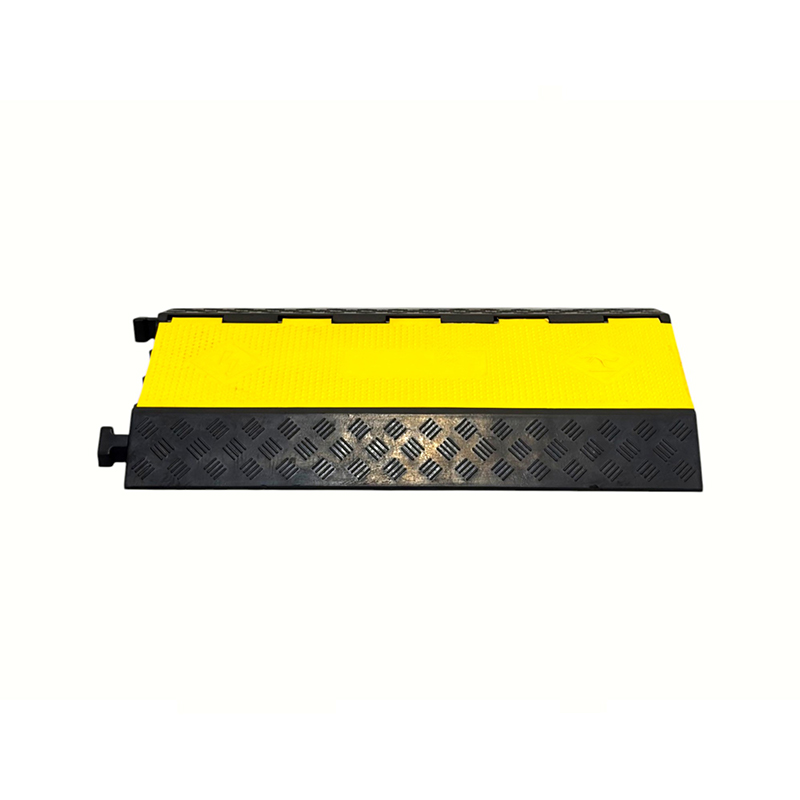
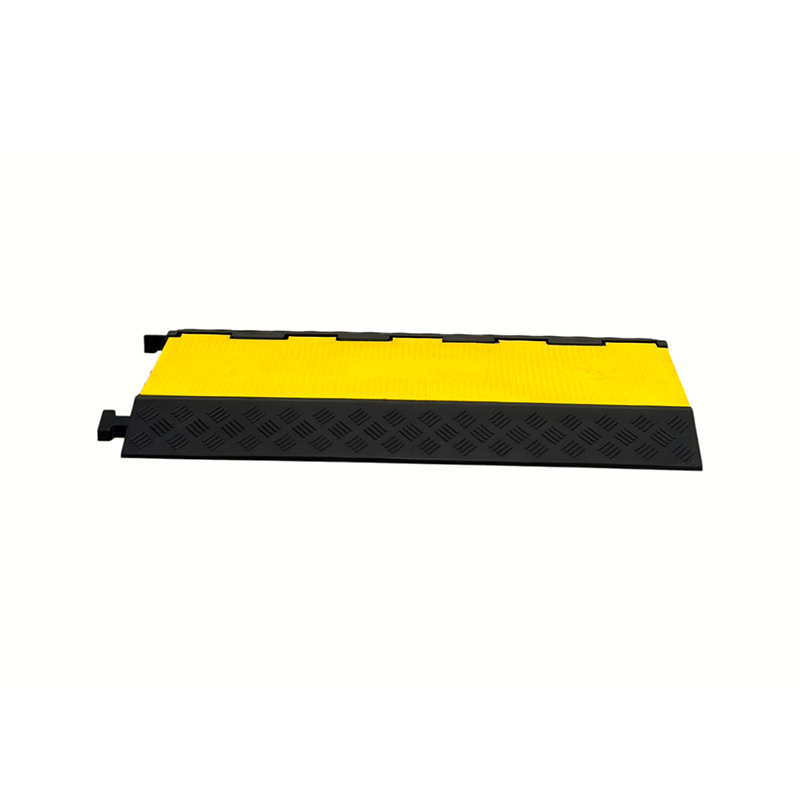
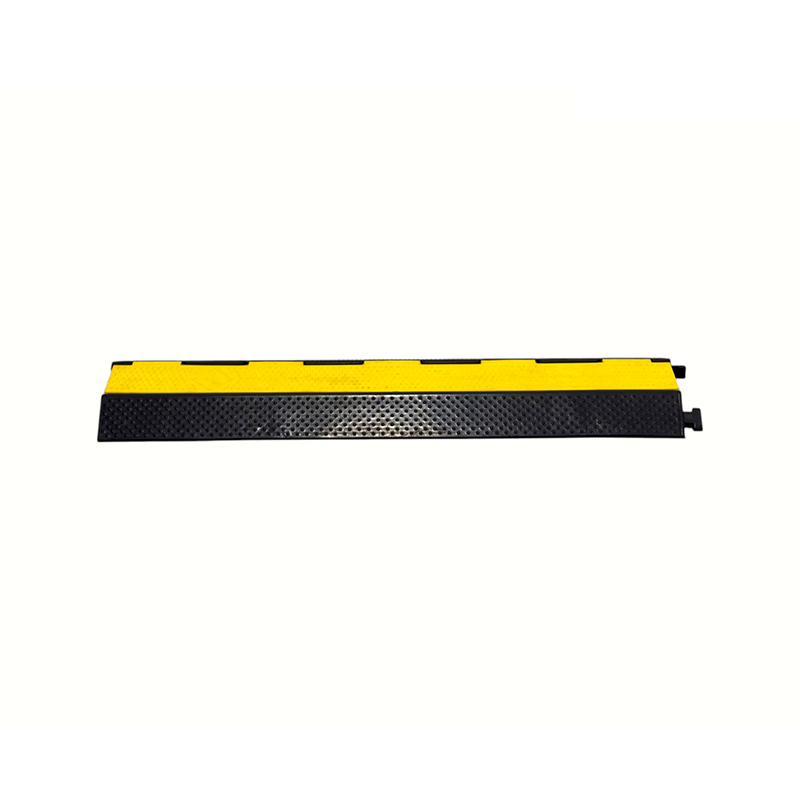
When it comes to safeguarding cables in high-traffic environments, the choice between rubber and plastic cable protectors is more than just a material preference—it is a decision that affects safety, durability, and long-term operational costs. While both serve the fundamental purpose of protecting hoses and wires from crushing and preventing trip hazards, their performance diverges significantly under real-world conditions. This article provides a technical comparison based on our flagship product, the high-elasticity wear-resistant rubber lightweight pull-down single-channel reinforced cable protector with ramp, against conventional plastic alternatives.
To understand the distinction, we must examine not only the chemical composition but also the engineering philosophy behind each design. Plastic protectors are often chosen for their low upfront cost and lightweight handling, but they frequently compromise on resilience and environmental adaptability. In contrast, the high-elasticity wear-resistant rubber lightweight pull-down single-channel reinforced cable protector with ramp exemplifies a premium approach that prioritizes shock absorption, thermal stability, and long service life—even under continuous pedestrian and light vehicle traffic. This analysis draws from our manufacturing expertise at Hangzhou Lutai Import and Export Trading Co., Ltd., where we have tested both material families across thousands of installations globally.
1. Material Fundamentals: Elasticity vs. Rigidity
The primary difference lies in the polymer structure. Plastic cable protectors (typically PVC or hard polypropylene) are thermoplastics with high stiffness but low deformation capacity. They rely on wall thickness to resist compression, which makes them susceptible to cracking under repeated impact, especially in cold weather. Conversely, the high-elasticity wear-resistant rubber lightweight pull-down single-channel reinforced cable protector with ramp utilizes vulcanized synthetic rubber with a cross-linked molecular network. This structure allows the ramp to absorb kinetic energy from rolling loads (e.g., carts or wheelchairs) and instantly recover its shape, preventing permanent indentation that could pinch cables.
From a manufacturing perspective, rubber compounds can be formulated with additives that enhance UV resistance, ozone resistance, and oil repellency. Our production line, overseen by Hangzhou Lutai Import and Export Trading Co., Ltd., includes a specialized blending process that ensures the outdoor cable ramp retains flexibility from -30°C to 70°C, a range far beyond what most PVC products can tolerate without becoming brittle or soft. This thermal stability is critical for outdoor construction sites, exhibition halls, and warehouse loading bays where seasonal temperature swings are common.
2. Structural Design and Deployment Efficiency
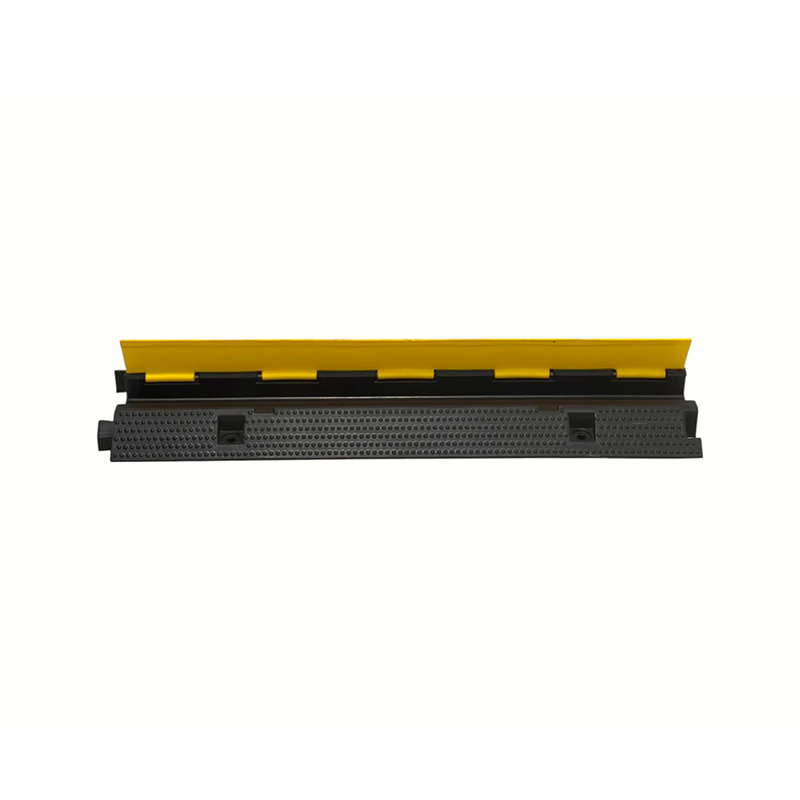
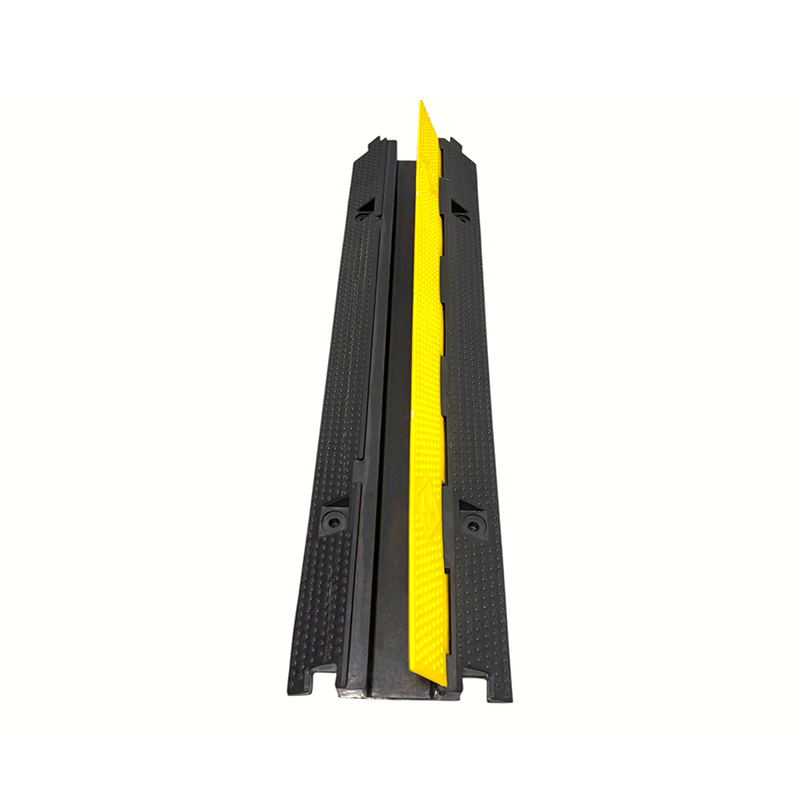
While both rubber and plastic protectors feature ramped ends, the engineering of the channel and closure mechanism sets them apart. Plastic variants often use a simple hinge or slide-lock system that can wear out after a few hundred cycles, leading to loose connections and exposed cables. In contrast, our high-elasticity wear-resistant rubber lightweight pull-down single-channel reinforced cable protector with ramp incorporates a patented "drop-over" deployment design: the bottom-opening channel allows users to lay the protector directly over existing cables without threading or lifting heavy loads. This feature significantly reduces setup time for temporary wiring at concerts, sports events, and emergency response sites.
Moreover, the lightweight rubber formulation (density ≈ 1.2 g/cm³) makes handling effortless for a single operator, yet the material's inherent toughness provides a crushing resistance of over 6 tons, outperforming many plastic counterparts that list similar ratings but fail in fatigue testing. Wholesale rubber cable protector orders from our Henan and Taizhou facilities are frequently supplied with standardized interlocking connectors, enabling endless length combinations without gaps—a critical advantage for long-distance power or data runs in industrial corridors. The table below compares key structural metrics between our rubber model and a typical heavy-duty plastic protector.
| Feature |
Rubber Model (Our Product) |
Plastic Protector (PVC) |
| Channel Opening Mechanism |
Pull-down flip-open, tool-free |
Hinged lid or bolt-on |
| Max Operating Temperature |
70°C (continuous) |
60°C (may warp) |
| Low-Temperature Flexibility |
-30°C (no cracking) |
0°C to -10°C (brittle risk) |
| Impact Recovery |
Instant elastic rebound |
Permanent denting common |
| Interlocking Joint Strength |
Reinforced steel-pin compatible |
Plastic clips (wear over time) |
3. Safety, Slip Resistance, and Environmental Compliance
Safety is the non-negotiable factor that often tips the scale toward rubber solutions. The high-elasticity wear-resistant rubber lightweight pull-down single-channel reinforced cable protector with ramp features a full-coverage anti-slip surface with diamond-patterned textures on both ramp slopes, providing excellent traction for wheelchairs, strollers, and pallet jacks even when wet or oily. Plastic protectors, by contrast, typically have smooth or minimally textured surfaces that become dangerously slick in damp conditions—a liability that has led to numerous workplace injury claims.
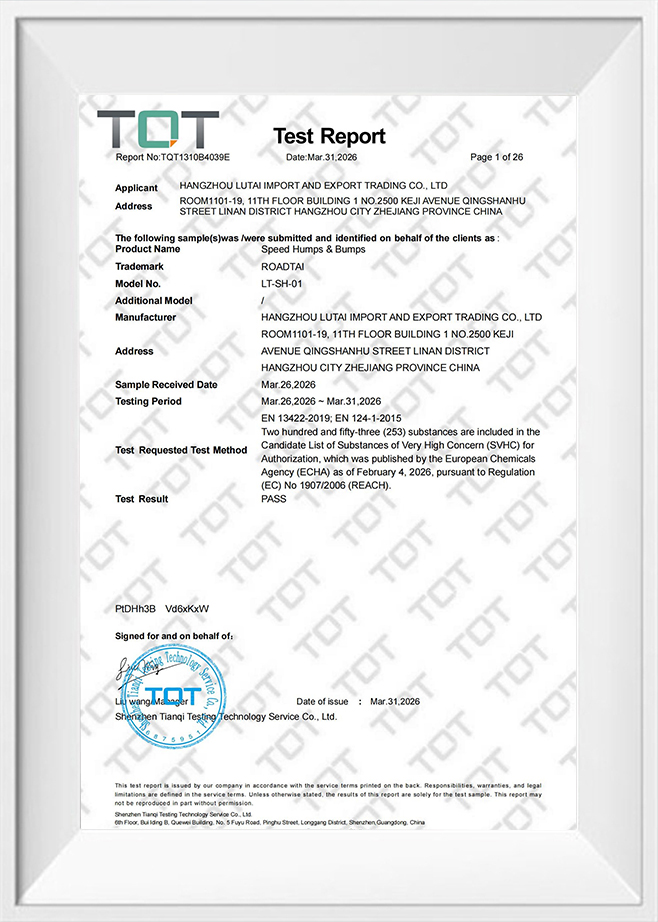
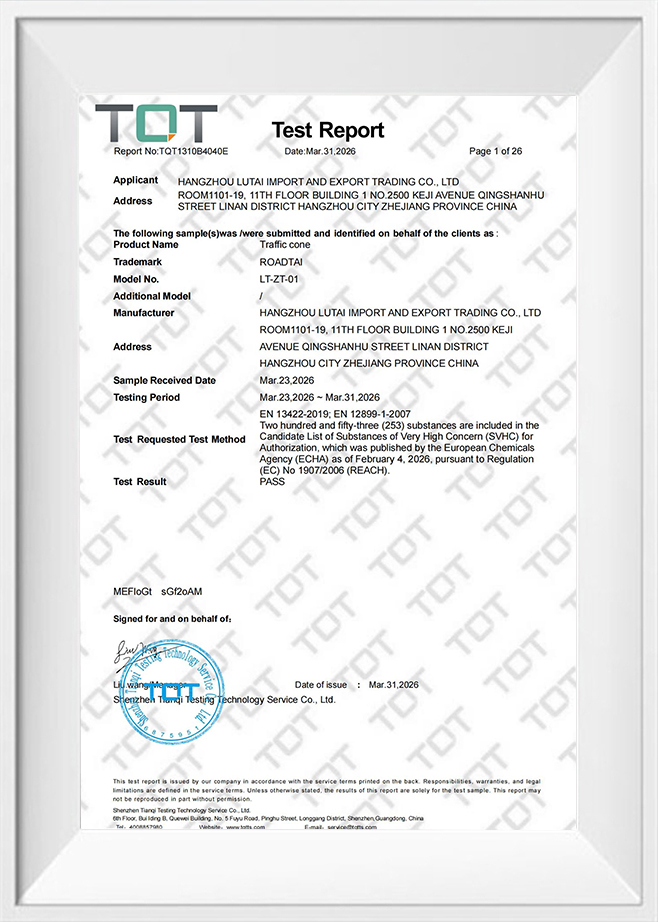
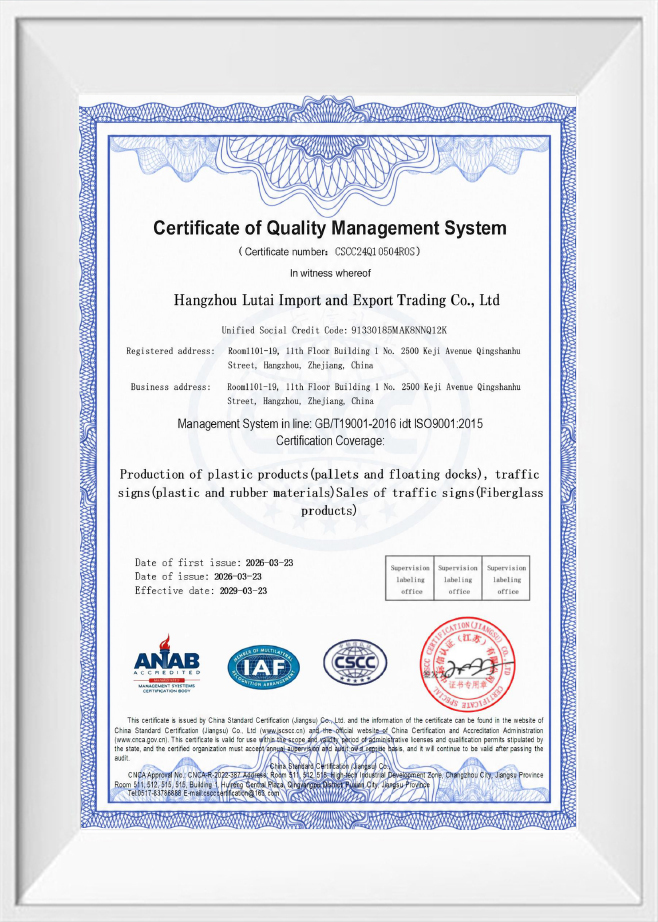
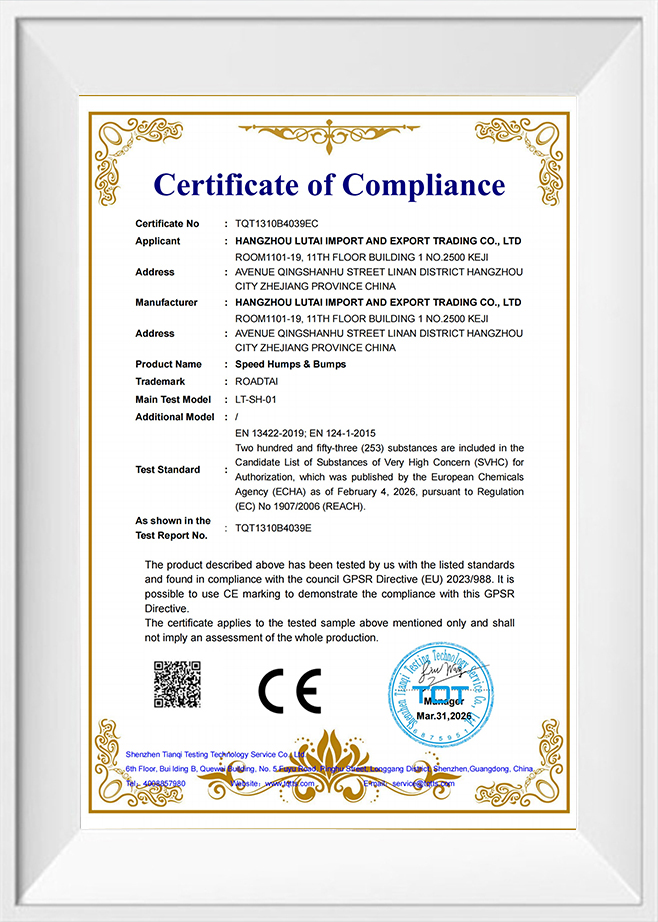
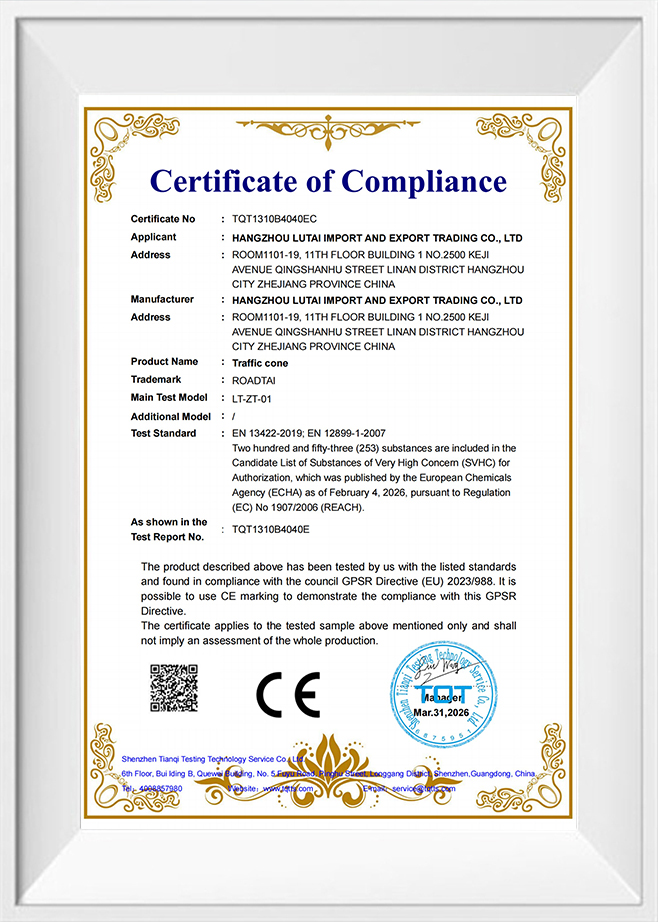
Additionally, rubber's natural electrical insulation property (dielectric strength > 15 kV/mm) adds a layer of protection against leakage currents from damaged cables, whereas some recycled plastics may contain conductive impurities. Our products comply with CE and CNAS standards, and we offer customization options such as yellow/black color schemes or reflective strips for low-visibility areas. Hangzhou Lutai Import and Export Trading Co., Ltd. has also achieved ISO 9001 certification, ensuring that every wholesale rubber cable protector batch undergoes rigorous hardness, tensile, and aging tests before shipping to clients in North America, Europe, and Asia-Pacific.
From an ecological standpoint, our rubber compounds are free from heavy metals and phthalates, making them safer for indoor use (e.g., hospitals and schools). Plastic protectors often rely on plasticizers that can leach out over time, leading to surface stickiness and reduced dimensional stability. The outdoor cable ramp we supply maintains its shape and color for years, reducing replacement frequency and total cost of ownership—a fact frequently highlighted in our client feedback from Italy and Australia.
4. Application Scenarios and Customization Flexibility
The choice between rubber and plastic is also dictated by the application environment. For temporary events (concerts, film sets, trade fairs), the lightweight and quick-deploy nature of our high-elasticity wear-resistant rubber lightweight pull-down single-channel reinforced cable protector with ramp is unmatched. For permanent installations in factories or data centers, the rubber protector's noise-dampening properties reduce rolling noise by up to 8 dB compared to hard plastic, improving worker comfort. Below we summarize typical deployment use cases:
- Events & Exhibitions: Fast setup/teardown, repeated assembly, indoor/outdoor transitions.
- Warehouses & Logistics: High forklift traffic, oil/grease exposure, need for shock absorption.
- Construction Sites: Heavy machinery passing, extreme temperature variations, UV exposure.
- Healthcare & Hospitality: Wheelchair accessibility, slip prevention, quiet operation.
Our R&D team at Hangzhou Lutai Import and Export Trading Co., Ltd. actively collaborates with clients to produce custom colors, embossed logos, and even integrated reflective tapes for enhanced night safety. This level of personalization is rarely offered with plastic protectors, which are typically mass-produced in standard black or yellow without surface branding options. The ability to co-develop products based on physical samples or technical drawings has made us a preferred partner for distributors in Japan and the UAE.
- Assessment: Evaluate traffic type (pedestrian, cart, forklift) and frequency.
- Material Selection: Choose rubber for dynamic loads and outdoor use; plastic only for static, indoor, low-traffic areas.
- Channel Sizing: Verify cable diameter against the protector's inner width (single-channel design accommodates up to 35 mm OD cables).
- Anchoring: For permanent installs, use optional bolt-down holes; for temporary, rely on the weight and friction of the rubber ramp.
Frequently Asked Questions
Q1: What is the average lifespan of a rubber cable protector versus a plastic one in outdoor conditions?
Under direct sunlight and seasonal temperature changes, a high-quality rubber protector like our high-elasticity wear-resistant rubber lightweight pull-down single-channel reinforced cable protector with ramp typically lasts 5–7 years, while standard PVC plastic protectors often show surface cracking and loss of impact resistance within 2–3 years, especially in regions with freeze-thaw cycles.
Q2: Can the rubber protector be used for electrical cables with high voltage?
Yes. The rubber body provides excellent electrical insulation (tested up to 1000V). However, we always recommend routing cables according to local electrical codes. For specific high-voltage applications, consult our engineering team at Hangzhou Lutai Import and Export Trading Co., Ltd. for customized dielectric reinforcement.
Q3: Is the wholesale rubber cable protector available in custom colors and with company logos?
Absolutely. We offer all-black, all-yellow, and two-tone combinations. Surface embossing for logos or warning texts is supported with a minimum order quantity. Many of our European clients utilize this feature for brand visibility on rental equipment.
Q4: How do I clean and maintain the rubber ramp to ensure long-term performance?
Simply wash with mild soap and water. Avoid petroleum-based solvents, as they may degrade the rubber. The diamond texture resists dirt accumulation, and the material's oil resistance makes it easy to wipe off grease—a distinct advantage over plastic, which often stains permanently.
In conclusion, while plastic cable protectors may appear economical for light-duty, indoor use, the high-elasticity wear-resistant rubber lightweight pull-down single-channel reinforced cable protector with ramp offers superior safety, durability, and adaptability for professional environments. With global shipping from Hangzhou Lutai Import and Export Trading Co., Ltd., and full compliance with CE and CNAS standards, our rubber solutions consistently deliver lower lifetime costs and higher user satisfaction. For outdoor cable ramp projects or large-scale wholesale rubber cable protector procurement, we invite you to contact us for tailored quotations and sample testing.



 Español